Military operations inherently involve complex and often hostile environments where situational awareness is paramount for troop safety and mission success. The ability to detect and
identify threats, often originating from beyond the line of sight, has driven continuous advancements in sensor technology. Among these, acoustic detection, though seemingly
straightforward, has evolved into a highly sophisticated and indispensable component of modern military intelligence gathering and force protection. This article examines the
evolution and current state of advanced military sound detection technology, highlighting its diverse applications and ongoing developments.
Early Beginnings and Passive Acoustics
The use of sound for military purposes dates back centuries, with early examples including the use of drums for communication and the listening of naval vessels for enemy ships.
However, systematic acoustic warfare began to take shape during World War I with the development of rudimentary sound-ranging equipment to pinpoint artillery positions. These
early systems relied on multiple listening posts and triangulation techniques, offering limited accuracy and being susceptible to environmental factors like wind and terrain. The
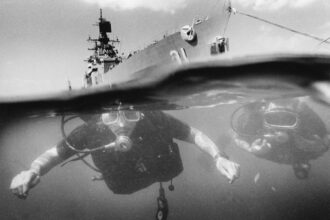
inter-war period saw further development, notably in submarine detection where hydrophones became critical for identifying submerged threats. This era primarily focused on
passive acoustics, where sensors merely listened for emitted sounds without actively generating signals. This principle of passive listening, which prioritizes stealth and avoids
revealing one’s own position, remains a cornerstone of modern acoustic detection.
The Cold War and Active Sonar Developments
The Cold War spurred significant investment in acoustic technology, particularly for naval applications. The advent of active sonar revolutionized underwater warfare. Active sonar
systems emit sound pulses (pings) and then listen for the echoes reflected off objects. This provided a more precise means of detecting submarines and mines compared to passive
hydrophones alone. However, active sonar also carries the inherent disadvantage of revealing the emitter’s presence, making it a double-edged sword in stealth-focused environments.
Concurrently, advancements in signal processing began to unlock more detailed information from acoustic signatures, allowing for the classification of enemy platforms based on their
unique sound profiles. This period also saw the initial exploration of airborne acoustic sensors for detecting low-flying aircraft and ground vehicles.
The Digital Age and Adaptive Processing
The advent of digital signal processing in the late 20th century marked a paradigm shift in acoustic warfare. Digitalization allowed for the powerful manipulation and analysis of
acoustic data in real-time. This enabled the development of adaptive beamforming techniques, where sensor arrays could electronically “steer” their listening focus, effectively
nullifying interference and enhancing the detection of specific sound sources. Furthermore, digital filters could isolate specific frequencies and patterns, separating target
signatures from a cacophony of background noise – akin to plucking a single instrument’s melody from a full orchestra. Machine learning algorithms, still in their nascent stages
at this time, began to be explored for automatic target recognition, reducing the cognitive load on human operators. This era laid the groundwork for the sophisticated systems in
use today.
Military sound detection technology has become increasingly sophisticated, enabling armed forces to enhance their situational awareness and operational effectiveness. For a deeper understanding of the advancements in this field, you can explore a related article that discusses various applications and innovations in sound detection systems. To read more, visit this article.
Modern Advanced Acoustic Detection Systems
Ground-Based Acoustic Sensors
Ground-based acoustic sensors represent a vital component of perimeter security and intelligence gathering in various land-based operations. These systems are designed to detect and
classify a wide range of acoustic events within a designated area.
Distributed Acoustic Sensing Networks
Modern ground systems often employ distributed networks of small, robust acoustic sensors. These sensors, sometimes no larger than a fist, can be strategically deployed
across a theatre of operations to create an acoustic “tripwire.” When a sound event occurs, multiple sensors detect it, and their data is then fused and processed centrally. This
allows for highly accurate triangulation of the sound source’s position, even in challenging terrain. Imagine each sensor as a tiny ear extended into the environment, collectively
painting an auditory picture of activity.
Classification and Identification Algorithms
Beyond mere detection, advanced algorithms are crucial for classifying detected sound events. These algorithms are trained on vast databases of acoustic signatures, enabling them to
distinguish between different types of vehicles (e.g., foot patrols, light vehicles, heavy armor), human speech, gunfire (categorizing caliber and weapon type), and even drones. The
ability to differentiate between a civilian vehicle and a hostile armored personnel carrier based solely on its acoustic signature is a testament to the sophistication of these
algorithms. This classification helps in discerning genuine threats from ambient noise, a critical distinction in high-stakes environments.
Integration with Other Sensor Modalities
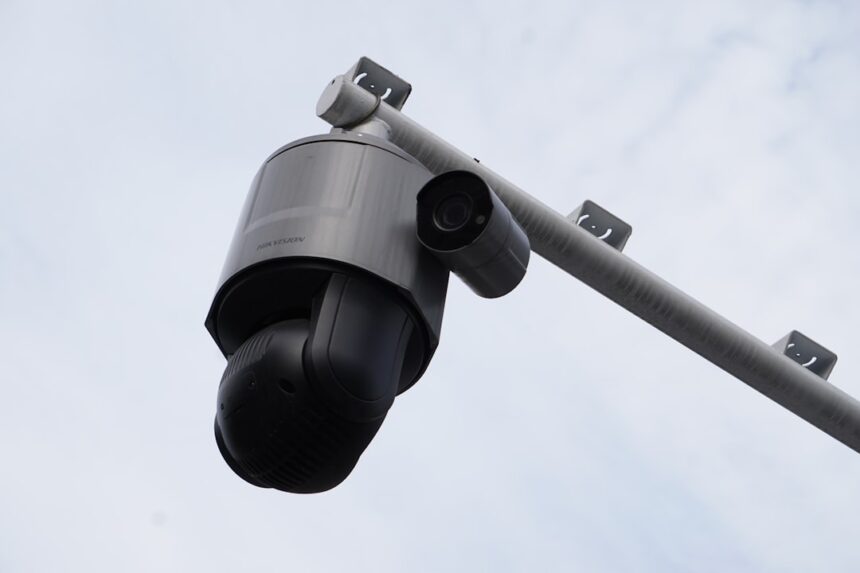
Acoustic sensors are rarely standalone systems. They are increasingly integrated with other sensor modalities, such as seismic sensors, and electro-optical/infrared (EO/IR) cameras.
The fusion of data from these disparate sources provides a more comprehensive and resilient picture of the operational environment. For instance, an acoustic detection of a vehicle
could trigger a PTZ (pan-tilt-zoom) camera to focus on the predicted location, providing visual confirmation and further intelligence. This multi-modal approach reduces false alarms
and enhances overall threat assessment.
Airborne Acoustic Detection
While perhaps less intuitive than ground-based or naval applications, acoustic detection from airborne platforms offers unique advantages, particularly for wide-area surveillance and
the detection of specific, high-value targets.
Acoustic Vector Sensors
Airborne platforms, such as drones and manned aircraft, can be equipped with acoustic vector sensors. Unlike traditional scalar microphones that only measure sound pressure, vector
sensors measure both sound pressure and the direction of sound particle motion. This provides inherent directional information, making them invaluable for pinpointing sound sources
from a distance, even when the platform is in motion. This is akin to having a super-sensitive ear that not only hears a sound but immediately knows where it’s coming from.
Counter-UAS Applications
A significant application of airborne acoustic detection is in counter-unmanned aerial systems (C-UAS). Small, low-flying drones often have distinct acoustic signatures that can be
detected from a distance, even when they are visually obscured or operating in GPS-denied environments. Acoustic sensors on C-UAS platforms can provide early warning, allowing for
interdiction before the drone poses a significant threat. The whirring of rotors, though often subtle, becomes a beacon for these advanced auditory systems.
Persistent Surveillance from Altitude
High-altitude long-endurance (HALE) platforms can carry acoustic arrays to provide persistent surveillance over large areas. These systems can detect subtle acoustic cues that might
indicate human activity, vehicle movement, or even the deployment of certain weapon systems, offering a non-intrusive method of intelligence gathering without the need for physical
presence on the ground. The sheer range and endurance of these platforms make them invaluable for monitoring expansive regions.
Naval Acoustic Detection (Sonar Advancements)
Naval acoustic detection, primarily through sonar, remains at the forefront of underwater warfare, with continuous innovation driven by the increasing sophistication of modern
submarines and underwater threats.
Passive Acoustic Arrays
Despite the efficacy of active sonar, passive acoustic arrays continue to be critical for stealth operations. These arrays, often integrated into the hull of submarines or towed
behind surface vessels, listen for the faint sounds emitted by other vessels: propeller cavitation, machinery noise, and even crew activities. Advanced signal processing allows
these systems to extract incredibly subtle sounds from the noisy underwater environment and classify them, providing crucial intelligence without revealing the listening platform’s
position. Consider a passive array as a vast, silent hunter, attuned to every whisper in the ocean’s depths.
Active Sonar with Advanced Processing
Modern active sonar systems have progressed significantly beyond simple “pings.” They employ complex waveforms, frequency hopping, and adaptive beamforming to improve detection range
and resolution while minimizing the probability of interception by enemy platforms. Furthermore, advancements in synthetic aperture sonar (SAS) allow for the creation of incredibly
detailed acoustic images of the seafloor and submerged objects, aiding in mine countermeasures and wreck identification. These systems are no longer just sending out a broad shout,
but rather a carefully crafted symphony of sounds designed to gather maximum information.
Autonomous Underwater Vehicles (AUVs) with Acoustic Payloads
The deployment of AUVs equipped with sophisticated acoustic payloads is revolutionizing underwater reconnaissance and warfare. These autonomous platforms can operate in dangerous or
difficult-to-access areas for extended periods, conducting surveys, detecting mines, and even tracking enemy submarines, all while reducing risk to human personnel. The ability of
AUVs to form network patrols, sharing acoustic data, significantly enhances their collective detection capabilities, acting as a tireless surveillance fleet beneath the waves.
Challenges and Future Directions
Environmental Factors and Noise Masking
One of the most significant challenges in acoustic detection is the pervasive presence of environmental noise. Wind, rain, ocean currents, industrial activity, and even animal sounds
can mask target signatures, making accurate detection and classification difficult. Like trying to hear a whispered secret in a bustling marketplace, separating target sounds from
the ambient din requires sophisticated filtering and adaptive algorithms. Continuous research focuses on developing more robust noise reduction techniques and algorithms that can
discern faint signals from overwhelming background noise.
Low Observable (LO) Signatures
The development of “low observable” (LO) or “stealth” platforms presents a major challenge to acoustic detection. These platforms are designed to minimize all forms of detectable
emissions, including their acoustic signatures. Reducing machinery noise, propeller cavitation, and aerodynamic hum is a priority for stealth platforms, pushing the boundaries of
acoustic sensor sensitivity and processing power. The race between stealth technology and acoustic detection is a perpetual arms race, where every reduction in signature demands a
corresponding increase in sensor capability.
Data Overload and Human-Machine Interface
Advanced acoustic systems generate immense volumes of data, presenting a challenge for human operators to process and interpret effectively in real-time. This “data overload”
necessitates advanced human-machine interfaces (HMIs) that can intuitively display critical information, highlight anomalies, and provide actionable intelligence. The seamless
integration of machine learning and artificial intelligence (AI) is crucial for automating initial analysis, filtering out irrelevant data, and presenting operators with high-confidence
detections, allowing them to focus on decision-making rather than raw data interpretation.
Artificial Intelligence and Machine Learning
The future of advanced military acoustic detection is inextricably linked with advancements in AI and machine learning. These technologies are poised to revolutionize several aspects
of acoustic warfare.
Real-time Anomaly Detection
AI algorithms can learn to identify “normal” acoustic environments and then flag any deviations as potential anomalies. This allows for the detection of novel threats or unexpected
activities that might not conform to previously trained signatures, providing an early warning system for unknown dangers. This capability is akin to having a tireless, hyper-vigilant
auditor that immediately alerts you to any unusual sound.
Autonomous Adaptation and Learning
Future acoustic systems will likely incorporate autonomous learning capabilities. This means that sensors will be able to adapt to new acoustic environments, learn new target
signatures on the fly, and continuously refine their detection and classification algorithms without constant human intervention. This adaptability is crucial in dynamic and
unpredictable combat zones, enabling systems to become more intelligent and effective over time.
Predictive Acoustics
Beyond real-time detection, AI also holds the promise of predictive acoustics. By analyzing patterns of acoustic activity over time, AI could potentially predict hostile intentions or
imminent actions. For example, a change in the frequency of certain vehicle movements or the sudden appearance of specific weapon-related sounds could trigger an alert about an
impending attack. This capability moves beyond reactive detection to proactive threat anticipation, offering a significant advantage in preventing hostile actions.
Conclusion
Advanced military sound detection technology has transformed from rudimentary listening devices into a complex ecosystem of sophisticated sensors, algorithms, and networked systems.
Its applications span every domain of warfare, providing critical intelligence, enhancing force protection, and enabling unprecedented situational awareness. While challenges remain
in overcoming environmental noise and detecting low-observable signatures, the relentless march of innovation, particularly in artificial intelligence and machine learning,
promises even more capable and autonomous acoustic systems in the future. As the auditory environment of the modern battlefield becomes increasingly complex, advanced acoustic
detection will continue to serve as an indispensable “ear” on the world, a silent sentinel constantly vigilant for the sounds that betray threat and opportunity alike.
FAQs
What is military sound detection technology?
Military sound detection technology refers to systems and devices designed to identify, locate, and analyze sounds related to military activities, such as gunfire, explosions, vehicle movements, and aircraft. These technologies help enhance situational awareness and improve battlefield intelligence.
How does military sound detection technology work?
Military sound detection technology typically uses arrays of microphones or acoustic sensors to capture sound waves. Advanced algorithms then process these sounds to determine their source, type, and distance. Some systems also integrate with other sensors like radar or infrared for more accurate detection.
What are the common applications of military sound detection technology?
Common applications include detecting enemy gunfire, locating artillery or mortar fire, monitoring vehicle movements, and identifying aircraft or drones. These technologies are used for force protection, threat assessment, and guiding countermeasures or tactical responses.
What are the advantages of using sound detection technology in military operations?
Sound detection technology provides real-time situational awareness, often in environments where visual or radar detection is limited. It can operate in all weather conditions, is relatively low-cost, and can be deployed in various platforms such as vehicles, drones, or fixed installations.
Are there any limitations to military sound detection technology?
Yes, limitations include susceptibility to background noise, difficulty distinguishing between similar sounds, and challenges in urban or complex terrains where sound reflections can cause inaccuracies. Additionally, environmental factors like wind or rain can affect detection performance.