The modern battlefield is a dynamic and complex environment, increasingly defined not just by what can be seen, but by what can be heard. For centuries, sound has been a rudimentary indicator of proximity and intent – the distant rumble of an approaching army, the sharp crack of a rifle. However, advancements in military sound detection technology have transformed this historical role into a sophisticated, data-driven capability, offering forces unparalleled situational awareness and a significant tactical edge. This article will explore the evolution and current state of these technologies, examining their underlying principles, diverse applications, and future trajectory.
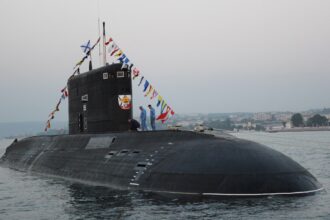
The initial attempts at military sound detection were largely reactive and labor-intensive. Soldiers, armed with keen ears and sometimes rudimentary listening devices like ear trumpets, served as the primary acoustic sensors. These methods, while vital in their time, were prone to human error, susceptible to environmental noise, and severely limited in range and precision. The advent of technologies like hydrophones during World War I marked a significant departure, enabling the detection of submarines and ships beneath the surface of the water. This represented an early leap from passive human observation to active technological intervention in the auditory domain. The development of sonar, both active and passive, during and after World War II, further cemented the importance of sound detection in naval warfare, becoming a critical tool for identifying and tracking submarines.
Early Innovations: From Ear to Instrument
The transition from relying solely on the human ear to employing mechanical and then electronic amplification was a gradual but crucial one. The use of listening posts, strategically placed to amplify distant sounds, was a precursor to more sophisticated systems.
The Impact of the Ear Trumpet and Other Amplifiers
While seemingly crude by today’s standards, early acoustic amplifiers, such as the ear trumpet, allowed individual soldiers to discern fainter sounds and distinguish them from ambient noise. This provided a marginal but valuable improvement in their ability to detect approaching threats.
The Dawn of Subsurface Acoustics: Hydrophones
The need to counter the submarine threat during World War I spurred the development of hydrophones. These underwater microphones, often towed or mounted on ships, enabled the detection of engine noise, propeller cavitation, and hull sounds, fundamentally altering the nature of naval reconnaissance.
The Rise of Sonar: A Game Changer
Sonar, an acronym for Sound Navigation and Ranging, proved to be a revolutionary technology. It offered the ability to both detect and locate objects by emitting sound pulses and analyzing the returning echoes (active sonar) or by listening for sounds emitted by targets (passive sonar).
Active Sonar Principles: The Echo Location Method
Active sonar works by transmitting a sound pulse (a “ping”) into the water. When this pulse encounters an object, a portion of it reflects back as an echo. By measuring the time it takes for the echo to return and the direction from which it originates, the range, bearing, and even characteristics of the object can be determined.
Passive Sonar Strategies: The Whispers of the Deep
Passive sonar, in contrast, relies on listening for sounds originating from the target itself. This can include the noise of a submarine’s engines, the cavitation generated by its propellers, or even the sounds of its internal machinery. While it does not reveal the target’s exact location as precisely as active sonar, it offers the advantage of stealth, as the detecting platform remains silent.
Recent advancements in military applications of sound detection have opened new avenues for surveillance and reconnaissance. For an in-depth exploration of these technologies and their implications, you can read a related article that discusses the integration of acoustic sensors in modern warfare. This article provides insights into how sound detection systems enhance situational awareness and operational effectiveness. To learn more, visit this link.
Modern Sound Detection Technologies: A Multifaceted Approach
Today’s military sound detection technology is a sophisticated fusion of acoustics, signal processing, artificial intelligence, and advanced sensor design. It extends far beyond the maritime domain, encompassing aerial, terrestrial, and even space-based applications. These systems are designed to be highly sensitive, capable of filtering out unwanted noise, and able to analyze complex acoustic signatures to identify specific threats.
Acoustic Sensor Networks: The Distributed Ear
The deployment of networks of acoustic sensors, both fixed and mobile, allows for the creation of a comprehensive auditory surveillance grid. These networks can be spread across vast areas, providing continuous monitoring and overlapping coverage, significantly reducing blind spots. The data from these distributed sensors is often aggregated and analyzed in real-time by sophisticated command and control systems.
Distributed Acoustic Sensors (DAS): Leveraging Existing Infrastructure
A notable advancement is the use of Distributed Acoustic Sensing (DAS). This technology, often deployed on fiber optic cables already laid for communication or monitoring, can detect acoustic vibrations along its entire length. This means that existing infrastructure, such as pipelines or communication lines, can be repurposed as vast sensor networks.
Mobile Acoustic Platforms: Drones and Autonomous Vehicles
The integration of acoustic sensors onto unmanned aerial vehicles (UAVs), ground robots, and autonomous surface or underwater vehicles is transforming the way reconnaissance is conducted. These mobile platforms can provide localized, on-demand acoustic intelligence, reaching areas inaccessible to traditional platforms or human operators.
Advanced Signal Processing and AI: Deciphering the Sonic Landscape
The sheer volume of acoustic data generated by modern sensor networks would be overwhelming without advanced signal processing and artificial intelligence (AI) capabilities. These tools are essential for sifting through the “noise” of the environment to identify and classify meaningful acoustic events.
Noise Reduction and Signal Enhancement Techniques
Sophisticated algorithms are employed to filter out ambient noise, such as wind, rain, and engine hum, thereby enhancing the clarity of target signals. Techniques like beamforming, adaptive filtering, and spectral analysis are critical for isolating and amplifying desired sounds.
Machine Learning for Acoustic Signature Identification
Machine learning algorithms are trained on vast datasets of acoustic signatures to identify and classify a wide range of threats. This includes distinguishing between the sounds of different types of aircraft, vehicles, weaponry, and even the unique acoustic fingerprints of individual platforms. This capability allows for immediate and accurate threat assessment.
Real-time Acoustic Event Detection and Classification
The ability to detect and classify acoustic events in real-time is paramount for rapid response. AI-powered systems can analyze incoming acoustic data streams, identify anomalies, and alert operators to potential threats within seconds, eliminating the delay inherent in manual analysis.
Direction Finding and Localization: Pinpointing the Source
Beyond simply detecting a sound, a crucial capability is the ability to determine its origin. This is achieved through various direction-finding and localization techniques that leverage the principles of acoustics and triangulation.
Triangulation and Multilateration in Acoustic Networks
By deploying multiple acoustic sensors, the direction and distance to a sound source can be calculated through triangulation. If the sound is detected by three or more sensors, its precise location can be pinpointed. Multilateration extends this principle for greater accuracy.
Time Difference of Arrival (TDOA) Methods
Time Difference of Arrival (TDOA) is a common technique where the time it takes for a sound wave to reach different sensors is measured. The differences in arrival times can be used to determine the location of the sound source.
Underwater Acoustics: The Unseen Battleground
The ocean remains a vast and largely opaque environment, making underwater acoustic detection a cornerstone of naval power. Advancements here have been critical in maintaining a strategic advantage.
Passive and Active Sonar Systems on Naval Vessels
Modern naval vessels are equipped with highly sophisticated passive and active sonar systems, often integrated into hull-mounted arrays, towed arrays, and dipping sonar deployed from helicopters. These systems are designed to detect and track submarines, mines, and other underwater threats at significant ranges.
Sonobuoys: Aerial Underwater Surveillance
Sonobuoys are expendable, free-floating acoustic sensors dropped from aircraft or ships. They provide an aerial and more dispersed form of underwater surveillance, transmitting acoustic data back to the deploying platform. They are particularly useful for area searches and for providing early warning.
Unmanned Underwater Vehicles (UUVs) for Acoustic Reconnaissance
UUVs are increasingly being equipped with advanced acoustic sensors, allowing for persistent and stealthy underwater reconnaissance. They can operate in areas too dangerous or inaccessible for manned submarines, providing valuable acoustic intelligence.
Applications of Military Sound Detection Technology
The applications of military sound detection technology are broad and continuously expanding, touching on nearly every facet of modern military operations. These technologies are not confined to the direct combat zone but are integral to intelligence gathering, force protection, and logistical support.
Intelligence, Surveillance, and Reconnaissance (ISR)
Acoustic detection plays a vital role in ISR operations, providing a continuous and often covert stream of information about enemy movements, activities, and capabilities. This intelligence can be gathered in a variety of environments, from the open ocean to urban settings.
Monitoring Enemy Movements and Positions
By detecting the characteristic sounds of vehicles, aircraft, or troop movements, acoustic sensors can provide real-time updates on enemy positions and intentions. This allows for proactive threat assessment and strategic planning.
Identifying Weapon Firing and Explosions
The distinct acoustic signatures of firearms, artillery, and explosions can be detected and analyzed to pinpoint the location of hostile fire, enabling friendly forces to respond effectively or take evasive action.
Detecting Covert Operations
Some advanced acoustic systems are capable of detecting subtle sounds associated with covert operations, such as the operation of small unmanned systems or the movement of personnel in clandestine environments.
Force Protection and Early Warning
Ensuring the safety of personnel is a primary concern, and acoustic detection technologies are critical for providing early warning of potential threats, allowing for defensive measures to be taken.
Perimeter Security and Intrusion Detection
In forward operating bases and other installations, acoustic sensors can be deployed to monitor perimeters and detect any unauthorized approaches, providing early warning of potential incursions.
Threat Detection in Urban Environments
Urban warfare presents unique acoustic challenges. Sophisticated systems can filter out the cacophony of city life to identify specific threat sounds, such as the detonation of improvised explosive devices (IEDs) or incoming fire.
Detecting Improvised Explosive Devices (IEDs)
While visual cues are often primary for IED detection, acoustic sensors can sometimes detect the sounds associated with their construction or deployment, offering an additional layer of security.
Counter-Terrorism Operations
The clandestine nature of terrorist activities makes acoustic detection a valuable tool in uncovering plots and disrupting operations.
Monitoring Suspect Communications and Activities
In certain scenarios, acoustic monitoring can be used to gather intelligence on suspected terrorist communications or activities by analyzing ambient sounds in areas of interest.
Locating Hidden Insurgent Positions
The ability to pinpoint the sound of weapons firing or vehicles operating can assist in locating hidden insurgent positions, allowing for targeted responses.
Maritime Domain Awareness
In the vastness of the ocean, acoustic detection remains paramount for understanding activity and maintaining safe passage.
Submarine Detection and Tracking
As discussed, sonar systems are indispensable for detecting and tracking submarines, a critical component of naval power projection and deterrence.
Mine Detection and Clearance
Acoustic signatures can assist in identifying and localizing mines in waterways, aiding in clearance operations and ensuring maritime security.
Monitoring Surface Vessel Activity
While visual and radar are primary for surface vessels, acoustic sensors can detect submerged activity or noise signatures from vessels that may be attempting to mask their presence.
Challenges and Future Directions

Despite the remarkable advancements, military sound detection technology faces ongoing challenges, and its future trajectory is shaped by the relentless pursuit of greater capability and adaptability. The evolving nature of warfare demands continuous innovation.
The Arms Race of Silence and Sound
A significant ongoing challenge is the adversarial nature of sound detection. As detection technologies improve, so too do countermeasures designed to reduce acoustic signatures. This creates a perpetual arms race between those who seek to reveal and those who seek to conceal.
Signature Management and Counter-Stealth Technologies
Nations invest heavily in developing quieter vehicles, engines, and operational tactics to minimize their acoustic footprint. This forces developers of detection systems to constantly refine their algorithms and sensor capabilities to overcome these counter-stealth measures.
Deception and Exploitation of Acoustic Environments
Adversaries may employ acoustic decoys, manipulate ambient noise, or exploit the natural acoustic properties of an environment to mask their activities or mislead detection systems.
Environmental Factors and Data Overload
The effectiveness of acoustic detection can be significantly impacted by environmental conditions, and the sheer volume of data generated by modern sensor networks presents its own set of challenges.
The Impact of Environmental Noise and Propagation
Acoustic signals can be distorted or masked by ambient noise from wind, waves, rain, or even biological sources. Understanding and mitigating the effects of sound propagation through different mediums (air, water, solids) is crucial for accurate detection.
Managing and Analyzing Massive Data Streams
The proliferation of acoustic sensors, particularly in networked architectures, generates petabytes of data. Developing efficient methods for storing, processing, and analyzing these massive data streams in real-time is a significant technical hurdle.
The Path Forward: Towards Autonomous and Adaptive Systems
The future of military sound detection technology points towards increasingly autonomous, adaptive, and integrated systems that can operate with minimal human intervention and adapt to rapidly changing battlefield conditions.
Enhanced AI and Machine Learning for Decision Support
Further integration of AI and machine learning will enable systems to not only detect and classify but also to predict enemy intentions and provide sophisticated decision support to commanders.
Swarms of Autonomous Acoustic Sensors
The concept of deploying coordinated swarms of autonomous acoustic sensors, both aerial and subterranean, could provide unprecedented levels of battlefield awareness, capable of dynamically reconfiguring their sensing strategies based on emergent threats.
Multi-Sensor Fusion and Cognitive Acoustics
The ultimate goal is to achieve seamless fusion of acoustic data with information from other sensor modalities (e.g., radar, infrared, visual). This “cognitive acoustics” approach will allow for a more holistic understanding of the operational environment, where sound is not just detected but understood in its broader tactical context. The continued development of this technology promises to further redefine the battlefield, making the unseen and unheard a critical dimension of military power.
FAQs
What are the primary military applications of sound detection?
Sound detection in the military is primarily used for surveillance, reconnaissance, and threat detection. It helps in identifying enemy movements, locating gunfire or explosions, and monitoring battlefield environments to enhance situational awareness.
How does sound detection technology work in military settings?
Military sound detection systems use arrays of microphones and acoustic sensors to capture sound waves. These sounds are then analyzed using signal processing techniques to identify specific acoustic signatures such as footsteps, vehicle engines, or weapon discharges.
What types of sound detection devices are commonly used by the military?
Common devices include acoustic sensors, gunshot detection systems, seismic-acoustic sensors, and directional microphones. These devices can be deployed on the ground, mounted on vehicles, or integrated into unmanned systems like drones.
Can sound detection be used for underwater military operations?
Yes, underwater sound detection is critical for naval operations. Sonar systems use sound waves to detect submarines, underwater mines, and other objects, providing essential information for navigation and threat avoidance.
What are the advantages of using sound detection in military operations?
Sound detection offers real-time monitoring, covert surveillance capabilities, and the ability to detect threats beyond visual range. It enhances force protection, improves tactical decision-making, and can operate effectively in various environmental conditions.