The advancements in submarine technology continuously push the boundaries of underwater exploration and military capabilities. Modern submarine design is characterized by an intricate interplay of hydrodynamics, material science, and stealth technologies, each contributing to unprecedented levels of operational efficiency and environmental awareness. This article delves into the contemporary approaches to submarine design, highlighting the innovations that enhance underwater performance.
The shape of a submarine is not merely aesthetic; it is a critical determinant of its performance beneath the waves. Hydrodynamic optimization focuses on minimizing drag and maximizing propulsion efficiency, which directly translates to speed, range, and acoustic signature.
Advanced Hull Forms
Traditional submarine hulls, often cylindrical with a tapering stern, are being refined through computational fluid dynamics (CFD) and extensive model testing. Modern designs explore alternative hull forms to achieve superior performance.
Tear-Drop and Albacore Hulls
The tear-drop or “Albacore” hull, exemplified by the USS Albacore (AGSS-569), remains a foundational concept for high-speed, low-drag operations. Its streamlined shape, resembling a water drop, minimizes turbulence and frictional drag. Subsequent designs have further refined this concept, incorporating finer stern sections and more gradual transitions to reduce flow separation. This design principle is akin to a finely honed blade, cutting through water with minimal resistance, ensuring that every ounce of thrust propels the vessel forward efficiently.
Appendage Integration
External appendages, such as sail, dive planes, and rudders, are significant sources of drag and acoustic noise. Modern designs integrate these components more seamlessly into the hull structure, often employing retractable or low-profile designs. For instance, X-shaped stern planes offer enhanced maneuverability and redundancy compared to traditional cross-shaped configurations, while also presenting a smaller acoustic signature. This integration is akin to a craftsman seamlessly joining pieces of wood, creating a unified and efficient whole rather than disparate parts.
Propulsion System Efficiency
The propulsion system is the heart of a submarine, dictating its speed, endurance, and quietness. Innovations in this area are pivotal for enhanced underwater performance.
Pump-Jet Propulsors
Conventional propellers, while effective, can generate significant cavitation noise, compromising stealth. Pump-jet propulsors, which enclose the propeller within a shrouded duct, mitigate this issue by reducing tip vortex cavitation and distributing thrust more evenly. This design minimizes the acoustic footprint, making the submarine a whispering shadow rather than a thundering presence. The blades are often highly skewed and individually controlled, further refining thrust and reducing vibrational harmonics.
Electric Propulsion Systems
Integrated electric propulsion (IEP) systems are gaining prominence, offering flexibility in interior layout and potentially reducing noise. In an IEP system, main engines (diesel generators or nuclear reactors) generate electricity, which powers electric motors for propulsion. This decouples the prime mover from the propeller shaft, allowing for greater freedom in engine placement and vibration isolation. This system functions like an electrical grid for the submarine, efficiently distributing power to where it is needed most.
For those interested in the intricacies of submarine design, a related article that delves into the latest advancements and technologies in underwater engineering can be found at this link. This article explores various aspects of submarine architecture, including hydrodynamics, stealth capabilities, and materials used in construction, providing a comprehensive overview for enthusiasts and professionals alike.
Stealth and Acoustic Signature Management
For a submarine, invisibility is paramount. Stealth technologies focus on reducing the vessel’s detectability by various sensors, particularly sonar.
Anechoic Coatings and Hull Materials
The submarine’s external shell is its primary defense against detection. Anechoic tiles, typically composed of rubber or polymer matrices, are affixed to the hull to absorb incident sonar waves rather than reflecting them. This effectively renders the submarine acoustically quieter to active sonar.
Multi-Layered Coatings
Modern anechoic coatings often consist of multiple layers, each optimized to absorb specific frequency ranges. These layers are meticulously designed to prevent resonance and acoustic impedance mismatch at various depths and temperatures. The principle is analogous to a sophisticated soundproofing panel, trapping and dissipating sound waves before they can echo.
Advanced Composite Materials
The use of composite materials, such as carbon fiber reinforced polymers (CFRP), for non-pressure hull structures and external fairings is becoming more widespread. These materials offer high strength-to-weight ratios and can be tailored to have specific acoustic properties, further reducing the vessel’s acoustic signature.
Vibration and Noise Reduction
Internal machinery noise is a significant contributor to a submarine’s overall acoustic signature. Extensive engineering efforts are dedicated to isolating these sources.
Rafted Machinery Mounts
Key machinery, such as generators, pumps, and motors, are often mounted on resilient rafts that are themselves isolated from the main hull structure. This “double isolation” mechanism significantly reduces the transmission of vibrations into the hull, preventing the submarine from broadcasting its presence. Think of balancing a delicate instrument on a spring-loaded platform; the vibrations are contained rather than transmitted.
Active Noise Cancellation
While still an emerging technology for large-scale application in submarines, active noise cancellation systems, similar to those found in high-end headphones, are being explored for specific noise sources. These systems generate “anti-noise” signals that destructively interfere with unwanted sounds, canceling them out.
Enhanced Sensor and Communication Systems
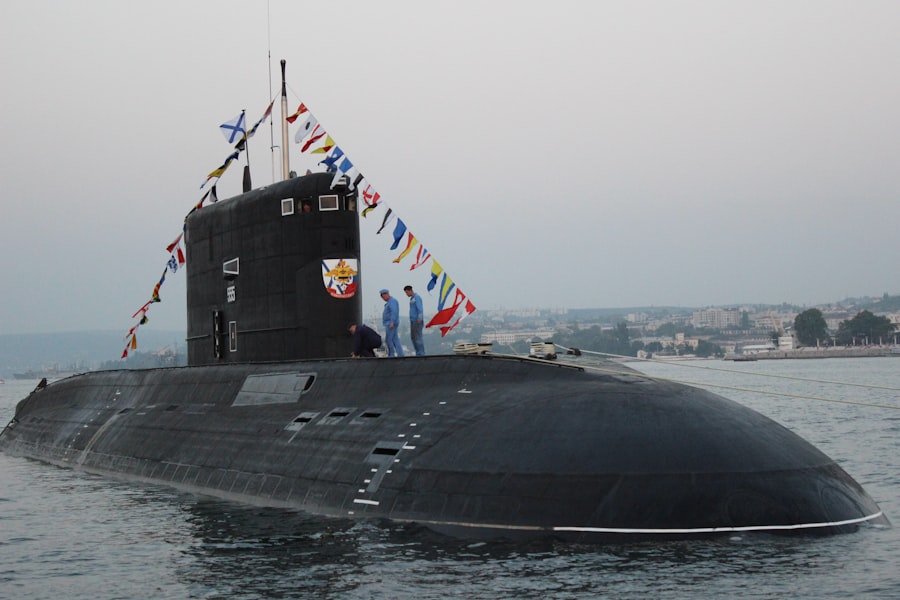
A submarine’s effectiveness hinges on its ability to perceive its environment and communicate securely. Modern sensor and communication systems are designed for maximum reach and discretion.
Integrated Sonar Suites
Sonar remains the primary sensor for underwater detection. Contemporary submarines feature highly integrated and sophisticated sonar suites.
Flank Array Sonars
In addition to traditional bow-mounted spherical or cylindrical arrays, modern submarines often incorporate flank array sonars. These are long, thin arrays embedded along the sides of the hull, providing passive detection capabilities over a wide azimuthal arc. This expands the submarine’s “listening ears,” allowing it to detect distant contacts without actively emitting sound.
Towed Array Sonars
Towed array sonars, deployed behind the submarine on a long cable, offer extremely long-range passive detection capabilities by placing the acoustic sensors far away from the submarine’s own noise source. These arrays are akin to a sophisticated fishing line, extending the submarine’s perception far beyond its immediate vicinity.
Covert Communication Systems
Maintaining secure and undetected communication is a persistent challenge for submarines.
Laser Communication
Blue-green laser communication systems are being developed to allow submarines to transmit and receive data at higher bandwidths from greater depths than traditional radio frequencies, without needing to surface or deploy an antenna mast. This method offers significantly lower probability of interception. This is akin to sending a private message with a focused beam of light, minimizing the chance of eavesdropping.
Low Probability of Intercept/Detection (LPI/LPD) Communications
Advanced satellite communication systems employ LPI/LPD techniques, using very short bursts of highly directional signals to transmit data. This minimizes the time a submarine is vulnerable to detection while communicating.
Advanced Automation and Crew Interfacing
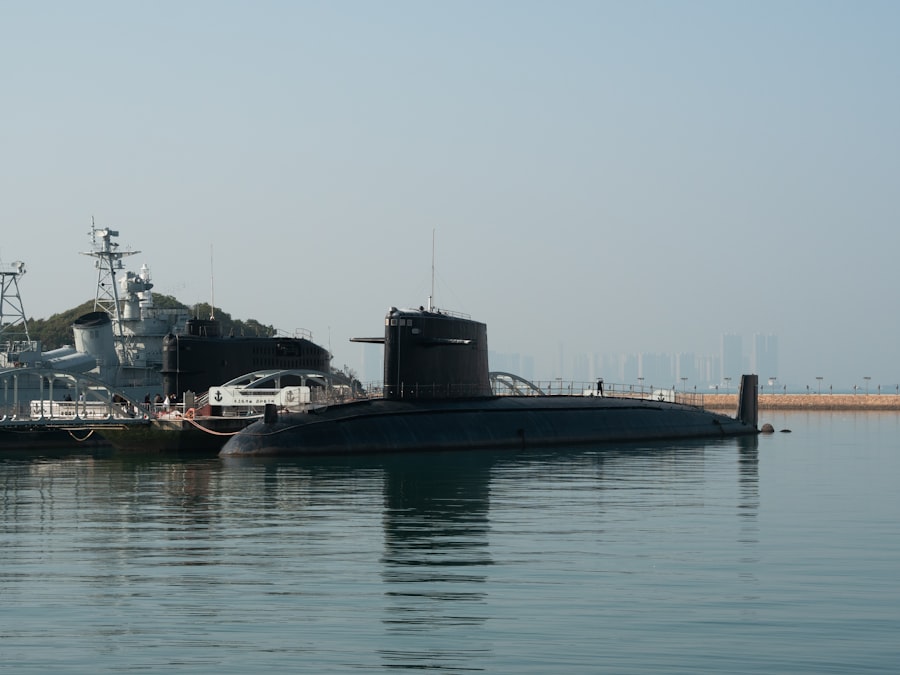
The complexity of modern submarines necessitates sophisticated automation and intuitive crew interfaces to optimize operational efficiency and reduce human workload.
Integrated Control Systems
Modern submarines feature highly integrated control systems that consolidate data from various sensors and manage multiple ship systems simultaneously.
Fly-by-Wire/Light Controls
Traditional hydraulic connections are increasingly being replaced by electrical or fiber-optic “fly-by-wire” or “fly-by-light” systems. These systems offer faster response times, reduced weight, and enhanced reliability, improving maneuverability and control precision. This is similar to the digital controls in modern aircraft, replacing physical linkages with electronic signals for greater accuracy.
Automated Damage Control
Automated damage control systems monitor the submarine’s structural integrity, detect leaks, and can even initiate corrective actions, such as isolating flooded compartments or activating fire suppression systems, significantly faster than human response times.
Ergonomics and Human-Machine Interface (HMI)
The interior design of modern submarines emphasizes ergonomics and intuitive human-machine interfaces to reduce crew fatigue and enhance situational awareness.
Multi-Function Displays
Instead of numerous dedicated gauges and dials, modern control rooms feature large, reconfigurable multi-function displays. These displays can present critical information visually, allowing operators to quickly assess complex situations and make informed decisions. This allows for a flexible and adaptable workspace, where information can be customized to the operator’s needs, much like a personalized dashboard.
Virtual Reality (VR) Training
VR and augmented reality (AR) technologies are increasingly being used for crew training, allowing operators to practice complex maneuvers and emergency procedures in a safe and realistic simulated environment before operating the actual vessel.
Submarine design has evolved significantly over the years, incorporating advanced technologies to enhance stealth and operational capabilities. For those interested in exploring this topic further, a related article can be found at In The War Room, where the latest innovations and strategic considerations in submarine engineering are discussed in detail. This resource provides valuable insights into the complexities of modern underwater warfare and the future of naval design.
Future Trends and Emerging Technologies
| Metric | Description | Typical Values | Units |
|---|---|---|---|
| Length | Overall length of the submarine | 50 – 170 | meters |
| Beam | Width of the submarine at its widest point | 6 – 15 | meters |
| Draft | Vertical distance between waterline and bottom of hull | 5 – 12 | meters |
| Displacement (surfaced) | Weight of water displaced when surfaced | 1,500 – 18,000 | tons |
| Displacement (submerged) | Weight of water displaced when submerged | 2,000 – 24,000 | tons |
| Maximum Operating Depth | Maximum safe depth for operation | 200 – 600 | meters |
| Test Depth | Depth at which the submarine is tested for structural integrity | 300 – 800 | meters |
| Speed (surfaced) | Maximum speed on surface | 10 – 25 | knots |
| Speed (submerged) | Maximum speed underwater | 20 – 35 | knots |
| Endurance | Maximum time submarine can operate without resupply | 30 – 90 | days |
| Crew Size | Number of personnel onboard | 30 – 150 | persons |
| Hull Material | Material used for pressure hull construction | HY-80 Steel, Titanium Alloy | — |
| Propulsion Type | Type of propulsion system | Nuclear, Diesel-Electric | — |
The evolution of submarine design is an ongoing process, with several developing technologies poised to redefine underwater performance.
Artificial Intelligence and Autonomous Operations
The integration of artificial intelligence (AI) and machine learning algorithms promises to revolutionize submarine operations. AI can assist in threat assessment, mission planning, and even operate certain systems autonomously, reducing the cognitive load on the human crew. Future submarines may feature increasingly sophisticated levels of autonomy, potentially leading to unmanned underwater vehicles (UUVs) that operate for extended periods without human intervention. This shift is analogous to the progress seen in the automotive industry, where self-driving capabilities are gradually being introduced.
Energy Storage and Endurance
Improving energy storage capabilities is critical for extending the submerged endurance of non-nuclear submarines.
Advanced Battery Technologies
Lithium-ion batteries and other advanced battery chemistries offer significantly higher energy densities compared to traditional lead-acid batteries. This translates to longer submerged endurance and higher burst power for non-nuclear submarines, reducing their reliance on air-breathing propulsion systems. This is akin to upgrading from a standard battery to a high-capacity power cell in a portable device, dramatically extending its operational life.
Fuel Cell Systems
Fuel cell technology, particularly proton exchange membrane (PEM) fuel cells, offers a quiet and efficient method of generating electricity without combustion, ideal for air-independent propulsion (AIP) systems in conventional submarines. These systems convert chemical energy directly into electrical energy, resulting in significantly reduced acoustic and thermal signatures.
Counter-Detection Technologies
While much effort is focused on stealth, future designs also consider technologies to actively counter detection.
Plasma Stealth
Research into plasma stealth, which involves creating a layer of ionized gas around the submarine to absorb or deflect radar and sonar waves, is an area of speculative but promising development. While still in nascent stages, such technology could fundamentally alter the dynamics of underwater detection.
Electromagnetic Anomaly Reduction
Reducing the vessel’s electromagnetic signature is another emerging area. This involves demagnetizing the hull and minimizing electromagnetic emissions from internal systems, making the submarine less detectable by magnetic anomaly detectors (MAD).
These advancements collectively contribute to a future where submarines are not only more capable and versatile but also fundamentally more elusive, extending their reach and effectiveness in the underwater domain. The ongoing pursuit of hydrodynamic efficiency, acoustic stealth, advanced sensor integration, and intelligent automation ensures that submarines will remain an indispensable asset in modern naval operations for the foreseeable future.
FAQs
What are the primary design considerations for submarines?
Submarine design primarily focuses on factors such as hull shape for hydrodynamics, structural strength to withstand deep-sea pressure, stealth capabilities to avoid detection, propulsion systems for efficient underwater travel, and life support systems to sustain the crew.
How does the hull shape affect a submarine’s performance?
The hull shape is critical for reducing water resistance and noise, enhancing speed and maneuverability. Most modern submarines use a teardrop-shaped hull to optimize hydrodynamic efficiency and minimize drag while maintaining structural integrity.
What materials are commonly used in submarine construction?
Submarines are typically constructed from high-strength steel alloys or titanium to withstand immense underwater pressure. Advanced composites and specialized coatings are also used to reduce sonar detection and improve durability.
How do submarines manage buoyancy and stability underwater?
Submarines control buoyancy using ballast tanks that can be filled with water to dive or with air to surface. Stability is maintained through careful weight distribution, control surfaces like fins and rudders, and computerized systems that adjust trim and balance during operations.
What propulsion systems are used in submarines?
Submarines use various propulsion systems including nuclear reactors for long endurance and high speed, diesel-electric engines for quieter operation, and air-independent propulsion (AIP) systems that allow extended underwater endurance without surfacing.