Project Azorian was an ambitious undertaking, a clandestine operation veiled in secrecy and fueled by an insatiable desire to reclaim what was lost. It was a gamble of colossal proportions, a daring heist masterminded by the United States government to recover a sunken Soviet submarine, the K-129, which had met its watery grave in the depths of the Pacific Ocean in 1968. The operation, shrouded in layers of espionage and technological ingenuity, aimed not only to retrieve the submarine but also to extract vital intelligence from its classified contents. The success or failure of Project Azorian hinges on a multifaceted examination of its objectives, execution, and ultimate impact.
The Loss of the K-129: A Silent Tragedy
The Soviet submarine K-129, a Golf-class ballistic missile submarine, met its demise on March 11, 1968. While the exact cause remains a subject of debate, the prevailing theory points to a catastrophic battery malfunction that led to a fire and subsequent explosion, causing the vessel to sink to a depth of approximately 15,000 feet in the Pacific Ocean, about 800 miles northwest of Hawaii. The loss was a significant blow to the Soviet Union, not only in terms of materiel but also in the potential intelligence that lay within its hull. The submarine was armed with nuclear-tipped ballistic missiles, and the prospect of these falling into the wrong hands, or their technology being analyzed by adversaries, was a chilling one.
The Intelligence Imperative: A Game of Cat and Mouse
In the high-stakes arena of the Cold War, intelligence was the golden currency. The United States, keenly aware of the K-129’s potential secrets, saw its sinking as an unprecedented opportunity. The submarine was believed to contain advanced sonar technology, encrypted communications equipment, and crucially, the payload of its missiles. The ability to examine these artifacts firsthand could provide a significant strategic advantage. It was akin to a chess grandmaster discovering an opponent’s playbook; the knowledge gained could revolutionize defensive and offensive capabilities. The CIA, in particular, recognized the unparalleled potential for espionage and scientific advancement that the sunken vessel represented. This intelligence imperative became the beating heart of Project Azorian.
The Birth of a Secret Mission: Operation Azorian Takes Shape
The concept of recovering the K-129 began to percolate within intelligence circles in the late 1960s. The sheer audacity of the idea—to lift a massive submarine from the crushing depths—was a testament to the era’s technological ambition and the desperate measures undertaken during the Cold War. Project Azorian, as it was codenamed, was birthed from this imperative. The initial challenges were immense. The technology for deep-sea salvage at such depths simply did not exist in a readily available form. This spurred a remarkable sprint of innovation, pushing the boundaries of engineering and naval architecture. The operation was designed to be the ultimate ghost in the machine, a stealthy maneuver carried out under the watchful, though presumably unaware, eyes of the Soviet Union.
The Project Azorian, a covert operation by the CIA in the 1970s aimed at recovering a sunken Soviet submarine, has been the subject of much intrigue and analysis over the years. A related article that delves into the complexities and outcomes of this ambitious endeavor can be found at In the War Room. This piece explores both the technological innovations employed during the operation and the strategic implications of its eventual success and failures, providing a comprehensive overview of one of the most fascinating espionage efforts of the Cold War era.
The Technological Marvel: Building the Keys to the Deep
The Hughes Glomar Explorer: A Ship Like No Other
At the heart of Project Azorian’s design was the Hughes Glomar Explorer, a purpose-built vessel that was a marvel of modern engineering for its time. Owned by Howard Hughes’ Summa Corporation and disguised as a deep-sea mining ship, its true purpose was far more clandestine. The ship was equipped with a revolutionary lifting system, a massive cradle known as the “Clementine,” designed to partially enclose and lift the submarine. This was no ordinary crane; it was a complex orchestration of hydraulics, cables, and sophisticated control systems capable of descending thousands of feet and gripping a target weighing thousands of tons. The sheer scale of the Explorer and its specialized equipment made it a ghost ship, its true mission obscured by a veil of legitimate commercial activity.
The Need for Precision and Secrecy: Navigating the Abyss
The technical challenges of the recovery were astronomical. The immense pressure at 15,000 feet could crush any conventional submersible. The K-129 itself was likely in multiple pieces, adding to the complexity of grasping and lifting it. Furthermore, the operation had to be conducted with utmost secrecy. The presence of a Soviet submarine in American operational waters, even a sunken one, could have sparked an international incident. Thus, the Hughes Glomar Explorer operated under a perpetual cover story, and the recovery operation itself was a meticulous ballet performed in the dark, with every movement calculated to avoid detection. The engineers and crew were tasked with a delicate dance with the ocean’s unforgiving physics.
Innovation in the Face of Adversity: Pushing Engineering Boundaries
Project Azorian was a crucible for technological innovation. The development of the lifting system, the specialized tools for manipulation at extreme depths, and the advanced sonar and navigation equipment all represented significant leaps forward. The concept of a “capture vehicle” that could dock with the submarine was unprecedented. The entire operation was a testament to human ingenuity fueled by national security concerns. It was a grand experiment, a scientific and engineering dare where the stakes were as high as the ocean was deep. The success of the mission hinged on the precise execution of these groundbreaking technologies.
The Operation Unfolds: A Delicate Ballet in the Deep
Locating the Prize: The Long and Arduous Search
Before any recovery could begin, the K-129 had to be found. This involved extensive sonar surveys and the deployment of specialized submersibles. The vastness of the Pacific Ocean is a humbling expanse, and pinpointing a specific wreck at such depths was a monumental task. The search was a relentless hunt, a search for a needle in a haystack, but with the added complication of the haystack being kilometers deep and under immense pressure. The US Navy and intelligence agencies employed their most advanced technologies to comb the seabed, a process that took years and considerable resources.
The “Whiskey-15” Dive: The Moment of Truth
The first attempt at recovery, codenamed “Whiskey-15,” took place in 1974. The Hughes Glomar Explorer descended, and the massive lifting arm was deployed. The Clementine, the specialized capture vehicle, was lowered, designed to cradle the submarine. The tension onboard must have been palpable as the colossal structure made its way through the crushing darkness. The success of this phase was critical, as any failure here would have meant the loss of the entire project and perhaps the K-129’s ultimate burial. This was the moment where theory met terrifying reality.
The Partial Success: A Glimpse of the Prize
During the Whiskey-15 attempt, the lifting process began. However, the K-129, as feared, was not intact. The immense forces of the ocean had taken their toll. As the submarine was brought closer to the surface, a significant portion of it broke away. The forward section, containing some of the most sensitive intelligence, including the missile launch tubes, was lost and sank back into the ocean. While the salvaged portion yielded some valuable material, it was a bittersweet victory, a testament to the immense challenges of deep-sea recovery. The dream of a complete retrieval had been dashed against the unforgiving realities of physics and naval decay.
Aftermath and Revelation: The Unveiling of a Secret
The Cover Story: A Newspaper Expedition
To mask the true nature of Project Azorian, a carefully crafted cover story was employed. The Hughes Glomar Explorer was presented as a deep-sea mining expedition, seeking manganese nodules. This elaborate charade, involving staged press conferences and fictitious scientific endeavors, successfully deflected much of the Soviet Union’s attention. The story of searching for valuable minerals provided a plausible justification for the ship’s presence and its extensive equipment. It was a masterful piece of misdirection, a smoke screen designed to keep the real prize hidden from prying Soviet eyes.
The Slow Unraveling: Declassification and Disclosure
For decades, the true purpose of Project Azorian remained a closely guarded secret. It was only through subsequent declassifications and investigative journalism that the full scope of the operation, and its partial success, began to emerge. The revelation of the CIA’s involvement and the audacious nature of the heist shocked many. The public’s perception of the Cold War, often a backdrop of political maneuvering and proxy conflicts, was given a glimpse into its more clandestine and technologically driven dimensions. The story of Project Azorian was akin to a historical artifact, buried for years, finally brought to light, revealing its complex and often hidden contours.
The Legacy: Intelligence Gains and Unanswered Questions
The intelligence that was retrieved from the salvaged section of the K-129 was certainly valuable. It provided insights into Soviet submarine technology, naval capabilities, and potentially code-breaking information. However, the incomplete nature of the recovery meant that some of the most sought-after secrets may have remained lost to the ocean’s embrace. The operation spurred advancements in deep-sea salvage technology, proving that even the most formidable depths could, to a degree, be conquered. Yet, the nagging question of what was truly lost and what could have been gained continues to fuel speculation and historical debate. The legacy of Project Azorian is a complex tapestry woven with threads of remarkable achievement and tantalizing incompleteness.
The intriguing story of Project Azorian, which aimed to recover a sunken Soviet submarine, has sparked much debate regarding its ultimate success or failure. For a deeper understanding of the complexities surrounding this covert operation, you can explore a related article that delves into the various challenges faced by the CIA during the mission. This article provides valuable insights into the technological innovations employed and the political ramifications that followed, making it a fascinating read for anyone interested in Cold War espionage. To learn more, visit this link.
Success or Failure? A Nuanced Verdict
| Metric | Details |
|---|---|
| Operation Name | Project Azorian |
| Objective | Recovery of Soviet submarine K-129 from the Pacific Ocean floor |
| Date of Operation | July 1974 |
| Location | North Pacific Ocean, approximately 1,560 nautical miles northwest of Hawaii |
| Recovery Vessel | Glomar Explorer |
| Depth of Submarine | Approximately 16,500 feet (5,000 meters) |
| Amount of Submarine Recovered | Approximately 38 feet (11.5 meters) of the submarine’s hull |
| Success Level | Partial success – recovered part of the submarine but lost a section during lift |
| Intelligence Gained | Some cryptographic materials and nuclear missiles were recovered |
| Failure Points | Major section of the submarine broke off and sank back to the ocean floor |
| Secrecy | Operation remained classified for many years; publicly revealed in the 1970s |
Defining Success: When is a Heist Truly Successful?
The question of whether Project Azorian was a success or a failure is not easily answered with a simple yes or no. A true heist, in its purest form, implies the complete acquisition of the intended prize. In this regard, Project Azorian fell short. The entirety of the K-129 and all its classified contents were not retrieved. The forward section, crucial for understanding missile technology and potentially other sensitive data, was lost. However, success in intelligence operations is rarely black and white. It is often measured in degrees of advantage gained and risks mitigated.
The Pragmatic View: Intelligence Achieved
From a pragmatic intelligence perspective, Project Azorian can be considered a qualified success. The United States did gain valuable intelligence from the salvaged portion of the K-129. The insights provided likely contributed to a better understanding of Soviet naval capabilities and technological advancements. The sheer fact that a significant portion of a Soviet submarine could be brought up from such extreme depths was a technological triumph that demonstrated American ingenuity and resolve during the Cold War. This retrieved intelligence acted as a critical piece of a larger puzzle, informing strategic decisions and counter-intelligence efforts. It was like finding a significant part of a treasure map, even if the complete map remained elusive.
The Idealistic View: The Lost Potential
However, from an idealistic perspective, if the goal was complete retrieval and the acquisition of all potential intelligence, then Project Azorian must be deemed a failure. The lost section represented a significant unturned stone, a potential treasure trove of information that remained unexamined. The knowledge that specific, vital components were left behind is a constant reminder of the operation’s limitations. The “what ifs” loom large, leaving a sense of what might have been if the technological or operational challenges had been overcome completely. The dream of a perfect extraction was shattered, leaving a scar of incompleteness on an otherwise extraordinary undertaking. The grand ambition was tempered by the humbling power of the ocean and the inherent difficulties of deep-sea engineering.
The Enduring Enigma: A Legacy of Ambiguity
Ultimately, Project Azorian stands as a monument to daring ambition and the relentless pursuit of knowledge in the face of immense challenges. It was a testament to what human ingenuity, fueled by the pressures of geopolitical rivalry, could achieve. While it did not achieve a complete victory in its ambitious heist, the intelligence gained and the technological advancements spurred ensure that its story is far from one of unqualified failure. It remains an enduring enigma, a fascinating chapter in the history of espionage and deep-sea exploration, a reminder that even in the darkest depths, the pursuit of knowledge can illuminate the most unexpected pathways, even if they are not entirely illuminated.
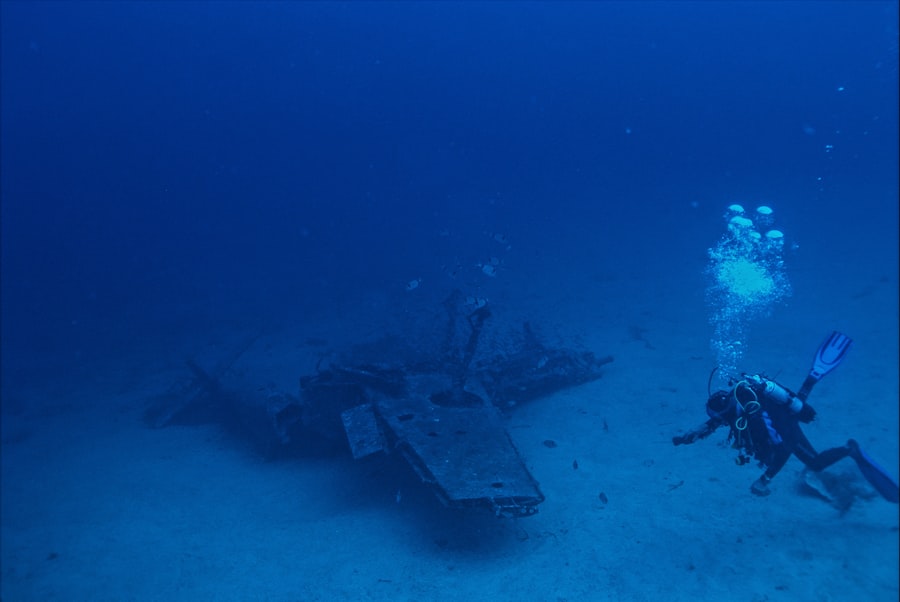
WATCH NOW ▶️ The CIA’s Impossible Mission To Steal A Nuclear Submarine
FAQs
What was Project Azorian?
Project Azorian was a secret CIA operation in the early 1970s aimed at recovering a sunken Soviet submarine, K-129, from the Pacific Ocean floor using a specially designed ship called the Hughes Glomar Explorer.
Was Project Azorian considered a success or a failure?
Project Azorian is generally considered a partial success. While the operation managed to recover a significant portion of the submarine, much of the vessel broke apart during the lift, and the full recovery of the submarine was not achieved.
What was the main objective of Project Azorian?
The main objective was to retrieve the Soviet submarine K-129 to gather intelligence, including cryptographic materials and nuclear missile technology, during the Cold War.
Why was Project Azorian kept secret?
The project was kept secret to avoid diplomatic tensions with the Soviet Union and to protect the sensitive intelligence-gathering methods and technology used in the operation.
What happened to the Hughes Glomar Explorer after the project?
After Project Azorian, the Hughes Glomar Explorer was repurposed for commercial deep-sea mining exploration and later sold. The ship’s involvement in the CIA operation remained classified for many years.