
In the annals of Cold War espionage, few operations captivate the imagination quite like Project Azorian. This clandestine mission, undertaken by the United States Central Intelligence Agency (CIA) in the mid-1970s, aimed to recover a sunken Soviet submarine, the K-129, from the Pacific Ocean floor. The operation, spanning years of meticulous planning and technological innovation, culminated in an extraordinary feat of engineering and intelligence gathering. The recent release of rare wreckage photographs offers an unprecedented glimpse into this audacious undertaking, allowing a deeper appreciation for the scale and complexity of the endeavor.
Project Azorian was born from the detection of a Soviet Golf II-class ballistic missile submarine, the K-129, at the bottom of the Pacific Ocean in August 1968. The submarine, carrying three R-21 nuclear ballistic missiles, had sunk approximately 1,560 nautical miles northwest of Hawaii in March of the same year. The intelligence value of recovering such a vessel, particularly its codebooks, torpedoes, and nuclear missiles, was immense. The prospect of understanding Soviet naval technology and potentially gaining insights into their nuclear capabilities fueled the high-stakes project.
Initial Discovery and Surveillance
The K-129 was initially located by the US Navy’s sophisticated SOSUS (Sound Surveillance System) network. The system, designed to track Soviet submarines, registered an unusual acoustic event. Subsequent analysis, involving hydrophones and meticulous data processing, narrowed down the approximate location of the wreck. This initial detection ignited the spark for what would become one of the most ambitious salvage operations in history.
The Problem of Secrecy
Maintaining absolute secrecy was paramount. The geopolitical implications of openly salvaging a Soviet nuclear submarine during the Cold War were staggering. Any overt attempt would be interpreted as a hostile act and could have escalated international tensions significantly. This need for discretion became the driving force behind the elaborate cover story and the clandestine nature of Project Azorian. The entire operation was conceived within a veil of secrecy, akin to a meticulous stage play with the ocean floor as its grand theater.
For those interested in the intriguing details surrounding the Project Azorian wreckage photos, a related article can be found at In The War Room. This article delves into the historical significance of the project and provides additional context about the recovery efforts of the sunken Soviet submarine, highlighting the technological advancements and geopolitical implications of the operation.
The Glomar Explorer: A Ship Like No Other
The centerpiece of Project Azorian was the Hughes Glomar Explorer, a purpose-built salvage vessel designed and constructed for this singular mission. To the outside world, the Glomar Explorer was a deep-sea mining ship, ostensibly engaged in manganese nodule recovery. This elaborate cover provided a plausible explanation for its unusual design and capabilities.
Engineering Marvels
The Glomar Explorer was a marvel of contemporary engineering. Its most distinctive feature was a massive, retractable “moon pool” in its center, through which a giant mechanical claw, known as the Clementine, would be lowered to the seabed. The ship was equipped with dynamic positioning systems to maintain a precise location over the target, even in challenging sea conditions. Its design was a testament to human ingenuity, pushing the boundaries of what was thought possible in deep-ocean recovery.
The Clementine Claw
The Clementine, a colossal grappling device, was specifically engineered to encase and lift a significant portion of the K-129. Weighing several hundred tons, it was designed with multiple articulated arms and clamps to grasp the submarine’s hull. The successful operation of this intricate mechanism at depths exceeding 16,000 feet represented an unprecedented technical achievement.
The Recovery Operation: A Dance with the Deep
The actual recovery operation was fraught with challenges. The immense depths, the fragile nature of the sunken submarine, and the constant threat of equipment failure demanded meticulous planning and execution. The process of lowering the Clementine, aligning it with the K-129, and then slowly lifting the colossal wreckage was an engineering ballet performed on an underwater stage.
The Long Descent
Lowering the Clementine to a depth of over 16,000 feet was a painstaking process. The descent was slow and deliberate, requiring careful monitoring to ensure the integrity of the lift pipe and the precise positioning of the claw. Imagine lowering a delicate, enormous mechanism through miles of dark, turbulent water, aiming for a target the size of a train, unseen and kilometers beneath.
The Partial Success
Despite the extraordinary efforts, the recovery was not entirely successful. During the lifting phase, a significant portion of the K-129 broke away from the Clementine due to structural fatigue and the immense stresses involved. This catastrophic failure meant that only a third of the submarine was ultimately recovered. While disappointing in terms of the initial ambitious goals, the recovered section still yielded invaluable intelligence.
The Retrieved Secrets
The recovered portion of the K-129 contained significant intelligence assets. Among the retrieved items were two nuclear torpedoes, various cryptographic equipment, and the remains of six Soviet submariners. The recovery of these artifacts provided crucial insights into Soviet technology and, perhaps more profoundly, offered a poignant reminder of the human cost of the Cold War. The remains of the sailors were subsequently given a solemn burial at sea with full military honors, a testament to the unwritten code of respect even between adversaries.
The Unmasking: A Web of Leaks and Exposure
The clandestine nature of Project Azorian was not destined to last. Over time, a series of leaks and investigative reporting slowly unraveled the meticulously constructed cover story. The exposure of the operation represented a significant blow to CIA secrecy and ignited public debate about government overreach and classified programs.
The Rona and Glomar Connection
The initial revelations stemmed from public interest in Howard Hughes’s involvement and the unusual nature of the Glomar Explorer. Journalist Jack Anderson, known for his investigative reporting, played a pivotal role in exposing aspects of the operation. He drew connections between the Glomar Explorer and the K-129 incident, raising suspicions about the ship’s true purpose.
Public Outcry and Congressional Hearings
As more details emerged, public and congressional pressure mounted. The “Glomar Gambit,” as the CIA’s standard non-denial, non-affirmation response became known, further fueled speculation. The eventually confirmed details of Project Azorian triggered congressional hearings and intense scrutiny, highlighting the delicate balance between national security and public transparency. The incident became a landmark case in the ongoing struggle between government secrecy and the public’s right to know.
The recent discovery of the Project Azorian wreckage photos has sparked significant interest among historians and enthusiasts alike. For those looking to delve deeper into the fascinating history behind this covert operation, a related article provides valuable insights and context. You can explore more about the intricacies of the mission and its implications by visiting this detailed analysis. This resource not only highlights the technological advancements of the time but also sheds light on the geopolitical landscape during the Cold War era.
Rare Wreckage Photos: An Unprecedented Glimpse
| Metric | Details |
|---|---|
| Project Name | Project Azorian |
| Objective | Recovery of Soviet submarine K-129 wreckage |
| Date of Operation | 1974 |
| Location | North Pacific Ocean, near Hawaii |
| Depth of Wreckage | Approximately 16,500 feet (5,000 meters) |
| Number of Photos Taken | Estimated 100+ (classified) |
| Photo Type | Black and white, underwater reconnaissance |
| Photo Purpose | Assessment of wreckage condition and recovery planning |
| Photo Availability | Mostly classified; some declassified images available |
| Significance | Provided critical intelligence on Soviet submarine technology |
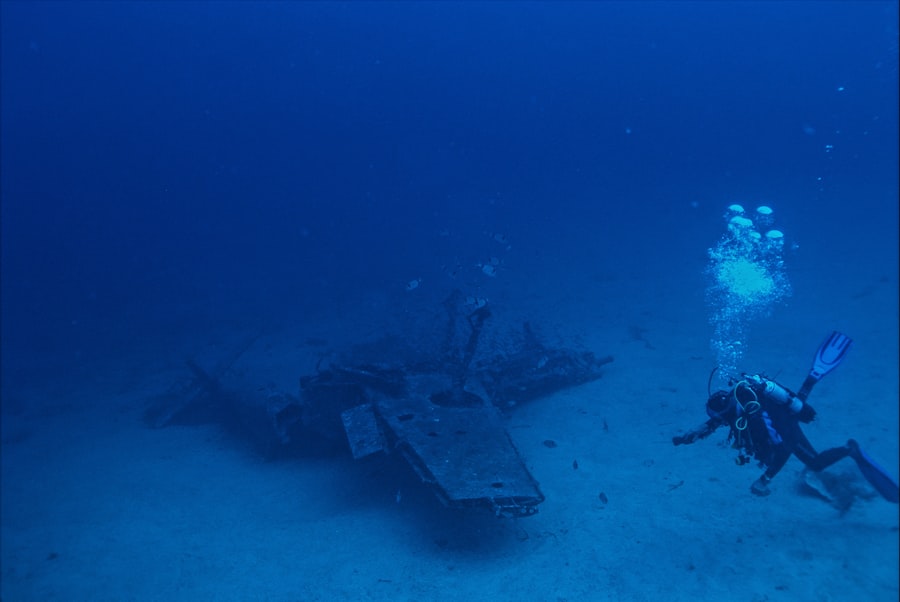
For decades, detailed imagery of the K-129 wreckage remained classified. The recent release of rare photographs offers an unparalleled opportunity to visualize the scale and condition of the sunken submarine, providing a tangible link to this extraordinary historical event. These images serve as a powerful testament to the challenges faced by Project Azorian’s engineers and technicians.
The Silent Witness
The photographs reveal a submarine severely damaged by its implosion as it descended to the ocean floor. The hull is buckled and torn, a silent witness to the immense pressures it endured. The images portray a scene of stark desolation, a metal hulk resting in the eternal darkness, eternally preserved yet violently distorted.
Details of the Recovery
The images also provide glimpses of the Clementine’s grappling mechanisms and the sections of the submarine that were successfully lifted. These detailed views illuminate the sheer complexity of engineering required to undertake such a sensitive operation thousands of meters beneath the surface. They show the specific points where the massive claw engaged with the K-129, offering a visual narrative of the partial recovery. One can observe the deep gouges and deformations on the sections of the hull that were subjected to the forces of the recovery attempt, revealing the titanic struggle between machine and deep-sea pressure.
Historical Significance of the Images
Beyond their technical details, these photographs contribute significantly to the historical record of the Cold War. They provide a visual dimension to a story previously understood primarily through narrative and declassified documents. As such, they offer a powerful educational tool for understanding the technological prowess and the high-stakes espionage that characterized that era. For historians and enthusiasts alike, these images are invaluable, akin to peering through a window into a bygone era of covert operations and technological daring. They concretize a narrative that has long been whispered in the shadows of Cold War history, finally bringing vivid, visual evidence to the surface.
WATCH NOW ▶️ The CIA’s Impossible Mission To Steal A Nuclear Submarine
FAQs
What was Project Azorian?
Project Azorian was a secret CIA operation in the early 1970s aimed at recovering a sunken Soviet submarine, K-129, from the Pacific Ocean floor using a specially designed ship called the Hughes Glomar Explorer.
Why are photos of the Project Azorian wreckage significant?
Photos of the Project Azorian wreckage provide rare visual documentation of the recovered submarine parts and the recovery operation, offering insights into Cold War espionage efforts and underwater salvage technology.
Where was the K-129 submarine located and recovered?
The K-129 submarine sank approximately 1,560 nautical miles northwest of Hawaii in the Pacific Ocean. The recovery operation took place at a depth of about 16,500 feet (5,000 meters) on the ocean floor.
What challenges did the Project Azorian recovery face?
The operation faced extreme technical challenges due to the great depth of the wreck, the need for secrecy during the Cold War, and the complexity of designing equipment capable of lifting heavy submarine parts from the ocean floor.
Are the Project Azorian wreckage photos publicly available?
Some photos and information about Project Azorian have been declassified and released to the public, but many details and images remain classified or heavily redacted due to the sensitive nature of the mission.