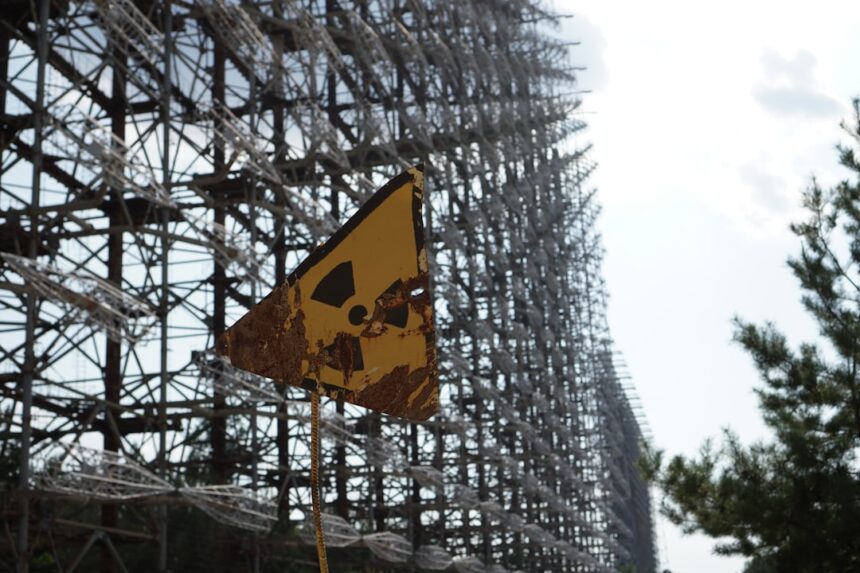
Soviet nuclear strategy during the Cold War was a complex and evolving doctrine, shaped by ideological imperatives, geopolitical realities, and a persistent, often paranoid, sense of existential threat. For decades, the Soviet Union engaged in a high-stakes chess match with the United States, where each move on the strategic chessboard carried the potential for global annihilation. Understanding this period is crucial, for the echoes of these strategic calculations continue to resonate in the contemporary security landscape. The Soviet approach to nuclear weapons was not merely a defensive posture; it was a fundamental pillar of its grand strategy, designed to achieve political objectives, deter aggression, and, in the most extreme circumstances, secure the survival of the socialist state.
The development of Soviet nuclear capabilities was intrinsically linked to the broader narrative of communist ideology. From the outset, nuclear weapons were viewed through the lens of class struggle. They were seen not just as instruments of war, but as potent symbols of industrial might and scientific advancement, essential for demonstrating the superiority of the socialist system. This ideological framing informed every aspect of its nuclear planning, from the initial research and development to the articulation of war-fighting doctrines and the rhetoric surrounding their use. The Soviet Union’s pursuit of nuclear parity with the United States was, therefore, more than a military necessity; it was a political imperative, a testament to its ability to challenge and even surpass its capitalist adversary.
The strategic thinking was also deeply influenced by the harsh lessons of World War II. The immense devastation wrought upon the Soviet Union left an indelible mark on its leadership, fostering a profound sense of vulnerability and a deep-seated desire to prevent such a catastrophe from ever recurring. This collective trauma translated into a strategic culture that prioritized the preservation of the state above all else, and for which nuclear weapons became the ultimate guarantor of that preservation. The Soviet leadership perceived the West, particularly the United States, as inherently hostile, driven by an expansionist agenda that sought to encircle and ultimately dismantle the communist bloc. This perception fueled a constant state of alert, a preparedness to act decisively, and a willingness to consider extreme measures to defend what they considered their rightful sphere of influence.
Early Foundations: From Conventional Dominance to Nuclear Reality
The initial Soviet approach to nuclear weapons was characterized by a degree of skepticism and a reliance on established, albeit outdated, military doctrines. Having emerged from World War II with a formidable conventional army, the Soviet Union was initially slow to fully grasp the transformative potential of nuclear arms. However, the successful detonation of its first atomic bomb in 1949, a remarkably swift achievement, signaled a decisive shift. This event was not a sudden revelation but rather the culmination of sustained scientific and industrial effort, fueled by both indigenous innovation and intelligence gathering. The geopolitical environment of the late 1940s and early 1950s, dominated by the nascent Cold War and the Korean War, underscored the growing importance of nuclear weapons in the arsenals of major powers.
The Sputnik Shock and the Missile Gap
The launch of Sputnik in 1957 was a watershed moment. It demonstrated Soviet technological prowess and, more importantly, the ability to deliver a nuclear payload across intercontinental distances. This achievement ignited fears in the West of a “missile gap,” a perceived Soviet advantage in intercontinental ballistic missiles (ICBMs) that could enable a pre-emptive strike. While the extent of this gap was later debated and arguably exaggerated, its psychological impact was profound, spurring increased Western defense spending and a renewed focus on missile defense and retaliatory capabilities. For the Soviet Union, Sputnik was a potent symbol of its ascendance and a tangible demonstration of its nuclear deterrent. It shifted the strategic conversation from the primacy of bombers to the emerging era of missile warfare.
From Retaliation Only to Flexible Response in Theory
In the early years, Soviet doctrine was often characterized as favoring a massive retaliatory strike. The logic was straightforward: any attack on the Soviet Union, especially a nuclear one, would be met with overwhelming nuclear force. However, as its arsenal grew and diversified, and as it observed Western strategic thinking, the concept of a more flexible, graduated response began to emerge. This was not a full embrace of NATO’s flexible response doctrine, which emphasized the ability to respond at various levels of escalation, but rather a recognition that a monolithic, all-or-nothing response might not always be the most advantageous or survivable option. The Soviets began to consider scenarios involving the use of tactical nuclear weapons and selective strikes, though these concepts remained largely theoretical for much of the Cold War, overshadowed by the overarching concern of all-out strategic war.
The Doctrine of Mutual Assured Destruction (MAD) and its Soviet Interpretation
Mutual Assured Destruction, or MAD, became the grim reality that governed superpower nuclear relations. It posits that a full-scale nuclear exchange between two or more opposing sides would result in the complete annihilation of both the attacker and the defender. This concept, though not explicitly articulated by the Soviets in the same terms as Western strategists, formed the bedrock of their nuclear planning. The Soviets understood, perhaps even more viscerally than some on the Western side, the devastating consequences of nuclear war. Their primary objective was therefore to deter an initial nuclear attack by ensuring that they possessed sufficient retaliatory capability to inflict unacceptable damage on an aggressor, even after enduring a first strike.
The “Launch on Warning” Dilemma
A key aspect of Soviet strategic readiness was the concept of “launch on warning.” This doctrine, or at least the operational readiness to implement it, implied that Soviet forces would launch their missiles upon receiving credible intelligence of an incoming nuclear attack, rather than waiting for the impact. This strategy was driven by the fear of decapitation – the destruction of Soviet leadership and command and control systems – rendering any subsequent retaliation impossible. However, it also introduced the terrifying possibility of accidental war, where false alarms or misinterpretations could trigger a catastrophic response. The “dead hand” or “Perimeter” system, a highly controversial and complex automated retaliatory system, is often associated with this era, though its precise operational status and deployment remain subject to debate among historians.
The Concept of “Escalation Control”
While MAD suggested a binary outcome of total war or no war, Soviet strategists also grappled with the concept of “escalation control.” This involved the idea that a nuclear conflict could, theoretically, be managed or limited to prevent it from spiraling into a global conflagration. This often translated into exercises and planning for the use of tactical nuclear weapons on the battlefield, particularly in the context of a European war. The Soviets believed that demonstrating a willingness to use nuclear weapons at lower levels of conflict could deter escalation by the West, or at least provide them with an advantage if conflict did occur. However, the inherent unpredictability of nuclear escalation meant that “control” was always a fragile and theoretical construct.
The Evolution of the Soviet Nuclear Arsenal: From Bombers to Ballistic Missiles
The Soviet Union’s nuclear arsenal underwent a continuous process of modernization and expansion throughout the Cold War. Initially reliant on bombers for nuclear delivery, the Soviets dramatically shifted their focus to the development of intercontinental ballistic missiles (ICBMs) and submarine-launched ballistic missiles (SLBMs). This shift reflected an understanding that mobile, survivable forces were essential for maintaining a credible retaliatory capability in the face of evolving Western strategic defenses. The sheer quantity and variety of Soviet nuclear weapons produced were staggering, encompassing a wide range of strategic and tactical options.
Strategic Rocket Forces: The Spearhead
The Strategic Rocket Forces (RVSN) were the pride of the Soviet military, the ultimate arbiter of its nuclear power. They oversaw the vast majority of Soviet ICBMs, deployed in hardened silos and on mobile launchers. The RVSN were a highly disciplined and technologically sophisticated branch, tasked with maintaining the readiness and operability of a formidable nuclear deterrent. Their development was a monumental undertaking, involving extensive research, engineering, and infrastructure development, all geared towards one singular purpose: possessing the capacity to strike any target on earth with devastating force.
The Submarine Threat: The Silent Deterrent
The Soviet Navy played a crucial role in the nuclear equation, particularly through its development of nuclear-powered ballistic missile submarines (SSBNs). These submarines represented a highly survivable component of the Soviet nuclear deterrent, capable of lurking in the depths of the oceans, hidden from enemy detection. The ability to launch a nuclear strike from a submerged platform provided a significant hedge against a surprise attack on land-based missile fields and command centers. The continuous modernization of their SSBN fleets, with progressively larger and more capable submarines, ensured that the “boomers” remained a potent and unnerving presence in the strategic calculus.
Tactical Nuclear Weapons: The Battlefield Edge
Beyond strategic systems, the Soviet Union developed an extensive arsenal of tactical nuclear weapons. These were designed for use on the battlefield, to neutralize enemy formations, disrupt logistics, and gain a decisive advantage in conventional conflicts. The proliferation of such weapons, particularly in Eastern Europe, created a complex and dangerous environment. The theoretical integration of tactical nuclear weapons into conventional warfare plans was a hallmark of Soviet military thinking, reflecting a pragmatic, if grim, approach to achieving victory in a potential conflict with NATO.
The Role of Intelligence and Counterintelligence
In the high-stakes nuclear game, intelligence and counterintelligence played an oversized role. For the Soviet Union, understanding the capabilities, intentions, and strategic thinking of the United States was paramount. Conversely, preventing the United States from gaining a decisive advantage through intelligence gathering or technological breakthroughs was equally critical. The relentless pursuit of intelligence, often through covert means, was a constant undercurrent of the Cold War, shaping strategic decisions and fueling paranoia on both sides.
Espionage and Technological Acquisition
The Soviet Union invested heavily in espionage, both human intelligence (HUMINT) and signals intelligence (SIGINT), to obtain sensitive information about Western nuclear programs, missile technology, and strategic planning. This included efforts to steal technological blueprints, acquire scientific data, and understand the decision-making processes within Western governments and military establishments. The acquisition of such information was crucial for closing the perceived technological gap, for refining their own weapon designs, and for anticipating potential threats.
Countering Western Intelligence Efforts
Simultaneously, the Soviet Union dedicated significant resources to counterintelligence, aiming to thwart Western espionage operations and protect its own sensitive nuclear secrets. This involved extensive surveillance, agent recruitment and management, and sophisticated disinformation campaigns. The constant struggle to maintain secrecy and deny the West crucial information was a vital component of their strategic defense, a veiled war waged in the shadows, where the stakes were as high as any battlefield.
The Legacy of Soviet Nuclear Strategy
The end of the Cold War and the dissolution of the Soviet Union marked a seismic shift in global geopolitics and, consequently, in nuclear strategy. However, the legacy of Soviet Cold War nuclear planning continues to cast a long shadow. The sheer scale of the Soviet nuclear arsenal, the strategic doctrines it embodied, and the paranoia that often underpinned its development have left an enduring imprint on the international security landscape.
Arms Control and Disarmament Efforts
The era of intense superpower nuclear competition also spurred significant efforts in arms control and disarmament. Treaties like SALT (Strategic Arms Limitation Talks) and START (Strategic Arms Reduction Treaty) were born from the mutual recognition of the existential threat posed by nuclear weapons. These agreements, while often fraught with difficulty and suspicion, represented a critical step in managing the nuclear balance and de-escalating tensions. The lessons learned from these negotiations remain invaluable in contemporary efforts to prevent nuclear proliferation and pursue disarmament.
The Continued Relevance of Deterrence Theory
The theoretical underpinnings of Soviet nuclear strategy, particularly the concept of deterrence, remain central to contemporary thinking about nuclear weapons. The principles of assured destruction, the importance of survivable retaliatory forces, and the psychological dynamics of nuclear brinkmanship are all concepts that, while born in the crucible of the Cold War, continue to inform the strategic calculations of nuclear-armed states today. The ghost of Soviet strategic thought, therefore, continues to haunt the halls of defense ministries and strategic think tanks worldwide.
In conclusion, Soviet nuclear strategy during the Cold War was a monumental human endeavor, driven by a complex interplay of ideology, fear, and strategic ambition. It was a grand, and often terrifying, experiment in power, where the ultimate stakes were nothing less than the survival of civilization. Understanding this history is not merely an academic exercise; it is a vital imperative for navigating the present and future of nuclear security. The choices made by Soviet leaders and strategists, though decades removed, continue to shape the world we inhabit, serving as both a cautionary tale and a testament to the enduring power of strategic thought in the face of existential threats.

WATCH NOW ▶️ The CIA’s Impossible Mission To Steal A Nuclear Submarine
FAQs
What was the primary goal of Soviet nuclear planning during the Cold War?
The primary goal of Soviet nuclear planning during the Cold War was to develop and maintain a credible nuclear deterrent against the United States and its NATO allies, ensuring the USSR’s security and strategic parity.
How did the Soviet Union’s nuclear strategy differ from that of the United States?
The Soviet Union emphasized a strategy of massive retaliation and maintaining a large arsenal of intercontinental ballistic missiles (ICBMs) and strategic bombers, focusing on the capability to deliver a devastating counterstrike, whereas the U.S. developed a more flexible response strategy including tactical nuclear weapons.
What role did the Soviet military-industrial complex play in nuclear planning?
The Soviet military-industrial complex was crucial in nuclear planning, responsible for the research, development, production, and deployment of nuclear weapons and delivery systems, ensuring the USSR could sustain and modernize its nuclear forces throughout the Cold War.
How did arms control agreements impact Soviet nuclear planning?
Arms control agreements such as the Strategic Arms Limitation Talks (SALT) and the Intermediate-Range Nuclear Forces Treaty (INF) influenced Soviet nuclear planning by imposing limits on certain types of weapons and delivery systems, leading to adjustments in strategy and force structure.
What was the significance of Soviet nuclear doctrine during the Cold War?
Soviet nuclear doctrine was significant because it outlined the conditions under which nuclear weapons would be used, emphasizing deterrence, the possibility of limited nuclear war, and the importance of maintaining second-strike capability to prevent a nuclear conflict.