The wreckage of the Soviet submarine K-129, resting at the bottom of the Pacific Ocean, has long been a silent enigma. Its catastrophic destruction in 1968, a mere 20 days into its patrol, ignited a firestorm of speculation. While the official Soviet explanation pointed to a catastrophic battery malfunction, the sheer scale of the loss, the depths at which the submarine was found, and the subsequent clandestine recovery operation by the United States fueled a multitude of theories, each a thread in the complex tapestry of Cold War intrigue. This article will attempt to unravel these theories, examining the available evidence and the persistent questions that continue to shroud the K-129’s final moments.
The Soviet Union, upon belatedly acknowledging the loss of the K-129, offered a streamlined and, to many, unconvincing explanation. The official cause cited was a grave equipment failure, specifically a fire in the battery compartment that escalated into an uncontrolled explosion.
The Role of Battery Explosions
Submarine batteries, particularly the lead-acid types common in that era, are potent sources of energy but also carry inherent risks. When charging, they release hydrogen gas, a highly flammable and explosive substance. If ventilation systems fail or if a spark ignites the hydrogen, a devastating explosion can occur. The K-129, a Romeo-class diesel-electric submarine, would have relied heavily on these batteries for submerged operations.
The Likelihood of a Cascade Failure
The theory suggests that a malfunction in the battery charging system or a leak within the battery compartment could have led to a buildup of hydrogen. A subsequent ignition source, perhaps a stray spark from electrical equipment or even friction, would then trigger the detonation. This initial explosion, powerful enough to breach the hull, could have then led to the submarine’s rapid descent and subsequent destruction due to immense water pressure. However, the precise sequence of events and the specific failure mechanism have remained subjects of debate, leading to broader speculation.
The mysterious explosion of the K-129 submarine has sparked numerous theories and debates among historians and military enthusiasts alike. For a deeper dive into the various hypotheses surrounding this incident, you can explore the article titled “Unraveling the K-129 Mystery” on In The War Room, which examines the potential causes and implications of the explosion. To read more about this intriguing topic, visit In The War Room.
The American Interest: Operation Azorian and its Secrets
The United States’ involvement in the K-129 incident is as significant as the Soviet claim. The discovery of the K-129’s resting place, approximately 1,600 nautical miles northwest of Hawaii and at a depth of nearly three miles, was a remarkable feat of naval intelligence. The subsequent, highly classified recovery attempt, codenamed Operation Azorian, only amplified the mystery.
Navigational and Intelligence Breakthroughs
The ability of the U.S. Navy to locate such a deep-sea wreck was a testament to Cold War advancements in sonar technology and underwater reconnaissance. It’s understood that intelligence gathered from signals intelligence (SIGINT) and other sources played a crucial role in pinpointing the submarine’s location. This intelligence was not merely a fortunate accident; it was the culmination of dedicated effort and sophisticated capabilities.
The Enigma of Operation Azorian
Operation Azorian, launched in the summer of 1974, was an ambitious and unprecedented undertaking. Employing a massive specialized vessel, the Glomar Explorer, the CIA and the U.S. Navy attempted to lift a significant portion of the K-129 from the ocean floor. The stated purpose was recovery of intelligence materials, but the sheer scale and secrecy surrounding the operation fueled numerous conspiracy theories. What exactly were they hoping to retrieve, and why the need for such an elaborate charade?
The Partial Success and Lingering Questions
While Operation Azorian managed to recover some sections of the K-129, including portions of the missile compartment, detailed information about the operation and its findings was tightly controlled. The recovered remains of Soviet sailors were given a formal burial at sea by the U.S. Navy, a gesture that suggested a degree of respect and perhaps an acknowledgment of a shared human tragedy, but also added to the aura of solemn secrecy. The true extent of what was recovered and the implications for U.S. intelligence remain largely speculative.
Alternative Theories: Beyond the Battery

The official Soviet explanation, while plausible on a technical level, failed to satisfy many observers, particularly in light of the U.S. Navy’s intense interest. This opened the door to a spectrum of alternative theories, each attempting to explain the definitive end of the K-129.
Collision with a U.S. Navy Ship
One of the more persistent theories posits that the K-129 was sunk in a collision with an American submarine or surface vessel. The Cold War provided a fertile ground for such encounters, with naval patrols often operating in close proximity in contested waters.
The “Close Encounter” Scenario
Advocates of this theory suggest that the K-129 may have been operating in an area where U.S. naval assets were conducting intelligence gathering or exercises. A miscalculation in navigation, a failure to detect each other’s presence due to stealth technology, or a deliberate aggressive maneuver could have led to a fatal collision. The sheer distance and depth of the wreckage could be explained by the immediate sinking of both vessels, or the accidental sinking of the K-129 after a glancing blow that compromised its hull.
Evidence and Counterarguments
Proponents point to the K-129’s location being within a plausible zone for naval activity. However, there is no publicly available evidence from publicly declassified sources to support such a collision. The U.S. Navy’s official records, if they exist and were to confirm such an incident, remain classified. The absence of wreckage from another vessel alongside the K-129 is also a point of contention for this theory.
Accidental Detonation of Ballistic Missiles
Given the K-129 was a missile submarine, the possibility of an accidental missile launch or detonation has also been explored as a cause for its demise. These were the silent thunderbolts of the era, and their accidental discharge would have been a catastrophic event.
The “Sea-Launched Ballistic Missile” Hypothesis
The K-19 was equipped with R-27 submarine-launched ballistic missiles (SLBMs). These missiles, while advanced for their time, were not without their technical challenges. A malfunction within a missile’s guidance or propulsion system, or an accidental arming sequence, could have led to an internal detonation.
The Missile Compartment Findings
The recovery of portions of the K-129’s missile compartment during Operation Azorian has been a focal point for this theory. If evidence of missile damage or detonation was found within these recovered sections, it would lend significant weight to this hypothesis. The nature of any such damage – whether it indicated an internal explosion within a single missile or a broader catastrophic event – would be key to understanding the sequence of destruction.
Technical Hurdles and Safety Measures
However, the design and safety protocols of ballistic missiles of that era were intended to prevent accidental launches and detonations. Multiple safety interlocks and stringent procedures were in place. Detonating a missile underwater, while devastating, would also require overcoming several layers of safety mechanisms. The question remains whether these systems could have been bypassed or failed in such a way as to cause the K-129’s destruction.
The Speculative Landscape: CIA Involvement and Espionage

The involvement of the CIA in Operation Azorian has led to numerous theories that place the K-129 incident firmly within the realm of espionage and covert operations. This is where the threads of official pronouncements and clandestine actions begin to fray, allowing speculation to weave its own narrative.
“Targeted Destruction” Theories
Some theories propose that the K-129 was not merely the victim of an accident, but was deliberately destroyed by the United States or even elements within the Soviet Union itself. The rationale behind such an act would vary.
The “Preemptive Strike” Argument
In the context of the Cold War, a nation might consider the preemptive destruction of an enemy submarine, especially if it was perceived as an imminent threat or was carrying particularly sensitive intelligence. This might involve jamming its communications, disabling its navigation, and then orchestrating a situation that would lead to its sinking by other means, or even direct engagement. However, evidence supporting such a deliberate act is scarce and remains purely within the realm of conjecture.
The “Internal Sabotage” Possibility
Another angle within this speculative framework is the possibility of internal sabotage. This could have been carried out by a dissident crew member or an agent planted within the Soviet Navy, with the intention of preventing the submarine from completing its mission or revealing its secrets. The aftermath of Operation Azorian, with its selective recovery, could be seen as an attempt to cover up such an act.
The CIA as the Puppet Master
The CIA’s deep involvement in Operation Azorian, a mission so bold and resource-intensive, has inevitably led to speculation about their broader role in the K-129’s fate.
Intelligence Gathering Beyond Recovery
Did the CIA know about the imminent disaster? Did they have the capability to prevent it, and if so, why did they not? Or, did intelligence suggest that the K-129 was already doomed, and Operation Azorian was simply a calculated effort to salvage what they could of its technological secrets, or perhaps intelligence it carried? The agency’s long history of covert operations and highly classified missions makes it a natural focal point for such questions.
The “False Flag” Interpretation
Some theories suggest that the entire battery explosion narrative may have been a deliberate fabrication, a “false flag” operation designed to mask the true cause of the sinking and to provide a convenient explanation for the U.S. Navy’s subsequent actions. This interpretation posits that the U.S. might have played a more direct role in the K-129’s destruction, with Operation Azorian serving to conceal their involvement.
The mysterious explosion of the K-129 submarine has sparked numerous theories over the years, with many researchers delving into the possible causes and implications of the incident. One intriguing perspective can be found in a related article that explores various hypotheses surrounding the event, shedding light on the geopolitical tensions of the time and the technological challenges faced by the Soviet Navy. For those interested in a deeper understanding of this enigmatic occurrence, the article can be accessed through this link.
Unanswered Questions and the Enduring Legacy
| Theory | Description | Supporting Evidence | Counterarguments | Source |
|---|---|---|---|---|
| Accidental Internal Explosion | Explosion caused by malfunction or accident within the submarine, such as a torpedo or battery explosion. | Reports of internal fires and explosions in similar submarines; debris patterns consistent with internal blast. | Lack of conclusive wreckage analysis; some debris suggests external damage. | US Navy and Soviet Navy reports |
| Collision with USS Swordfish | Collision between K-129 and the US submarine USS Swordfish leading to sinking. | Proximity of USS Swordfish in the area; sonar data indicating possible collision. | Official denial by US Navy; no direct evidence of collision damage on recovered debris. | Declassified US Navy documents |
| Missile Explosion | Accidental detonation of a missile onboard causing catastrophic damage. | Presence of missile components in debris; known risks of missile handling. | Some missile parts recovered intact; explosion pattern inconsistent with missile detonation. | Analysis of recovered wreckage |
| Sabotage or Attack | Deliberate attack or sabotage by foreign agents or internal dissent. | Cold War espionage context; reports of suspicious activity near the submarine. | No concrete evidence; Soviet investigations found no signs of external attack. | Historical intelligence reports |
Despite decades of speculation, declassified documents, and the arduous efforts to recover parts of the K-129, the precise circumstances of its final moments remain largely a mystery, a maritime ghost story etched in the icy depths of the Pacific.
The Limits of Evidence
The primary hurdle in definitively unraveling the K-129’s fate is the inherent difficulty of evidence retrieval from such extreme depths. Even the most sophisticated operations can only recover fragments, leaving vast gaps in the narrative. The passage of time also contributes to the erosion of any physical evidence that might have been present.
The Geopolitical Shadow
The K-19 incident occurred at the height of the Cold War, a period of intense suspicion and adversarial relations between the United States and the Soviet Union. This geopolitical climate cast a long shadow over all events, encouraging interpretations driven by suspicion and mistrust rather than pure logic. Any explanation, however plausible, was potentially viewed through a lens of espionage and strategic advantage.
The Continuing Allure of the Mystery
The K-19 submarine disaster continues to capture the imagination because it represents more than just a naval tragedy. It is a potent symbol of the clandestine nature of Cold War intelligence, the technological prowess of superpowers, and the enduring human fascination with the unknown. Like a shipwreck on a forgotten shore, its story draws us in, inviting us to piece together what remains, even as the full truth may forever lie hidden beneath the waves. The K-19’s story serves as a stark reminder of the perils of the deep, the complexities of international relations, and the enduring power of secrets.
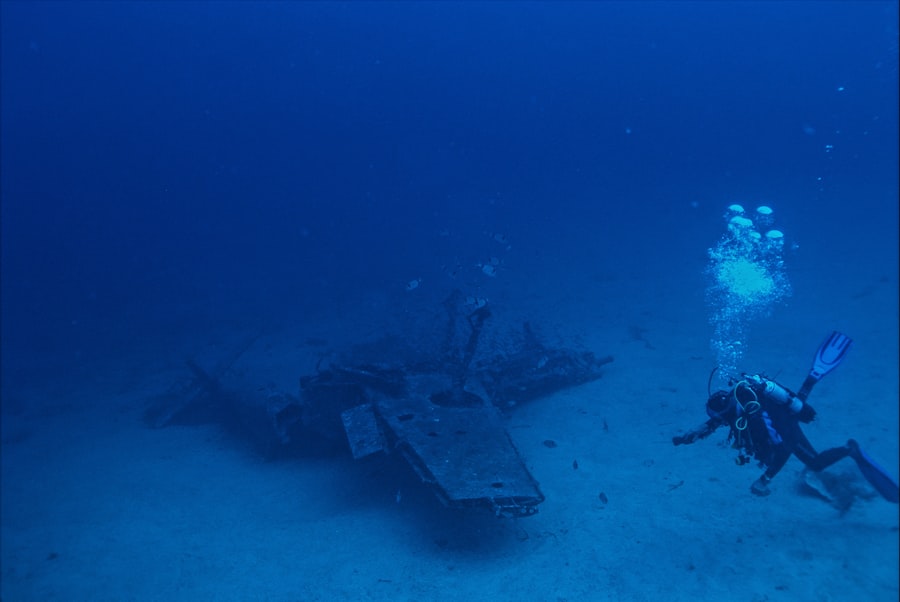
WATCH NOW ▶️ The CIA’s Impossible Mission To Steal A Nuclear Submarine
FAQs
What was the K-129 submarine?
The K-129 was a Soviet Golf II-class ballistic missile submarine that sank in the Pacific Ocean in March 1968 under mysterious circumstances.
When did the K-129 submarine explosion occur?
The explosion and sinking of the K-129 submarine occurred on March 8, 1968.
What are the main theories about the cause of the K-129 submarine explosion?
The main theories include an internal explosion due to a missile or torpedo malfunction, a collision with a U.S. submarine, or an accidental detonation of onboard weapons.
Was the K-129 submarine ever recovered?
The U.S. conducted a secret recovery operation called Project Azorian in 1974 to retrieve parts of the K-129 from the ocean floor, but the entire submarine was not recovered.
Why is the K-129 submarine explosion still a subject of interest?
The incident remains a subject of interest due to Cold War secrecy, the mystery surrounding the cause of the sinking, and the implications for naval and intelligence history.