
For decades, the phrase “neither confirm nor deny” has served as a ubiquitous, almost iconic, response from government agencies when confronted with inquiries about sensitive information. This seemingly evasive, yet legally sanctioned, stance is formally known as the Glomar Response. Its origins, far from being a simple bureaucratic invention, are deeply intertwined with Cold War espionage, technological innovation, and a burgeoning public demand for transparency. Understanding the genesis of the Glomar Response offers a fascinating glimpse into the complex interplay between national security, intelligence operations, and the principles of open government.
The mid-20th century was a crucible of geopolitical tension, characterized by the ideological struggle between the United States and the Soviet Union. This era, known as the Cold War, fostered an intense environment of espionage and counter-espionage, where the acquisition of intelligence was paramount. Both superpowers invested colossal resources in developing clandestine capabilities, and the sea, with its vastness and inherent obfuscation, became a critical theater for these covert operations.
Submarine Warfare and Surveillance
The development of nuclear-powered submarines revolutionized naval warfare, transforming them into silent, undetectable hunters capable of projecting power globally. Simultaneously, these submarines became crucial platforms for intelligence gathering, their deep-sea movements largely hidden from public view. The Soviet Union, in particular, maintained a formidable submarine fleet, and monitoring their activities became a primary objective for Western intelligence agencies.
The Quest for Soviet Submarine Technology
The potential for a technological breakthrough in Soviet submarine design, particularly concerning their nuclear capabilities, fueled an urgent desire within American intelligence circles to obtain firsthand information. Understanding the acoustic signatures, propulsion systems, and weapon payloads of Soviet submarines was considered vital for national defense and strategic deterrence. This insatiable hunger for intelligence often led to audacious and technologically challenging missions.
The CIA’s Glomar response, which refers to the agency’s refusal to confirm or deny the existence of certain information, has its origins in the need for secrecy during the Cold War. For a deeper understanding of this topic and its implications on government transparency, you can read a related article that explores the nuances of the Glomar response and its impact on public access to information. Check it out here: CIA Glomar Response Explained.
Project Azorian: A Covert Grand Design
Against this backdrop of intense Cold War rivalry, the Central Intelligence Agency (CIA) conceived one of its most ambitious and audacious covert operations: Project Azorian. This highly classified endeavor aimed to retrieve a sunken Soviet submarine, a mission so improbable it almost defies belief.
The K-129 Incident
In the spring of 1968, the Soviet Golf II-class submarine K-129, a diesel-electric vessel carrying three nuclear-armed ballistic missiles, mysteriously sank in the Pacific Ocean, approximately 1,500 miles northwest of Hawaii. The exact cause of the sinking remains debated, but the loss of a submarine of this caliber, especially one equipped with nuclear weapons, represented a significant intelligence opportunity for the United States.
The Discovery and Planning Phase
The United States Navy, utilizing its sophisticated hydroacoustic surveillance system, detected the K-129’s implosion and subsequently located the wreckage on the ocean floor, lying at a staggering depth of 16,000 feet (approximately 4,900 meters). The sheer depth presented unprecedented engineering challenges for any recovery operation. Undeterred, the CIA, under the directorship of Richard Helms, embarked on a highly compartmentalized project to raise the submarine. This project, codenamed “Azorian,” was a monumental undertaking, pushing the boundaries of deep-sea salvage technology.
Hughes Glomar Explorer: A Ship Shrouded in Secrecy
To accomplish the seemingly impossible task of retrieving the K-129, the CIA commissioned the construction of a unique deep-sea recovery vessel. This ship, designed and built under the guise of commercial ventures, would become the very embodiment of the Glomar Response.
Howard Hughes’s Involvement
To provide a plausible deniability cover, the eccentric billionaire industrialist Howard Hughes was enlisted. His vast General Motors Company (GM) empire, with its diverse holdings, provided a perfect facade. Hughes, known for his reclusiveness and secretive ventures, was an ideal partner for such a clandestine operation. The cover story presented to the public was that the ship, christened the Hughes Glomar Explorer, was a state-of-the-art research vessel designed for deep-sea mining of manganese nodules – small, potato-sized clumps of metal-rich minerals found on the ocean floor.
Engineering Marvels and Cover Stories
The Hughes Glomar Explorer was a marvel of engineering, incorporating a massive internal moon pool, a retractable drilling rig, and a colossal mechanical claw, dubbed the “Clementine,” capable of lifting immense weights from extreme depths. The construction of such a specialized vessel, requiring significant resources and advanced technology, could not be entirely hidden. Therefore, the elaborate deep-sea mining cover story was meticulously crafted and disseminated to deflect suspicion and inquisitive journalistic inquiries. The ship was a tangible manifestation of a fantastic, yet plausible, fib.
The Encounter and the Birth of a Response
In the summer of 1974, the Hughes Glomar Explorer commenced its recovery operation in the Pacific. While the actual salvage mission encountered significant difficulties and ultimately recovered only a portion of the K-129, the operation itself remained a closely guarded secret for an extended period. However, the sheer scale of the Glomar Explorer and the unusual nature of its operations eventually drew unwanted attention.
Early Inquiries and Speculation
As the Hughes Glomar Explorer conducted its work, rumors and speculation began to circulate within the intelligence community and among journalists. The unusual design of the ship, its protracted presence in a remote area of the Pacific, and the high level of secrecy surrounding its activities naturally raised eyebrows. Some journalists, particularly those specializing in intelligence matters, began to piece together fragments of information.
Jack Anderson and the Leaks
In early 1975, syndicated columnist Jack Anderson, known for his investigative journalism and propensity for uncovering government secrets, received classified information detailing Project Azorian. Anderson, a determined and influential journalist, intended to publish the story, exposing the CIA’s audacious deep-sea recovery mission and the true purpose of the Hughes Glomar Explorer. His investigation put the CIA in an unprecedented predicament.
The CIA’s Dilemma: Confirming or Denying
The prospect of Anderson’s exposé presented a grave challenge to the CIA. If the agency confirmed the story, it would publicly acknowledge a highly classified operation, compromise intelligence sources and methods, and potentially provoke a severe diplomatic incident with the Soviet Union. Such a confirmation could also embolden other nations to undertake similar clandestine recovery operations. Conversely, a flat denial, if later disproven, would severely damage the CIA’s credibility and the public’s trust in government statements.
William Colby and the “Glomar Response”
Faced with this intractable dilemma, then-CIA Director William Colby, in consultation with legal and intelligence officials, crafted a novel response. When asked directly about the Hughes Glomar Explorer and its connection to the K-129, the CIA stated that it could “neither confirm nor deny” the existence or nature of the operation. This carefully worded formulation was designed to avoid a direct lie while simultaneously preventing the disclosure of classified information. The rationale was that confirming or denying the existence of the program would be tantamount to revealing classified information itself, as even a denial would confirm that the question was valid and had some intelligence basis.
The CIA’s Glomar response, which allows the agency to neither confirm nor deny the existence of certain information, has its origins in the Cold War era and has been the subject of much discussion in legal and intelligence circles. For a deeper understanding of the implications and historical context of this response, you can explore a related article that delves into its significance in modern intelligence practices. This insightful piece can be found at In the War Room, where it examines the balance between national security and transparency.
Legal and Public Ramifications: A Lasting Legacy
| Metric | Details |
|---|---|
| Origin Year | 1975 |
| Agency | Central Intelligence Agency (CIA) |
| Context | Freedom of Information Act (FOIA) request |
| Incident | Response to inquiries about the Hughes Glomar Explorer ship |
| Response Type | Glomar response (“neither confirm nor deny”) |
| Purpose | To protect classified information related to covert operations |
| Significance | Set precedent for government responses to sensitive FOIA requests |
The CIA’s “neither confirm nor deny” response, quickly dubbed the “Glomar Response” after the ship, proved to be an effective, albeit controversial, strategy. It established a precedent that would profoundly influence government transparency and information access for decades to come.
Freedom of Information Act (FOIA) and Litigation
In the wake of the Glomar incident, the Glomar Response became a primary tool for government agencies to withhold information sought through the Freedom of Information Act (FOIA). When citizens or organizations requested documents pertaining to sensitive or classified programs, government agencies would often invoke the Glomar Response, arguing that even acknowledging the existence or non-existence of such documents would reveal classified information. This led to numerous legal challenges, with courts grappling with the delicate balance between public information and national security.
The “Glomar Clause” and its Evolution
Over time, legal precedents and court interpretations refined the application of the Glomar Response. The “Glomar Clause” or “Glomarization” became a recognized legal concept, allowing agencies to refuse to release information when the very fact of confirming or denying its existence would itself reveal classified intelligence. However, courts have also placed limits on its application, requiring agencies to provide sufficient justification for its use and ensuring that it is not used as a blanket refusal to avoid transparency. The justification for a Glomar response is that it prevents an adversary from learning what information the U.S. government considers sensitive, or even what information the U.S. government holds at all. If the government were to deny the existence of a document, it would effectively confirm that it does not possess that information, which could be exploited by adversaries.
Public Perception and Transparency Concerns
While effective in a national security context, the Glomar Response has consistently drawn criticism from advocates of government transparency and the public. Critics argue that it can be exploited by agencies to evade legitimate scrutiny and that it fosters a culture of secrecy, eroding public trust in government institutions. The phrase “neither confirm nor deny” has become synonymous with official stonewalling and obfuscation in the popular imagination, a shield behind which agencies can hide information without outright lying. This public perception highlights the inherent tension between the operational demands of intelligence agencies and the principles of open government in a democratic society.
Conclusion: The Enduring Shadow of the Glomar Response
The origin of the CIA’s Glomar Response is a captivating narrative rooted in the high stakes of the Cold War and the audacious pursuit of intelligence. The story of Project Azorian, the sunken K-129, and the ingenious Hughes Glomar Explorer serves as a powerful reminder of the extraordinary lengths to which intelligence agencies will go to secure national interests. However, the Glomar Response itself has transcended its original context, evolving into a fundamental, if contentious, tool in the lexicon of government transparency.
Today, the Glomar Response continues to be invoked by various government agencies across the globe, a testament to its enduring utility in managing sensitive information. As you, the reader, encounter the phrase “neither confirm nor deny” in news reports or official statements, you now possess a deeper understanding of its convoluted history and the complex ethical and legal considerations it embodies. It is a linguistic artifact of an era defined by shadows and whispers, and its continued presence underscores the eternal struggle to balance the imperatives of national security with the fundamental right of a free society to know. The Glomar Response stands as a monument to the lengths to which governments will go to keep their deepest secrets, a silent sentinel guarding the gates of classified information.
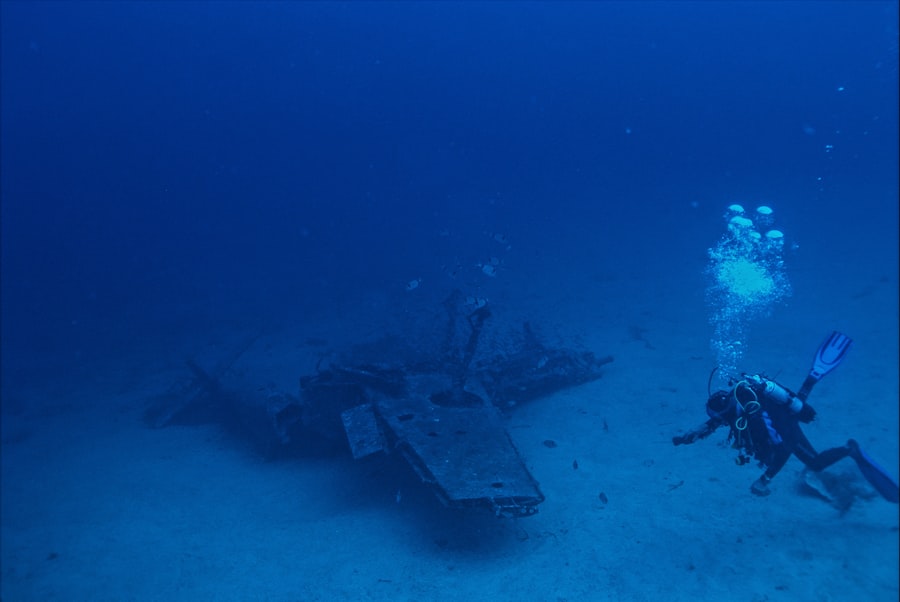
WATCH NOW ▶️ The CIA’s Impossible Mission To Steal A Nuclear Submarine
FAQs
What is the CIA Glomar response?
The CIA Glomar response is a term used to describe a specific type of reply to Freedom of Information Act (FOIA) requests where the agency neither confirms nor denies the existence of the requested information.
Where did the term “Glomar response” originate?
The term originated from the CIA’s response to FOIA requests about the Hughes Glomar Explorer, a ship used in a secret Cold War mission to recover a sunken Soviet submarine in the 1970s.
Why does the CIA use the Glomar response?
The CIA uses the Glomar response to protect national security and sensitive intelligence operations by refusing to confirm or deny the existence of certain records, thereby preventing potential adversaries from gaining information.
Is the Glomar response unique to the CIA?
No, while the term originated with the CIA, other U.S. government agencies also use the Glomar response when responding to FOIA requests involving classified or sensitive information.
Has the Glomar response been challenged legally?
Yes, the Glomar response has been subject to legal challenges, but courts have generally upheld its use when agencies demonstrate that confirming or denying the existence of records would harm national security or other protected interests.