The saga of the Hughes Glomar Explorer is a story worthy of a technothriller, a clandestine operation veiled in the Cold War’s icy grip. It’s a narrative woven from ambition, ingenuity, and a monumental undertaking that pushed the boundaries of human engineering. For those captivated by the audacious endeavors of humankind, the Explorer’s tale offers a compelling glimpse into a world where national secrets and technological marvels danced a delicate ballet.
The story of the Hughes Glomar Explorer is inextricably linked to a daring mission codenamed Operation Azorian. This was no ordinary salvage operation; it was a covert endeavor conceived by the United States’ Central Intelligence Agency (CIA) with a singular, ambitious goal: to recover a sunken Soviet submarine, the K-129, in the crushing depths of the Pacific Ocean. The K-129, aGolf II-class diesel-electric submarine, had met its demise in 1968 under mysterious circumstances, taking its entire crew and its presumably classified payload to the ocean floor, approximately 1,600 nautical miles northwest of Hawaii.
The strategic implications of recovering this submarine were immense. Intelligence agencies were eager to access the submarine’s technology, its codebooks, and potentially, its nuclear missiles. The K-129 was believed to be carrying three nuclear ballistic missiles, and their recovery, or at least the denial of their potential recovery by the Soviets, was a paramount concern. Imagine a lost treasure chest teeming with secrets; the K-129 was just such a chest, but instead of gold, it held the keys to potential military parity or even superiority.
The Challenge of the Abyss
The sheer depth of the K-129’s resting place presented a formidable obstacle. The submarine lay submerged at a staggering depth of nearly 16,000 feet (approximately 4,900 meters). This was a realm where sunlight feared to tread, where water pressure could crush a submarine like a tin can, and where the ocean floor was a vast, uncharted expanse. Conventional salvage methods were utterly inadequate for such a task. It was akin to trying to lift a mountain using only a fishing line.
The Role of Howard Hughes
Into this seemingly intractable problem stepped Howard Hughes, the enigmatic and famously reclusive billionaire industrialist. Hughes was a renowned innovator and a visionary in aviation and engineering. His company, Summa Corporation, through its shipbuilding division, Global Marine Inc., was a leader in deep-sea drilling and salvage technology. This made Hughes the ideal, albeit unconventional, partner for the CIA. The agency approached Hughes with the proposition, framing the operation as a commercial mining venture to explore for manganese nodules – a plausible cover story that would mask the true, clandestine nature of the undertaking. Hughes, perhaps intrigued by the technological challenge or the potential for lucrative contracts, agreed to lend his company’s expertise and resources to Operation Azorian.
The history of the Hughes Glomar Explorer is a fascinating tale of Cold War intrigue and technological innovation, particularly in its mission to recover a sunken Soviet submarine. For those interested in exploring more about this unique vessel and its operations, a related article can be found at this link, which delves deeper into the covert activities and implications of the project.
Baptized by Secrecy: The Birth of the Hughes Glomar Explorer
The monumental task of building a vessel capable of such a feat necessitated a custom-built ship. The CIA, working in tandem with Global Marine Inc., commissioned the construction of a unique vessel that would become the Hughes Glomar Explorer. The ship’s design was a testament to ingenuity born out of necessity, a tool forged in the crucible of high-stakes espionage. Its construction was shrouded in secrecy, with the public largely unaware of its ultimate purpose for years to come.
A Bespoke Design for an Unprecedented Mission
The Hughes Glomar Explorer was not just a large ship; it was a floating behemoth engineered for a specific, almost impossible task. Its most striking feature was its massive size, designed to provide a stable platform in the often-treacherous waters of the Pacific. The vessel was over 600 feet long, a true titan of the seas.
The Heart of the Operation: The Lifting Mechanism
Central to the Glomar Explorer’s design was its revolutionary lifting system, painstakingly developed to reach the K-129. This system was a marvel of mechanical engineering, allowing for the controlled descent and ascent of enormous payloads from extreme depths.
- The Moon Pool: Perhaps the most distinctive feature of the Glomar Explorer was its massive “moon pool” – an opening in the center of the ship’s hull that extended down through the ship’s structure. This allowed equipment to be lowered directly into the water without being subjected to the rolling motion of the ship, providing a steady platform for operations at extreme depths. Imagine a colossal, submerged elevator shaft within the ship itself.
- The Giant Claw and Gimbal System: The primary tool for the recovery of the submarine was a massive, remotely operated submersible named “Clover,” equipped with a complex clamshell-like gripping mechanism, often referred to as the “claw.” This claw was designed to encircle and lift the K-129. The entire lifting apparatus was mounted on a sophisticated gimbal system, which compensated for the ship’s movement and ensured the stable positioning of the claw and the submerged submarine. This was a feat of precision engineering at its finest, akin to performing microsurgery on the ocean floor from a mile-long operating table.
- The Drilling Rig: The ship was also equipped with a sophisticated drilling rig. This was not for mineral extraction in the traditional sense, but rather for stabilizing and securing the massive lifting arm and claw assembly during the delicate operation of latching onto the submarine. The drilling rig’s anchors burrowed into the seabed, creating a fixed point of reference, crucial for precise maneuvering at extreme depths.
The Cover Story: Mining for Manganese Nodules
To maintain the veil of secrecy, the official cover story for the Hughes Glomar Explorer’s activities was the exploration and potential mining of manganese nodules. These small, potato-sized concretions are found on the ocean floor and contain valuable minerals. This narrative provided a plausible reason for the ship’s extensive seabed operations and its technologically advanced equipment. It was a masterful piece of misdirection, a Smoke and Mirrors act played out on the grandest stage.
The Shadow of the Operation: Success, Incompleteness, and Lingering Questions
In the summer of 1974, after years of construction and testing, the Hughes Glomar Explorer embarked on its historic mission. The operation, conducted in extreme secrecy, was a technical triumph, but one tinged with an air of incompleteness. The recovery effort reached depths previously thought impossible, a testament to the vessel’s cutting-edge technology.
The First Retrieval: A Partial Victory
Under the cloak of darkness and extreme operational conditions, the Glomar Explorer successfully deployed its massive lifting mechanism. The “claw” was guided with remarkable precision to the resting place of the K-129. After a tense period of maneuvering, the claw engaged with the submarine. The monumental task of lifting the K-129 from the crushing depths began.
The Descent of the Vessel
The ascent of the K-129 was a slow and arduous process, a painstaking journey from the abyss to the surface. The immense pressure and the sheer weight of the submarine made this phase fraught with peril. The world watched, unknowingly, or perhaps, the intelligence agencies of other nations observed with keen interest, speculating on the purpose of this unusual maritime endeavor.
The Eventual Breach of the Surface
When the K-129 finally broke the surface, it was a chilling spectacle. The submarine, however, had broken apart during the recovery. The forward section, containing the missile compartment and the majority of the crew’s living quarters, was severely damaged and remained on the ocean floor. The central section, which included the sail and control room, was successfully brought aboard the Glomar Explorer.
The Spoils of the Deep
While the complete recovery of the K-129 was not achieved, the portion that was salvaged still held significant value. The central section provided invaluable intelligence.
Accessing Soviet Technology and Secrets
The intelligence gleaned from the recovered section of the K-129 was immense. It offered insights into Soviet submarine technology, naval capabilities, and communication systems. The CIA was able to study, analyze, and understand the secrets that the K-129 held, providing a crucial advantage in the ongoing Cold War. Imagine a puzzle with missing pieces, but the pieces you do have unlock the secrets of your opponent’s entire strategy.
- Codebooks and Cryptography: The recovery of codebooks and cryptographic equipment was of paramount importance. This allowed US intelligence to decrypt Soviet communications, providing a window into their strategic thinking and military operations.
- Navigational Systems and Sonar: Understanding the K-129’s navigation and sonar systems offered insights into Soviet underwater detection and tracking capabilities.
- Engineering and Design: The physical examination of the submarine’s hull, propulsion system, and other components provided valuable data on Soviet naval engineering and construction techniques.
The Fate of the Crew
Tragically, not all of the K-129’s secrets were revealed through its machinery. The submarine had carried its entire crew of 98 sailors to their watery grave. The recovered section contained the remains of some of the submariners, who were subsequently given a solemn burial at sea by the Glomar Explorer’s crew. Their sacrifice, though largely unknown to the public, was an integral part of this clandestine mission.
The Lingering Shadows: Declassification and Public Awareness
For decades, the true nature of the Hughes Glomar Explorer’s mission remained a closely guarded secret. The narrative of manganese nodule exploration was the official story, and for a long time, it was sufficient to shield the operation from public scrutiny. However, as the Cold War waned and a greater appetite for transparency emerged, the veil of secrecy began to lift.
The Unveiling of Operation Azorian
In the late 1980s and early 1990s, as declassification efforts gained momentum, the story of Operation Azorian began to emerge. Information previously held under lock and key, in the dusty archives of intelligence agencies, started to see the light of day. This revelation sent ripples of astonishment through many who had only known the ship as a research vessel.
The Work of Investigative Journalists and Historians
A pivotal role in bringing the story to the public’s attention was played by investigative journalists and historians. They pieced together fragments of information, interviewed former intelligence operatives and crew members, and meticulously compiled the narrative of the bold undertaking. Their work acted as a lens, focusing the scattered pieces of information into a coherent and compelling account.
The Legacy of the Explorer
The Hughes Glomar Explorer stands as a testament to human ingenuity and the lengths to which nations will go to gain a strategic advantage. Its story encapsulates the high-stakes drama of the Cold War and the extraordinary feats of engineering that were possible under such intense pressure.
Technological Prowess and Its Broader Impact
The technological innovations developed for the Glomar Explorer had a lasting impact on deep-sea exploration and salvage operations. The advancements in submersible technology, remote operated vehicles, and deep-sea lifting systems that were pioneered for this mission continued to be refined and utilized in later endeavors, both civilian and military. The ripples of its creation spread far beyond the immediate scope of Operation Azorian.
The Unanswered Questions
Despite the declassification of many documents, some aspects of Operation Azorian and the Hughes Glomar Explorer’s story continue to be subjects of speculation and debate. The exact contents of what was recovered, beyond what is publicly acknowledged, and the full extent of the intelligence gained, remain partly within the realm of conjecture. The ocean, after all, is a vast repository of secrets, and some of them may forever remain with the deep.
The history of the Hughes Glomar Explorer is a fascinating tale of Cold War intrigue and technological ambition, particularly in its mission to recover a sunken Soviet submarine. For those interested in exploring more about the covert operations and the implications of such endeavors, a related article can be found at In the War Room, which delves into the broader context of espionage and underwater recovery missions during that era. This connection highlights the intersection of innovation and secrecy that characterized the Cold War period.
The End of an Era: The Glomar Explorer’s Later Years
| Year | Event | Description |
|---|---|---|
| 1966 | Construction Begins | Hughes Glomar Explorer was built by the Hughes Tool Company for a secret CIA project called Project Azorian. |
| 1974 | Project Azorian Mission | The ship attempted to recover a sunken Soviet submarine K-129 from the Pacific Ocean floor. |
| 1975 | Partial Recovery | Only a portion of the submarine was recovered due to mechanical failure during the lift. |
| 1976 | Declassification | Details about the mission and the ship were partially declassified by the U.S. government. |
| 1990s | Commercial Use | The ship was repurposed for deep-sea mining and other commercial activities. |
| 2016 | Retirement | Hughes Glomar Explorer was retired and scrapped after decades of service. |
Following its historic, albeit partially successful, mission, the Hughes Glomar Explorer continued to serve for a number of years, albeit in less clandestine capacities. Its unique capabilities and specialized equipment were repurposed for other deep-sea endeavors, demonstrating the versatility of its design.
A New Lease on Life: Research and Salvage Operations
After the intense secrecy of Operation Azorian, the Glomar Explorer was refitted and put to work on various research and salvage projects. Its hull, engineered to withstand immense pressures, and its powerful lifting capabilities made it an invaluable asset for scientific exploration and recovery operations.
The Civilian Face of a Secret Machine
The ship was often employed in the exploration for seabed minerals, aligning with its original public cover story. It also participated in other salvage missions, rescuing valuable equipment or recovering important artifacts from the ocean floor. This phase of its life provided a more visible, albeit still specialized, role for the vessel, allowing some of its technological prowess to be recognized more broadly.
The Inevitable Decline: Obsolescence and Scrapping
Like all great machines, time eventually caught up with the Hughes Glomar Explorer. As technology advanced and newer, more specialized vessels emerged, the Glomar Explorer began to face obsolescence. Its cost of operation and maintenance, coupled with the development of more efficient technologies, ultimately led to its decommissioning.
The Fate of a Legend
In the early 2000s, the Hughes Glomar Explorer was eventually scrapped. The end of its operational life marked the final chapter in the active service of a ship that had played such a significant, albeit clandestine, role in history. Though its physical form was dismantled, its legacy endured, a powerful reminder of the ambitious engineering and daring operations that took place under the cloak of the Cold War. Its story is a testament to the fact that even the most impressive creations eventually yield to the march of time, though their impact can resonate for generations.
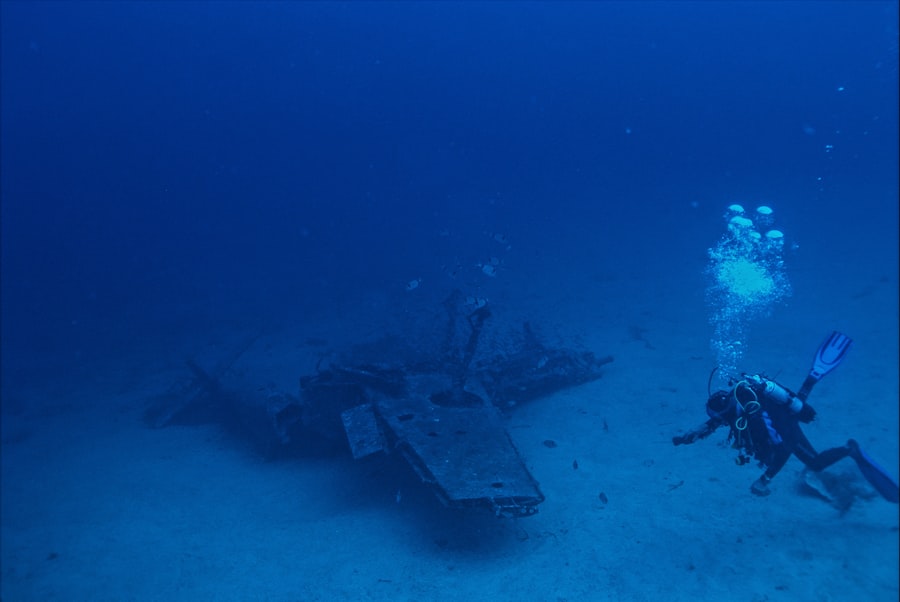
WATCH NOW ▶️ The CIA’s Impossible Mission To Steal A Nuclear Submarine
FAQs
What was the Hughes Glomar Explorer originally built for?
The Hughes Glomar Explorer was originally built in the early 1970s by the CIA and Howard Hughes’ company to conduct a secret mission called Project Azorian, which aimed to recover a sunken Soviet submarine from the Pacific Ocean.
Who owned and operated the Hughes Glomar Explorer?
The ship was owned by the CIA and operated under the guise of a commercial deep-sea mining vessel by the Global Marine Development Inc., a company created specifically for the mission.
What was the significance of Project Azorian?
Project Azorian was significant because it represented one of the most ambitious and secretive Cold War intelligence operations, attempting to recover Soviet military technology from a submarine that sank in 1968.
What happened to the Hughes Glomar Explorer after the mission?
After the mission, the Hughes Glomar Explorer was sold and repurposed for commercial deep-sea mining and later scientific research before being scrapped in the 2010s.
Why is the Hughes Glomar Explorer historically important?
The Hughes Glomar Explorer is historically important because it symbolizes Cold War espionage ingenuity, advanced marine engineering, and the lengths to which governments went to gain intelligence during that era.