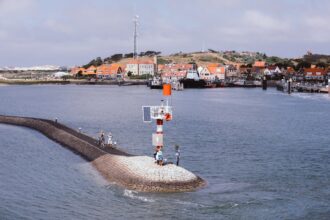
You, as a security professional or interested observer, are likely familiar with the ever-evolving landscape of surveillance technology. While terrestrial and aerial monitoring have reached sophisticated levels, a critical domain often overlooked, yet increasingly vital, is the underwater environment. Just as your eyes scan your surroundings for potential threats on land, a similar vigilance is now being extended beneath the surface. Enhancing security with underwater surveillance is no longer a futuristic concept but a rapidly developing reality, offering a robust layer of protection for a diverse range of assets and critical infrastructure.
You might ask yourself, “Why the sudden emphasis on what lies beneath the waves?” The answer lies in the increasing vulnerability of littoral zones, maritime borders, and subsea infrastructure. Traditional security measures, effective against surface threats, often falter in the opaque and challenging underwater realm. Consider, for a moment, the vast network of undersea cables that carry the world’s internet traffic, telephone communications, and financial transactions. These vital arteries are a potential Achilles’ heel, susceptible to sabotage or accidental damage. Furthermore, coastal facilities, naval bases, and ports face threats ranging from unauthorized intrusions by divers and autonomous underwater vehicles (AUVs) to the clandestine placement of explosives. Your security protocols, however robust on land, are incomplete without addressing this submerged dimension.
Protecting Critical Infrastructure
Underwater surveillance offers a proactive defense for a multitude of subsurface assets. Think of pipelines carrying oil and gas, crucial for national energy security, or the cooling water intakes of power plants, essential for their operation. The integrity of these structures is paramount, and any compromise can have cascading economic and environmental consequences that directly impact you and your community.
Deterring Unauthorized Intrusions
The ocean’s depths can provide cover for illicit activities. Smugglers, saboteurs, and even state-sponsored actors might exploit the underwater environment to bypass conventional security checkpoints. Your ability to detect and
identify these submerged threats early is critical for a timely and effective response.
Safeguarding Maritime Assets
Naval vessels, offshore drilling platforms, and even commercial shipping can benefit from enhanced underwater situational awareness. Imagine a stealthy intruder approaching a berthed warship – early detection can be the difference between a minor incident and a significant security breach.
Underwater surveillance technology has become increasingly vital for various applications, including military operations, environmental monitoring, and maritime security. A related article that delves deeper into the advancements and implications of this technology can be found at In The War Room. This resource explores the latest innovations in underwater surveillance systems and their strategic importance in contemporary warfare and defense strategies.
Core Technologies in Underwater Surveillance
To extend your sensory capabilities into the aquatic domain, a variety of sophisticated technologies have been developed. These technologies, much like a carefully assembled toolkit, each offer distinct advantages and are often employed in conjunction to create a comprehensive surveillance network. Your understanding of these fundamental components is crucial for appreciating the scope and effectiveness of modern underwater security.
Acoustic Sonar Systems
Sonar, an acronym for Sound Navigation and Ranging, is the workhorse of underwater surveillance. At its core, sonar emits sound waves and listens for their echoes. You likely recall its use in submarines for navigation, but its application in security is far more nuanced.
Active Sonar
Active sonar transmits a pulse of sound and measures the time it takes for the echo to return. By analyzing these echoes, you can determine the distance, bearing, and even the size and shape of submerged objects. Imagine shining a flashlight into a dark room; active sonar is the auditory equivalent, illuminating the underwater environment. Different frequencies are used for various applications; high-frequency sonar offers higher resolution for detecting smaller objects, while low-frequency sonar can penetrate further through water, providing a broader surveillance range.
Passive Sonar
In contrast, passive sonar listens for sounds emitted by objects themselves. You might think of it as sitting in a quiet room and discerning the distinct noises made by different individuals. Ships, submarines, and even divers create unique acoustic signatures that passive sonar can detect and, with advanced processing, classify. This non-invasive approach is particularly valuable for covert monitoring, as it does not betray the presence of the surveillance system.
Multi-Beam and Side-Scan Sonar
These advanced sonar techniques provide detailed imagery of the seafloor and submerged objects. Multi-beam sonar creates a swath of acoustic beams, generating 3D maps of the seabed, akin to using many flashlights simultaneously to illuminate a wide area. Side-scan sonar, on the other hand, emits fan-shaped pulses to either side of a towed or hull-mounted transducer, producing high-resolution acoustic images that resemble black-and-white photographs of the seafloor. These tools are invaluable for identifying anomalies, such as hidden objects or alterations to the seabed that might indicate illicit activity.
Optical Underwater Cameras
While sonar provides an acoustic “picture,” optical cameras offer a visual one, though their utility is constrained by water clarity. You wouldn’t expect a clear view in murky waters, but in certain environments, these cameras provide crucial visual confirmation.
Low-Light and Infrared Cameras
Technological advancements have enhanced the performance of underwater cameras in challenging lighting conditions. Low-light cameras can capture images with minimal ambient light, while infrared cameras detect heat signatures, allowing for detection even in complete darkness or slightly turbid water. Think of these as your night-vision goggles for the underwater world.
Remotely Operated Vehicles (ROVs) and Autonomous Underwater Vehicles (AUVs)
These unmanned platforms are often equipped with optical cameras. ROVs provide real-time visual feedback and can be maneuvered to inspect specific objects or areas. AUVs, pre-programmed with survey paths, can conduct autonomous patrols, collecting imagery and other data over extended periods, freeing you from constant direct control.
Magnetic Anomaly Detectors (MAD)
Magnetic Anomaly Detectors operate on the principle that metallic objects, particularly those containing ferrous materials, create localized distortions in the Earth’s natural magnetic field. You can liken this to a compass needle twitching when a metal object is brought near.
Detecting Submerged Metallic Objects
MAD systems are particularly effective at detecting submarines, shipwrecks, and large metallic objects on or beneath the seafloor. While they do not provide precise成像 like sonar, they offer a valuable broad-area detection capability, especially in areas where acoustic conditions are challenging.
Deployment Strategies and Integration

No single technology can provide comprehensive underwater security on its own. Just as a well-guarded fort utilizes multiple layers of defense, effective underwater surveillance relies on intelligently orchestrated deployment strategies and the seamless integration of various systems. You, as the security architect, must consider the specific threats, environmental conditions, and budgetary constraints to design an optimal solution.
Fixed and Mobile Platforms
Underwater surveillance systems are deployed from a range of platforms, each optimized for different operational requirements.
Fixed Seabed Arrays
These permanent installations consist of interconnected sensors placed strategically on the seafloor. They offer continuous, long-term monitoring of critical areas, forming an unblinking eye on the underwater environment. Think of them as your permanent guard posts. These arrays can integrate various sensor types, including hydrophones (for passive sonar), active sonar transducers, and even environmental sensors to monitor water conditions.
Towed Arrays
Towed arrays are long cables containing multiple sonar transducers, pulled behind a surface vessel or submarine. They provide excellent detection capabilities over a wide area and can be rapidly deployed to areas of interest. You can imagine this as extending your listening ear across a broad expanse. Their flexibility makes them suitable for both prolonged surveillance missions and rapid response situations.
Unmanned Underwater Vehicles (UUVs)
UUVs, encompassing both ROVs and AUVs, offer unparalleled flexibility. ROVs, tethered to a surface vessel, allow for real-time human control and detailed inspection. AUVs, operating autonomously, can cover vast areas for extended periods, collecting data and transmitting it periodically or upon mission completion. These platforms act as your mobile patrols, capable of venturing into challenging or dangerous areas without risking human life.
Sensor Fusion and Data Analytics
The true power of modern underwater surveillance lies in the ability to combine data from multiple disparate sensors and process it intelligently. You wouldn’t rely on just one piece of information for a critical decision; similarly, integrating acoustic, optical, and magnetic data provides a more complete and reliable picture.
Real-time Threat Assessment
Advanced software algorithms play a critical role in analyzing vast amounts of sensor data in real-time. These algorithms can identify anomalous patterns, classify potential threats (e.g., differentiating between marine life and human-made objects), and alert operators to potential security breaches. This is akin to having an intelligent assistant constantly sifting through information and flagging anything suspicious, freeing you to focus on critical decision-making.
Predictive Modeling
Beyond real-time detection, sophisticated systems can employ predictive modeling to anticipate future threats based on historical data and current patterns. By understanding potential trajectories of suspicious objects or likely areas of intrusion, you can proactively deploy resources and optimize your response.
Challenges and Future Directions
Despite significant advancements, underwater surveillance remains a field with inherent challenges and continuous innovation. You, as an informed stakeholder, should be aware of both the current limitations and the exciting prospects for future development.
Environmental Constraints
The underwater environment itself presents formidable obstacles.
Sound Propagation Variability
Water temperature, salinity, pressure, and even biological activity significantly affect how sound travels. These variations can create “shadow zones” where sonar is less effective, much like pockets of poor reception for a radio signal. Your systems must be designed to adapt to these fluctuating conditions.
Optical Attenuation and Turbidity
Light dissipates rapidly in water, and particulate matter (turbidity) can severely limit visibility for optical cameras. This is why you cannot simply use a standard camera underwater and expect clear images. Specialized lighting and imaging techniques are continuously being refined to overcome these limitations.
Biofouling
The growth of marine organisms on sensors and equipment (biofouling) can degrade performance over time. This necessitates regular maintenance and the development of antifouling coatings, adding to the operational overhead.
Countermeasures and Evasion Techniques
Adversaries are also evolving their capabilities. You can expect sophisticated adversaries to employ various countermeasures to evade detection.
Stealth Technologies
Submarines and UUVs are increasingly designed with acoustic and magnetic stealth features, making them harder to detect. This drives a continuous arms race in detection technology.
Acoustic Decoys and Jammers
Just as jamming devices are used in aerial warfare, similar techniques can be employed underwater to confuse or overwhelm sonar systems. Understanding and mitigating these countermeasures is a crucial aspect of maintaining security superiority.
Emerging Technologies and Research
The future of underwater surveillance is bright, with ongoing research pushing the boundaries of what is possible.
Artificial Intelligence and Machine Learning
The application of AI and machine learning to analyze vast datasets from underwater sensors will revolutionize threat detection and classification. Imagine systems that can learn to identify new types of threats without explicit programming, adapting and evolving their detection capabilities. These intelligent systems effectively become your highly trained analysts, operating 24/7.
Quantum Sensing
Advancements in quantum sensing hold the promise of incredibly sensitive detectors for magnetic fields, gravity, and even subtle changes in water chemistry, potentially offering entirely new ways to detect submerged objects with unprecedented precision, akin to acquiring an entirely new sense to perceive the underwater world.
Biometric Identification Underwater
While still nascent, research into underwater biometric identification, such as facial recognition for divers in clear water, could add another layer of verification and threat assessment.
In conclusion, enhancing security with underwater surveillance is a multifaceted endeavor that demands a comprehensive understanding of both the threats and the available technological solutions. You, as a part of the global security community, are at the forefront of this evolving domain. By embracing these sophisticated technologies and continuously adapting to new challenges, you can fortify your defenses beneath the waves, ensuring the continued safety and resilience of critical assets and maritime interests. The unseen depths are no longer a blind spot; they are becoming an increasingly transparent and secure frontier thanks to dedicated innovation and strategic deployment.
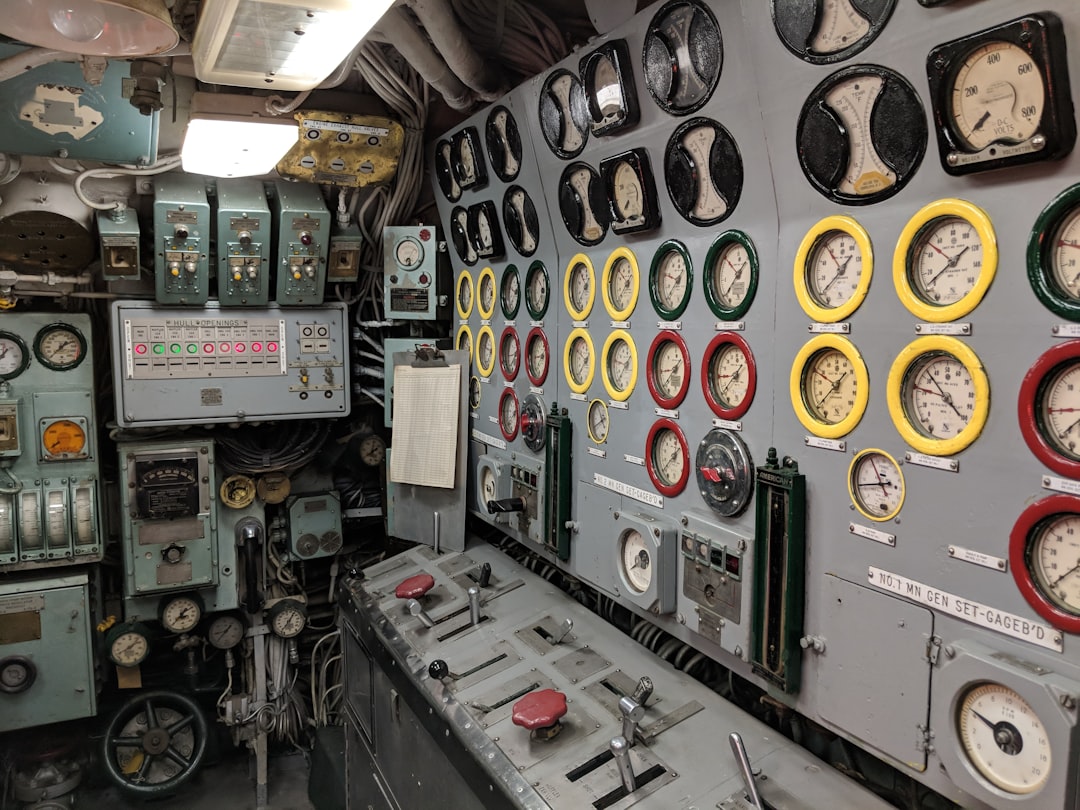
WATCH NOW▶️ Submarine detection technology history
FAQs
What is underwater surveillance?
Underwater surveillance refers to the monitoring and observation of underwater environments using various technologies such as sonar, underwater cameras, and sensors to detect and track objects or activities beneath the water surface.
What technologies are commonly used in underwater surveillance?
Common technologies include sonar systems (active and passive), underwater cameras, remotely operated vehicles (ROVs), autonomous underwater vehicles (AUVs), hydrophones, and underwater radar systems.
What are the main applications of underwater surveillance?
Underwater surveillance is used for military defense, maritime security, environmental monitoring, underwater infrastructure inspection, search and rescue operations, and scientific research.
How does sonar technology work in underwater surveillance?
Sonar technology emits sound waves that travel through water and reflect off objects. By analyzing the returned echoes, sonar systems can determine the location, distance, size, and movement of underwater objects.
What challenges are associated with underwater surveillance?
Challenges include limited visibility, signal attenuation in water, interference from marine life or environmental noise, the complexity of underwater navigation, and the high cost of deploying and maintaining underwater surveillance equipment.