The realm of nuclear technology, often shrouded in a veil of classification and strategic secrecy, harbors a multitude of hidden secrets. From its initial inception during the tumultuous years of World War II to its multifaceted applications in the modern era, the development and deployment of nuclear capabilities have been inextricably linked to notions of national security, scientific advancement, and both humanitarian progress and potential catastrophe. This article endeavors to peel back layers of this classified history, exploring some of the lesser-known facets and breakthroughs that have shaped the nuclear landscape. It delves into the clandestine programs, the unforeseen challenges, and the ingenious solutions that have defined this powerful and often perilous technology.
The genesis of nuclear technology can be traced back to a period of intense global conflict, where scientific discovery became inextricably linked with military imperative. The urgency of war catalysed scientific endeavor in unprecedented ways, leading to the rapid development of capabilities that would permanently alter the geopolitical balance.
Project Manhattan: Beyond the Bomb
While the atomic bombs dropped on Hiroshima and Nagasaki remain the most visible outcome of the Manhattan Project, the endeavor was far more expansive than merely weapon design. It was a sprawling, multifaceted enterprise that encompassed fundamental physics, complex engineering, and unprecedented human resource management.
The Race Against Time and Ignorance
Scientists involved in the Manhattan Project operated under immense pressure, not only from the Axis powers, who were also suspected of pursuing nuclear weapons, but also from the inherent unknowns of the nascent field. The project was, in essence, a grand experiment on an industrial scale, with theoretical physics being translated into practical, tangible hardware with astonishing speed. The inherent dangers of working with radioactive materials were still poorly understood, and initial safety protocols were often rudimentary, leading to significant exposure for many pioneers.
The Unsung Heroes and Hidden Laboratories
Beyond the household names like Oppenheimer and Fermi, thousands of engineers, technicians, and laborers contributed to the project. Their work, often involving manual manipulation of hazardous materials and the construction of immense, novel facilities, was pivotal. Sites like Oak Ridge, Tennessee, and Hanford, Washington, transformed from sleepy agricultural communities into bustling industrial complexes, operating under extreme secrecy. The vast infrastructure built for isotope separation, for instance, represented a monumental engineering feat, with facilities stretching miles and consuming immense amounts of electrical power, all while remaining largely invisible to the public eye.
Early Espionage and Counter-Espionage
The very nature of nuclear technology, with its profound implications for international power dynamics, made it an immediate target for espionage. The race for nuclear supremacy was not solely a scientific one; it was also a shadowy struggle fought by intelligence agencies.
The Soviet Atomic Spies
The penetration of the Manhattan Project by Soviet agents, most notably Klaus Fuchs, provided the Soviet Union with crucial blueprints and scientific data. This intelligence significantly accelerated their own nuclear program, potentially altering the timeline of the Cold War and the ensuing nuclear arms race. The extent of this espionage highlights the vulnerability of even the most closely guarded secrets when ideological fervor or financial incentives are at play.
The Quest for Uranium and Heavy Water
Early nuclear research was heavily dependent on specific rare materials. The scramble to secure sources of uranium ore became a global chess game, with nations covertly acquiring supplies from newly discovered deposits. Similarly, heavy water, crucial for certain reactor designs, became a highly sought-after commodity, leading to daring clandestine operations, such as the Norwegian heavy water sabotage during World War II, designed to deny its use to the Nazi regime.
Recent revelations regarding declassified nuclear technology secrets have sparked significant interest in the implications for global security and scientific advancement. For a deeper understanding of the historical context and the impact of these developments, you can explore the article titled “Unveiling the Past: The Secrets of Nuclear Technology” on In The War Room. This piece delves into the intricacies of nuclear research and its evolution over the decades. To read more, visit In The War Room.
Nuclear Weapons: Evolution Beyond Annihilation
While the destructive potential of nuclear weapons is undeniable, their evolution has been a complex interplay of scientific advancement, strategic doctrine, and geopolitical realities. The development of these weapons has not been a static process; it has involved continuous refinement and diversification.
Miniaturization and Delivery Systems
Initial nuclear devices were cumbersome and difficult to deliver. A significant secret aspect of nuclear weapon development has been the relentless pursuit of miniaturization, coupled with the creation of increasingly sophisticated delivery systems.
From Fat Man to MIRVs
The “Fat Man” bomb, used on Nagasaki, was a massive device requiring a specially modified bomber. Subsequent decades witnessed a dramatic reduction in weapon size and weight, allowing for their integration into intercontinental ballistic missiles (ICBMs), submarine-launched ballistic missiles (SLBMs), and even tactical artillery shells. The development of Multiple Independently Targetable Reentry Vehicles (MIRVs) allowed a single missile to carry multiple warheads, each capable of striking a different target, profoundly increasing the destructive capacity of a single launch. These advancements were not merely engineering feats; they involved breakthroughs in materials science, explosives technology, and guidance systems that remain heavily classified.
The Stealthy Standoff: Submarines and Bunkers
The nuclear triad, consisting of land-based missiles, strategic bombers, and ballistic missile submarines (SSBNs), represents a cornerstone of deterrence. SSBNs, designed to operate silently and remain undetected for extended periods, are technological marvels. Their ability to remain hidden, acting as an ever-present, retaliatory strike force, is a closely guarded secret, relying on advanced acoustic dampening, sophisticated navigation, and encrypted communication systems. Similarly, the hardened bunkers designed to house command and control centers and missile silos represent a triumph of defensive engineering, intended to withstand direct nuclear impacts and ensure retaliatory capability.
The Nuclear Testing Legacy
Underground and atmospheric nuclear testing, while publicly acknowledged, often had classified objectives beyond simply demonstrating destructive power. These tests were laboratories for understanding complex phenomena.
Weapon Effects and Hardening Initiatives
Each test, whether atmospheric or underground, provided invaluable data on the blast effects, electromagnetic pulse (EMP), and radiation patterns of nuclear detonations. This data, much of it still classified, informed the design of defensive structures, the hardening of military equipment against EMP attack, and the development of civil defense protocols. Experiments with “neutron bombs,” designed to maximize radiation output while minimizing blast, were also conducted, highlighting the diverse objectives of nuclear weapon designers.
Ecological and Climatic Consequences
Less publicized were the long-term ecological and climatic impacts studied during and after these tests. While some of this research has been declassified, much of it remains hidden, offering insights into the complex interactions of nuclear detonations with the natural environment. These studies often involved remote monitoring stations and specialized sensors designed to track radioactive fallout and its dispersion across vast geographical areas, revealing the far-reaching and often insidious consequences of nuclear weapon use.
Beyond Weapons: Peacetime Nuclear Applications
While the military applications of nuclear technology tend to dominate public discourse, a significant portion of its development has been dedicated to peaceful, civilian applications. These applications, often benefiting from the same underlying scientific principles as weapon design, have revolutionized various fields.
Nuclear Power: The Grid’s Unseen Architect
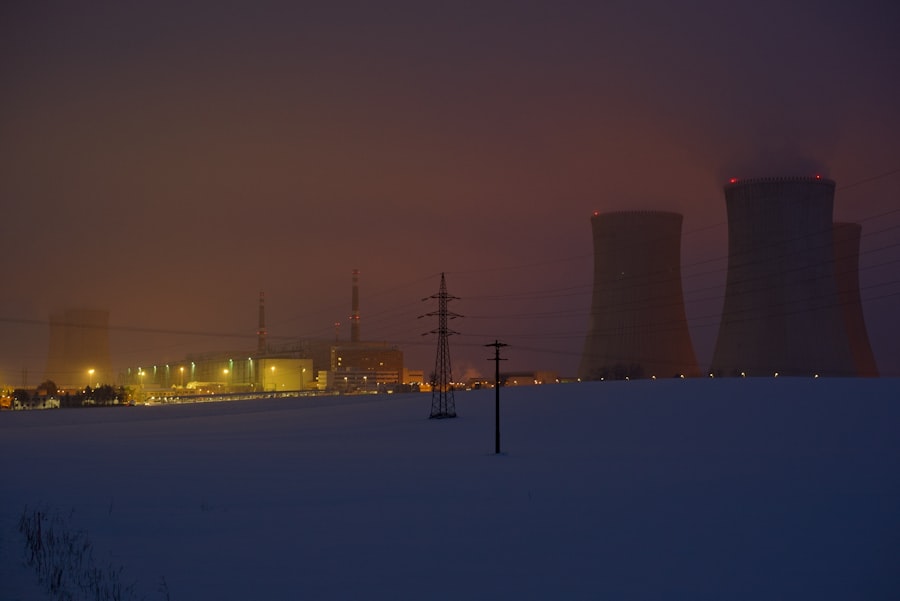
Nuclear power plants, while visible as imposing structures, rely on complex, highly engineered systems and classified operational protocols to safely generate electricity. The ongoing refinement of reactor technology, maintenance procedures, and waste management represents a continuous hidden effort.
Advanced Reactor Designs and Fuel Cycles
Beyond the familiar light water reactors, a secret history of advanced reactor designs exists. These include designs for fast breeder reactors, high-temperature gas reactors, and molten salt reactors, each with unique advantages in terms of fuel efficiency, waste reduction, or passive safety. Much of the research and development into these advanced concepts, particularly regarding novel fuel cycles and reprocessing techniques aimed at minimizing proliferation risks, remains under strict classification. The materials science dedicated to creating fuel rods and reactor components capable of withstanding extreme temperatures and radiation doses is a complex domain often shrouded in proprietary and national security secrecy.
Waste Management: A Hidden Challenge
The long-term storage and disposal of radioactive waste represent one of the most significant and persistent challenges associated with nuclear power. Research into deep geological repositories, transmutation technologies, and advanced vitrification processes is ongoing and often involves classified studies into geological stability, materials degradation, and containment strategies over millennia. The precise locations of some such facilities and comprehensive details of their design and contents are often kept highly confidential for national security and public safety reasons.
Medical and Industrial Isotopes: Invisible Lifelines
Radioactive isotopes, produced in nuclear reactors or particle accelerators, have become indispensable tools in medicine, industry, and scientific research. Their production, purification, and distribution often involve sensitive processes and facilities.
Diagnostic and Therapeutic Breakthroughs
Nuclear medicine, reliant on isotopes like Technetium-99m and Iodine-131, has transformed diagnostic imaging and cancer therapy. The development of new radiopharmaceuticals, the classified processes for their synthesis and quality control, and the security surrounding their transport are all crucial aspects of medical advancement. The use of sterile isotope generators within hospitals, though routine, is the culmination of decades of classified research into their safe and efficient operation.
Industrial Radiography and Sterilization
In industry, isotopes are used for non-destructive testing, gauging material thickness, and sterilizing medical equipment and food products. The precise configurations of industrial irradiators, the isotopes employed, and the safety protocols governing their use are often proprietary and subject to regulatory, and sometimes national security, oversight. The ability to scan large structures or cargo containers for contraband also utilizes nuclear techniques developed under classified programs.
Unforeseen Consequences and Future Challenges
The journey of nuclear technology has not been without its ethical dilemmas and unforeseen societal impacts. Understanding these aspects is crucial for navigating future advancements responsibly.
Proliferation and Arms Control: A Tightrope Walk
The proliferation of nuclear weapons technology remains a paramount concern. The efforts to prevent more nations from acquiring these weapons, and to control the existing arsenals, involve a complex web of diplomacy, intelligence, and covert operations.
Covert Nuclear Programs
While much attention is given to publicly acknowledged nuclear states, the history of nuclear proliferation includes numerous covert programs. Nations have, at various times, pursued clandestine paths to develop nuclear capabilities, often with secret external assistance or through dual-use technologies. The intelligence gathering and counter-proliferation efforts aimed at disrupting these programs represent a highly classified and continuous struggle, involving satellite imagery analysis, human intelligence, and sophisticated technical forensics.
Safeguards and Verification Technologies
The International Atomic Energy Agency (IAEA) plays a crucial role in verifying that declared nuclear materials are not diverted for military purposes. The development of advanced safeguards techniques, including tamper-indicating seals, remote monitoring systems, and forensic analysis of nuclear materials, often stems from classified research and development. Challenges remain in implementing these safeguards effectively in all contexts, particularly in states with opaque nuclear programs. The art of detecting undeclared nuclear activities relies heavily on intelligence gathering and scientific methods that are not openly discussed.
Environmental Remediation and Legacy Sites
The legacy of nuclear weapons production and testing includes vast quantities of radioactive waste and contaminated sites. The efforts to remediate these areas are often complex, costly, and subject to ongoing secrecy regarding the extent of contamination and the efficacy of various cleanup methodologies.
Decommissioning Classified Facilities
Many of the facilities built during the early atomic age, now long decommissioned, held classified purposes and contained hazardous materials. The processes for their safe dismantlement, remediation, and long-term monitoring involve highly specialized engineering and environmental science, much of which remains under wraps due to its sensitive nature. The exact composition of pollutants and the precise nature of contamination at some historical sites are often not fully disclosed to the public.
The Search for Permanent Solutions
The search for permanent solutions to radioactive waste continues. While deep geological repositories are favored, the long-term integrity of such sites and the risks associated with transporting highly radioactive materials remain subjects of ongoing research and public debate. The scientific modeling of geological processes over millennia, crucial for assessing repository safety, relies on advanced computer simulations and geological data, some of which are considered proprietorial or classified by national entities.
Recent discussions surrounding nuclear technology have brought to light various declassified secrets that reveal the extent of governmental research and development in this field. An intriguing article that delves into these revelations can be found at this link, where it explores the implications of these secrets on current nuclear policies and international relations. As more documents become available, the historical context of nuclear advancements continues to shape our understanding of global security.
Conclusion: The Unfolding Narrative
| Declassified Secret | Description | Year Declassified | Country | Impact on Nuclear Technology |
|---|---|---|---|---|
| Manhattan Project Documents | Details of the first atomic bomb development during WWII | 1971 | USA | Provided foundational knowledge on nuclear fission and bomb design |
| Tsar Bomba Test Data | Information on the largest nuclear bomb ever detonated | 1992 | USSR (Russia) | Advanced understanding of thermonuclear weapon yield and effects |
| Operation Crossroads Reports | Analysis of nuclear weapon effects on naval vessels | 1996 | USA | Improved knowledge of blast and radiation impact on military hardware |
| UK’s Blue Danube Bomb Design | Design and testing data of the UK’s first atomic bomb | 1980 | United Kingdom | Enhanced British nuclear weapons development and strategy |
| French Nuclear Test Data | Details of underground nuclear tests in the Sahara | 2000 | France | Contributed to understanding of nuclear test containment and yield |
The story of nuclear technology is far from complete. It is a narrative woven with strands of scientific brilliance, strategic necessity, human ambition, and profound ethical challenges. Understanding the hidden secrets of this field is not merely an academic exercise; it is essential for informed public discourse and for shaping responsible policies regarding its future development. The classifications and secrecy that have historically enveloped nuclear technology reflect its immense power and potential for both good and ill. As we move forward, the ongoing balance between maintaining national security, fostering scientific progress, and ensuring global safety will continue to define the unfolding narrative of nuclear tech’s hidden secrets. Addressing you, the reader, directly, it is imperative to recognize that the pursuit of knowledge, even regarding such dangerous capabilities, is ultimately a shared human endeavor, carrying with it immense responsibility. The secrets we uncover today may well shape the world of tomorrow.
FAQs
What does “nuclear tech declassified secrets” refer to?
“Nuclear tech declassified secrets” refers to information about nuclear technology that was previously classified for national security reasons but has since been made publicly available by governments or authorized agencies.
Why are nuclear technology secrets classified initially?
Nuclear technology secrets are classified to prevent sensitive information from falling into the hands of adversaries, which could threaten national security, enable nuclear proliferation, or lead to the development of nuclear weapons by unauthorized entities.
How does the declassification process work for nuclear technology?
The declassification process involves a thorough review by government agencies to determine if the information can be safely released without compromising security. This process may include redacting sensitive details and is often governed by specific laws and regulations.
What types of nuclear technology information have been declassified?
Declassified information can include technical details about nuclear reactors, weapon designs, safety protocols, historical research data, and information about nuclear testing, among others.
Where can the public access declassified nuclear technology information?
Declassified nuclear technology information is typically available through government archives, official publications, research institutions, and online databases maintained by agencies such as the Department of Energy or the National Archives.