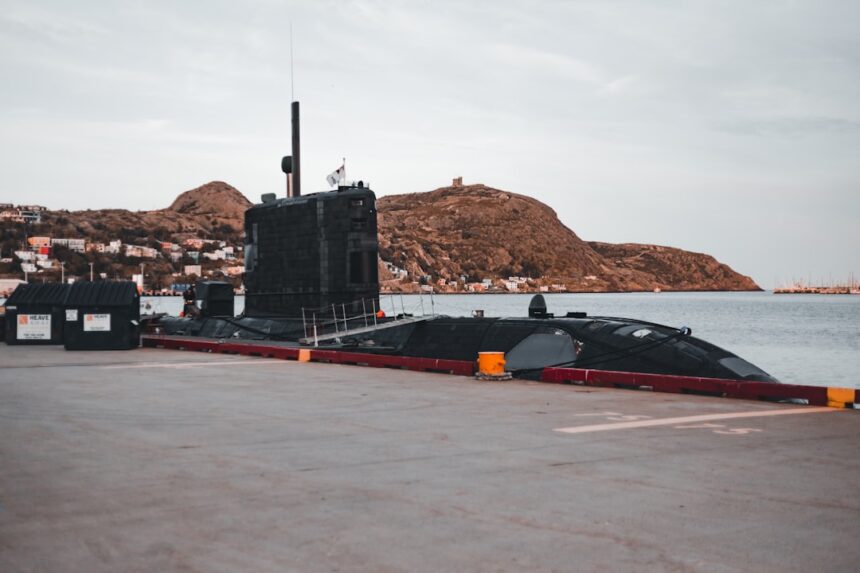
Nuclear submarines, often described as silent hunters of the deep, represent a pinnacle of naval engineering and strategic capability. Their operational effectiveness hinges significantly on their ability to remain undetected, a feature paramount in both offensive and defensive roles. This stealth, far from being a singular attribute, is a complex interplay of design principles, advanced technologies, and meticulous operational procedures. Understanding these capabilities requires a delve into the multifaceted approaches employed to minimize various forms of detectable signatures.
The primary challenge in submarine stealth is acoustic detection. Water, while a formidable barrier to many forms of electromagnetic radiation, is an excellent conductor of sound. Consequently, minimizing radiated noise is the bedrock of nuclear submarine design.
Hull Design and Hydrodynamics
The external shape of a nuclear submarine is not merely aesthetic; it is meticulously sculpted to reduce hydrodynamic noise. Smooth, clean lines minimize turbulence, which can generate broad-spectrum noise detectable at significant ranges. Features such as sail fairings, propeller shrouds, and even limber holes are designed to optimize laminar flow and prevent cavity formation, a phenomenon where sudden pressure drops create bubbles that collapse noisily.
Machinery Isolation and Quieting
Within the pressure hull, a labyrinth of machinery generates substantial noise. Nuclear reactors, steam turbines, pumps, and auxiliary systems all contribute to the submarine’s acoustic signature. To counter this, extensive sound-dampening measures are employed.
Rafted Foundations
Key machinery components are often mounted on “rafted foundations.” These are essentially independent platforms suspended within the main hull on vibration-absorbing mounts. This layered isolation prevents vibrations from the machinery from directly coupling with the hull, where they would radiate into the water. Imagine a delicate instrument being transported on a spring-mounted tray within a larger container; the principle is similar.
Anechoic Tiles
The external surfaces of modern nuclear submarines are often covered with anechoic tiles. These specialized rubber or polymer tiles contain internal voids or structures designed to absorb incoming active sonar pulses and dampen the submarine’s own radiated noise. By disrupting the reflection of sound waves, they reduce the “ping” returned to an active sonar, making the submarine appear significantly smaller or effectively invisible to such systems.
Natural Circulation Reactors
For certain operational profiles, modern nuclear submarines can utilize natural circulation cooling in their reactors. This eliminates the need for noisy primary coolant pumps, offering exceptionally quiet operation at reduced speeds. This “whisper mode” is a critical tactical advantage, allowing the submarine to ingress or egress sensitive areas with minimal acoustic footprint.
Propulsor Design
The propeller, or propulsor, is a major source of radiated noise. Cavitation, the formation and collapse of vapor bubbles around the propeller blades due to rapid pressure changes, is particularly disruptive.
Skewed Propellers and Pump-Jets
Modern nuclear submarines employ highly skewed propellers, where the blades are swept back at an angle. This design reduces tip vortex cavitation and spreads the acoustic energy over a wider frequency range, making it harder to distinguish from background noise. Some advanced designs utilize pump-jet propulsors, which enclose the propeller within a shroud. This design further reduces cavitation, improves efficiency, and typically results in a quieter propulsion system compared to traditional open propellers. Think of it as putting a silencer on a powerful engine; the principle is to contain and dissipate the noisy energy.
Recent advancements in nuclear submarine stealth capabilities have been a topic of significant interest in military technology discussions. For a deeper understanding of these developments, you can explore the article on stealth technologies and their implications for naval warfare at In The War Room. This resource provides insights into how modern submarines are enhancing their stealth features to evade detection and improve their operational effectiveness in various maritime environments.
Magnetic Stealth: A Subtler Signature
While acoustic detection is paramount, a submarine’s magnetic signature can also reveal its presence, particularly in shallow waters or when transiting over magnetic anomaly detectors (MAD).
Demagnetization and Deperming
The steel hull of a submarine can acquire residual magnetism from the Earth’s magnetic field or from its own onboard electrical systems. This magnetism creates a detectable anomaly. Submarines undergo a process called “deperming” where large electrical coils are used to neutralize or minimize the ship’s permanent magnetic field. This is akin to resetting a magnet or reducing its field to a baseline.
Non-Magnetic Materials and Shielding
Where feasible, non-magnetic materials are incorporated into the submarine’s construction, particularly for components that generate strong magnetic fields or are close to the hull. Additionally, electromagnetic shielding can be employed to contain magnetic fields generated by internal electrical equipment.
Thermal Stealth: The Infrared Challenge

Although water significantly attenuates infrared radiation, a submarine can still present a thermal signature, particularly when operating near the surface or when exhausting warmed water.
Deep Operation and Thermal Dissipation
The most effective thermal stealth measure is simply operating at significant depths. The immense volume of cold ocean water acts as a massive heat sink, rapidly dissipating any localized thermal plumes.
Advanced Cooling Systems
Modern nuclear submarines employ highly efficient cooling systems that minimize the temperature differential between discharged water and the surrounding ocean. This might involve internal heat exchangers and careful management of discharge points to diffuse any thermal signature over a larger area.
Non-Acoustic Active Signatures: The Radar and Optic Evasion
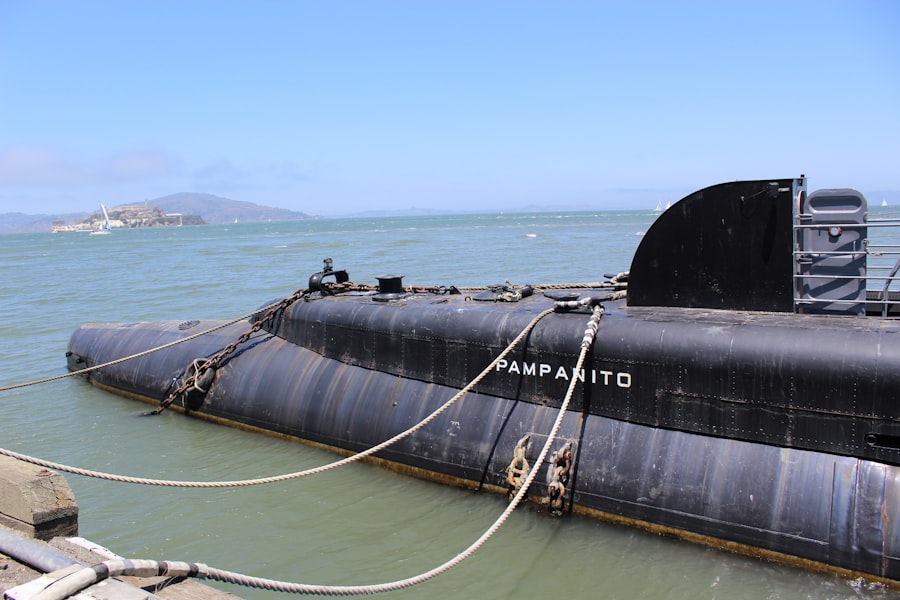
While primarily submerged, nuclear submarines must occasionally operate at or near the surface, exposing them to radar and optical detection.
Radar Cross-Section Reduction
When surfaced or operating at periscope depth, the submarine’s sail and other protruding elements present a radar target. Designers employ stealth shaping, similar to that found on stealth aircraft, to minimize the radar cross-section (RCS). This involves angling surfaces to deflect radar waves away from the transmitting source and using radar-absorbent materials (RAM) on key surfaces. A submarine’s sail, for instance, might incorporate faceted designs rather than rounded ones.
Periscope and Mast Design
Periscopes, communication masts, and other sensory appendages are designed for minimal visual and radar signature. They are often thin, retract quickly, and may incorporate low-observable coatings. The goal is to present the smallest possible target for the shortest possible duration.
Nuclear submarines are renowned for their stealth capabilities, which allow them to operate undetected in hostile waters. A recent article explores the advancements in technology that enhance these stealth features, making it increasingly difficult for adversaries to track these formidable vessels. For a deeper understanding of the innovations shaping modern naval warfare, you can read more in this insightful piece on stealth technology. As nations continue to invest in their underwater fleets, the importance of maintaining a strategic advantage through stealth cannot be overstated.
Operational Stealth: The Human Element
| Metric | Description | Typical Values / Notes |
|---|---|---|
| Acoustic Signature (Noise Level) | Measure of sound emitted by the submarine, affecting detectability by sonar | Below 120 dB re 1 μPa at 1 meter (quietest modern subs) |
| Propeller Cavitation | Formation of vapor bubbles on propeller blades causing noise | Minimized through advanced blade design and speed control |
| Hull Coating | Special anechoic tiles applied to absorb sonar waves and reduce echo | Rubberized tiles with thickness 10-30 mm |
| Magnetic Signature | Magnetic field emitted by the submarine, detectable by magnetic anomaly detectors | Reduced by degaussing systems to near background levels |
| Infrared Signature | Heat emitted from the submarine, detectable by IR sensors | Minimized by cooling systems and heat dissipation techniques |
| Speed | Operational speed affects noise generation and stealth | Typically 20-25 knots submerged for stealth operations |
| Depth | Operating depth influences sonar detection and stealth | Maximum depths over 300 meters; stealth optimized at deeper depths |
| Sonar Absorption | Ability of hull and materials to absorb or scatter active sonar pulses | Advanced composites and coatings reduce sonar return by 30-50% |
Beyond technological marvels, the operational procedures and training of the crew are indispensable to nuclear submarine stealth.
Evasive Maneuvers and Acoustic Disciplines
The crew is rigorously trained in evasive maneuvers, which involve specific speed and depth changes to complicate acoustic tracking. Strict acoustic discipline is maintained, requiring silent operation of internal systems, minimizing internal noise, and careful management of machinery to avoid unnecessary sound generation. A dropped wrench on a submarine can travel for miles acoustically.
Environmental Awareness and Tactical Deployment
Commanders and navigators possess a profound understanding of ocean acoustics, including factors like thermoclines, sound channels, and bottom topography. These environmental factors can be exploited to mask the submarine’s presence or to enhance its own detection capabilities. Tacitly, a submarine can hide behind a submerged mountain range or utilize a temperature gradient as an acoustic “shield” against detection. The choice of patrol areas, transit routes, and attack vectors are all heavily influenced by the demands of stealth. A submarine’s path is not merely the shortest distance between two points but a carefully calibrated journey through acoustic shadows and environmental advantages.
Conclusion
The stealth capabilities of nuclear submarines are not a singular component but an intricate tapestry woven from advanced engineering, material science, and human ingenuity. From the precisely sculpted hull that slips through water with minimal resistance, to the intricate internal isolation systems that dampen every mechanical whisper, and the highly trained crew that operates within a strict code of silence, every aspect is geared towards one overarching objective: invisibility. These silent hunters, therefore, remain one of the most potent and elusive assets in modern naval warfare, continuing to challenge the boundaries of detection technology and underscoring the enduring strategic value of operating unseen beneath the waves. As you consider their capabilities, reflect on the sheer scale of effort and innovation invested in making these immensely powerful vessels, in effect, disappear into the vastness of the ocean.
FAQs
What makes nuclear submarines stealthy compared to conventional submarines?
Nuclear submarines are stealthy primarily due to their ability to operate underwater for extended periods without surfacing, thanks to their nuclear reactors. This allows them to avoid detection by minimizing noise and eliminating the need to surface frequently for air, unlike diesel-electric submarines.
How do nuclear submarines reduce noise to maintain stealth?
Nuclear submarines use advanced sound-dampening technologies such as anechoic tiles on their hulls, isolated machinery mounts, and quiet propulsion systems. These features help minimize the noise generated by the submarine, making it harder for sonar systems to detect them.
What role does sonar play in detecting nuclear submarines?
Sonar systems, both active and passive, are the primary means of detecting submarines underwater. Nuclear submarines employ stealth technologies to reduce their acoustic signature, making it difficult for sonar to pick up their presence. Passive sonar listens for sounds emitted by the submarine, while active sonar sends out pulses and listens for echoes.
Can nuclear submarines remain undetected indefinitely?
While nuclear submarines have advanced stealth capabilities, they cannot remain undetected indefinitely. Factors such as ocean conditions, advanced detection technologies, and operational mistakes can lead to their detection. However, their design and technology significantly increase the time and distance over which they can operate covertly.
How do nuclear submarines use stealth capabilities in military operations?
Nuclear submarines use stealth to conduct surveillance, gather intelligence, and position themselves strategically without being detected. Their ability to remain hidden allows them to launch surprise attacks, deploy special forces, or serve as a deterrent by maintaining a covert nuclear strike capability.