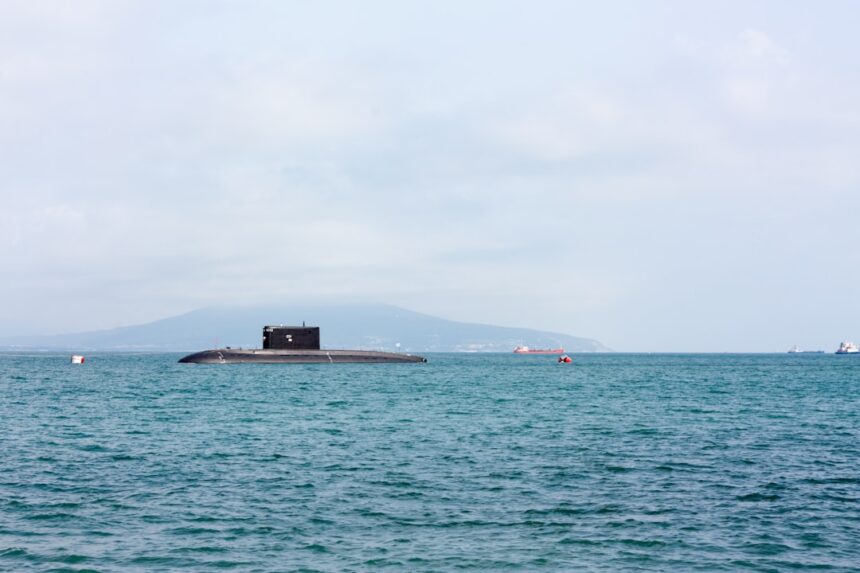
The unseen hunter beneath the waves, the submarine, has undergone a profound metamorphosis, driven by a relentless pursuit of stealth. This evolution is not merely about a quieter engine or a darker coat; it is a complex tapestry woven from advancements in hydrodynamics, acoustics, materials science, and operational doctrine. As submarines transitioned from lumbering behemoths to virtually invisible predators, their strategic implications shifted dramatically, transforming naval warfare and international power dynamics.
The initial forays into underwater warfare were less about stealth and more about surprise. Early submarines were noisy, cumbersome, and their detection was a matter of opportunity rather than sophisticated tracking. However, even in these nascent stages, the seeds of stealth were sown, driven by the fundamental purpose of the submarine: to be unseen.
The Rudimentary Origins of Underwater Evasion
The very act of submerging was inherently a form of concealment. Before the advent of advanced sonar, the primary means of detecting a submarine were visual observation and the noise it generated on the surface or at shallow depths. Early boats, often powered by steam on the surface and electric motors submerged, produced significant operational noise.
Noise as the Unavoidable Herald
The reciprocating engines and the churning propellers of early submarines were akin to a blacksmith hammering in a quiet village; their presence was announced by their very operation. Surface transit, while faster, exposed them to the prying eyes of lookouts and the limited acoustic capabilities of the time. Submerged, they were marginally less visible, but their battery limitations and the need for frequent surfacing to recharge limited their operational endurance and stealth.
The Acoustic Awakening: The Importance of Sound
The development of underwater acoustics, particularly sonar, during World War I, marked a paradigm shift. Suddenly, sound became the submarine’s greatest enemy and its greatest potential advantage. The ability to “hear” underwater, however rudimentary, highlighted the significance of the sound a submarine made.
Early Sonar: A Flawed but Fateful Invention
The first passive sonar systems, essentially directional microphones, were capable of detecting the general direction of a sound source. They were indiscriminate, picking up all manner of underwater noise, but they illuminated the critical vulnerability of submarines: their sonic signature. This spurred an immediate, albeit nascent, understanding that reducing noise was paramount to survival and mission success.
Hull Design and Hydrodynamics: The First Steps Towards Silence
While acoustic advancements were still in their infancy, early designers recognized the importance of hydrodynamics. A more streamlined hull would not only improve speed and maneuverability but also reduce the noise generated by waterflow around the vessel.
The Move Towards Smoother Lines
The boxy, utilitarian designs of the earliest submarines gradually gave way to more rounded and torpedo-like shapes. This was an intuitive response to the need for efficiency and a subtle reduction in the turbulent wake that could betray their presence. While not explicitly conceived as stealth features, these hydrodynamic improvements laid the groundwork for future acoustic quieting.
The evolution of submarine stealth technology has played a crucial role in naval warfare, significantly enhancing the capabilities of modern submarines. For a deeper understanding of this fascinating subject, you can explore a related article that delves into the historical advancements and innovations in submarine stealth. This article provides insights into how these developments have transformed underwater operations and strategic military planning. To read more, visit this link.
The Sonar Era and the Arms Race of Silence
World War II witnessed a dramatic escalation in the cat-and-mouse game between submarines and anti-submarine warfare (ASW) forces. Sonar technology progressed rapidly, and with it, the need for submarines to become even quieter. This period saw the true birth of submarine stealth as a deliberate design philosophy.
The Peril of Active Sonar and the Dawn of Passive Listening
The widespread deployment of active sonar, which emits a ping to detect objects, forced submarines to become masters of silence. Active sonar was a powerful tool, but it also acted as a beacon, revealing the submarine’s location to anyone who was listening. This created a strong incentive to rely on passive sonar, listening for the enemy’s movements rather than announcing one’s own.
The Submarine’s Countermeasure: The Art of the Passivist
Submarines began to be designed with an increasing emphasis on passive acoustics. This involved not only reducing the noise of the machinery within the hull but also minimizing the sounds generated by the interaction of the hull with the water.
Noise Reduction Technologies: A Symphony of Silencers
Submarine designers began to tackle the sources of noise systematically. This was a multi-pronged approach, addressing everything from the whine of electric motors to the clatter of crew activity.
Machinery Isolation: The Damped Heartbeat
Vibrations from engines, pumps, and other machinery were a significant source of noise. Techniques like mounting machinery on resilient foundations and using flexible couplings helped to isolate these vibrations and prevent them from propagating through the hull and into the water. Imagine placing a sensitive musical instrument on a carpeted floor rather than a bare wooden one; the difference in sound transmission is analogous.
Propeller Design: The Whisper of the Screw
The propeller, the very engine of underwater propulsion, was a major noisemaker. Propeller design evolved to minimize cavitation – the formation and collapse of bubbles – which creates a distinctive and detectable sound. Finer blade shapes, optimized tip speeds, and the use of specialized materials became crucial.
Hull Coatings: The Camouflage of Sound
The outer hull of the submarine also became a target for noise reduction. The development of anechoic coatings, essentially sound-absorbing tiles applied to the hull, helped to dampen the echoes of active sonar pings and absorb internally generated noise before it could escape. These coatings act like acoustic sponges, soaking up unwanted sound.
Operational Tactics: The Submarine as a Ghost
Stealth was not solely a matter of technological superiority; it was also about intelligent operational deployment. Submarines learned to exploit the ocean’s acoustic environment.
Exploiting the Sound Channel: The Ocean’s Whispering Gallery
The ocean possesses layers of water with different temperatures and salinity, creating underwater sound channels. Submarines learned to operate within these channels, where sound travels further and more efficiently, allowing them to both hear and remain unheard over greater distances. It’s akin to finding the perfect spot in a concert hall to hear the music without being overwhelmed by the crowd.
Acoustic Countermeasures: The Art of Misdirection
While reducing noise was primary, submarines also developed ways to confuse enemy sonar. This included the use of decoys that mimicked the submarine’s acoustic signature and techniques to mask their own sound with ambient ocean noise.
The Cold War Intensification: The Silent Running Era
The Cold War ushered in an unprecedented era of technological competition and strategic tension. Submarines, especially nuclear-powered ones, became critical components of nuclear deterrence, and their ability to evade detection was paramount. This period saw the refinement and hyper-specialization of stealth technologies.
The Nuclear Revolution and the Silent Running Imperative
Nuclear power provided submarines with virtually unlimited endurance and the ability to remain submerged for extended periods, making stealth a constant operational requirement rather than a temporary measure. The ability to operate silently for weeks or months at a time transformed their strategic role.
The Submarine as a Mobile Fortress: The Extended Patrol
With nuclear power, submarines could patrol enemy coastlines for extended durations without needing to surface for fuel. This meant that the pressure to remain undetected was constant. The submarine was no longer a fleeting shadow but a prolonged, unseen presence.
Advanced Hull Design and Hydrodynamics: The Quest for Laminar Flow
The pursuit of stealth led to radical advancements in hull design. The goal shifted from merely reducing turbulence to achieving laminar flow – a smooth, unbroken flow of water over the hull, which generates minimal noise.
The Tear-Drop Shape and Beyond: Mimicking Nature’s Efficiency
Hull shapes evolved towards highly streamlined, often “teardrop” or S-shaped configurations, which are acoustically quieter and more efficient. These designs aim to minimize the vortices and eddies that create sound. Think of a bird’s wing, designed for efficient and silent flight; similar principles were applied to underwater hulls.
Quieting the Nuclear Heart: Reactor and Propulsion Innovations
The nuclear reactor, while providing immense power, also generated its own set of acoustic challenges. Sophisticated engineering was required to dampen the vibrations and noises associated with the reactor and its associated cooling systems.
Reactor Insulation and Vibration Dampening: The Muffled Heartbeat
Reactors were enclosed in specially designed sound-deadening compartments, and all machinery connected to them was mounted on advanced vibration isolation systems. The sound of the reactor had to be progressively choked off before it could reach the hull.
Pump and Flow Management: The Silent Flow of Power
The pumps that circulated coolant and the water inlets and outlets were all subjected to intense scrutiny and redesign to minimize noise. The smooth, controlled flow of water, rather than turbulent gushing, became the ideal.
Sonar System Advancements: The Ears and Eyes of Stealth
As submarines became quieter, the ASW forces invested heavily in more sophisticated sonar systems, both active and passive. This, in turn, pushed submarine designers to develop even more effective countermeasures.
Passive Sonar Dominance: Listening for the Whispers of the Deep
Submarines prioritized passive sonar capabilities, allowing them to gather intelligence by listening to the sounds of the ocean and the movements of enemy vessels without betraying their own presence. This became their primary mode of situational awareness.
Improved Hull-Form Sonar Arrays: The Submarine’s Integrated Senses
Sonar arrays were integrated into the hull itself, often forming large, conformal domes or being embedded within hull coatings. This allowed for a more comprehensive and less obtrusive method of detecting sound.
The Digital Age of Stealth: Advanced Materials and Active Quieting
The late 20th and early 21st centuries have seen a leap forward in stealth technology, driven by advances in materials science, computational power, and a deeper understanding of acoustic propagation. Submarines have become more like conceptual entities, harder to pin down than ever before.
Metamaterials and Anechoic Innovations: The Unseen Shield
New materials have revolutionized how submarines interact with sound. The development of advanced anechoic coatings and the exploration of acoustic metamaterials offer unprecedented levels of sound absorption and redirection.
The Evolution of Hull Coatings: From Sponges to Sound Sculptors
Modern anechoic coatings are far more sophisticated than their predecessors, capable of absorbing a wider range of frequencies and even altering the acoustic properties of the hull to reduce reflections. They are no longer just passive absorbers but active participants in controlling the submarine’s acoustic signature.
Metamaterials: Bending Sound to Their Will
Acoustic metamaterials, engineered to have properties not found in naturally occurring materials, offer the potential to actively manipulate sound waves. These materials could be used to create “acoustic cloaks” that bend sound around the submarine, rendering it virtually invisible to sonar. Imagine a magician making an object disappear by bending light around it; metamaterials aim to do something similar with sound.
Magnetohydrodynamics and Non-Cavitation Propulsion: The Silent Drive
The search for even quieter propulsion systems has led to the exploration of advanced concepts like magnetohydrodynamic drives, which use electromagnetic forces to propel water without moving parts, and further refinements in propeller design to eliminate cavitation entirely.
The Dream of the Silent Engine: Eliminating Moving Parts
Magnetohydrodynamic (MHD) propulsion, while still largely experimental for large vessels, offers the theoretical promise of completely silent propulsion. By accelerating a conductive fluid (seawater) with magnetic fields, it eliminates the noise and vibration associated with traditional propellers and turbines.
Advanced Control of Water Flow: The Uninterrupted Stream
Even with traditional propellers, ongoing research focuses on actively controlling water flow to prevent cavitation across a wider range of speeds and maneuvers. This involves sophisticated sensor feedback and dynamic adjustments to propeller pitch and speed.
Advanced Sonar and Signal Processing: The Digital Ghost Hunter
The advent of powerful digital signal processing capabilities has allowed for the development of extremely sensitive sonar systems that can sift through immense amounts of acoustic data to detect even the faintest of sounds.
Low-Frequency Sonar and Signal Analysis: Hearing the Unhearable
New generations of sonar focus on analyzing low-frequency sounds, which travel further in water and can emanate from submerged vessels. Sophisticated algorithms are employed to distinguish the subtle acoustic signatures of submarines from the background noise of the ocean.
The Submarine’s Counter-Countermeasures: Digital Camouflage
In response, submarines employ advanced digital countermeasures, including active acoustic decoys that can mimic the acoustic signatures of other vessels and sophisticated jamming techniques that can disrupt enemy sonar signals. They are learning to fight not just with silence but with digital deception.
The evolution of submarine stealth technology has played a crucial role in naval warfare, allowing submarines to operate undetected in hostile waters. A fascinating exploration of this topic can be found in a related article that delves into the advancements and historical milestones of submarine design and technology. For those interested in understanding how these innovations have shaped modern naval strategies, you can read more about it in this insightful piece on submarine stealth technology history at In The War Room.
The Future of Submarine Stealth: Towards True Invisibility
| Year | Development | Country | Significance |
|---|---|---|---|
| 1914 | Introduction of early sound-dampening techniques | Germany | First attempts to reduce noise from submarine machinery |
| 1940s | Rubber anechoic tiles developed | Germany | Reduced sonar detection by absorbing sound waves |
| 1950s | Adoption of teardrop hull design | USA | Improved underwater speed and reduced noise |
| 1960s | Introduction of nuclear-powered submarines | USA / USSR | Extended underwater endurance and quieter operation |
| 1970s | Advanced anechoic coatings and sound isolation mounts | USA / USSR | Further reduction in acoustic signature |
| 1990s | Use of pump-jet propulsion systems | UK / USA | Reduced cavitation noise compared to traditional propellers |
| 2000s | Integration of advanced sonar-absorbent materials | Multiple countries | Enhanced stealth capabilities against modern sonar |
| 2010s | Development of quieting technologies for onboard systems | USA / Russia / China | Minimized internal noise sources for stealth |
| 2020s | Research into metamaterials for sonar cloaking | Various | Potential to significantly reduce sonar detection |
The evolution of submarine stealth technology is a continuous journey. The ultimate goal is to achieve a level of acoustic invisibility that renders the submarine virtually undetectable by any presently known means. This future vision is shaped by ongoing research and the ever-present need for strategic advantage.
Artificial Intelligence and Machine Learning: The Intelligent Stealth
The integration of artificial intelligence (AI) and machine learning is poised to revolutionize submarine operations, enhancing stealth capabilities in unprecedented ways.
Predictive Acoustic Modeling: Anticipating the Soundscape
AI can analyze vast datasets of acoustic information to predict how sound will propagate in a given environment, allowing submarines to choose optimal routes and depths for maximum stealth. It’s like having a weather forecast for sound, predicting where it will travel and where it will be muffled.
Adaptive Stealth Systems: Responding to the Enemy’s Ears
Machine learning algorithms can analyze the patterns of enemy sonar activity and adapt the submarine’s acoustic signature in real-time to minimize detection risk. If the enemy shifts their listening focus, the submarine can adjust its own “noise.”
Quantum Technologies and Unconventional Sensing: The Next Frontier
Emerging technologies, such as quantum sensing and advanced imaging techniques, may offer entirely new ways to detect submarines, necessitating further innovation in stealth.
Gravimetric and Magnetic Sensors: Detecting the Imperceptible
The development of highly sensitive gravimetric and magnetic sensors could potentially detect the mass and magnetic fields of even the quietest submarine, pushing the boundaries of stealth requirements.
Beyond Acoustics: Thermal and Visual Concealment
While acoustics remain the primary focus, research is also exploring methods to reduce a submarine’s thermal signature and enhance its visual concealment, especially in shallower waters or during specific operational phases.
The Submarine as a Networked Entity: Distributed Stealth
The concept of the submarine as an isolated entity is evolving. Future submarines may operate as part of a distributed network, sharing information and coordinating their movements to create complex acoustic illusions or a dispersed “phantom” signature.
Swarm Tactics and Deceptive Signatures: The Illusion of Many
The use of multiple, smaller, and less detectable autonomous underwater vehicles (AUVs) working in concert with a larger submarine could create a confusing and overwhelming sensory environment for ASW forces, making it impossible to isolate the true threat.
The evolution of submarine stealth technology is a testament to human ingenuity and the relentless pursuit of strategic advantage. From the rudimentary attempts at concealment in the early days to the sophisticated application of advanced materials and artificial intelligence, submarines have transformed from vulnerable underwater craft into the epitome of unseen power. As this technological arms race continues, the silent hunters of the deep will undoubtedly continue their quest for ever-greater invisibility, a constant reminder of the evolving nature of naval warfare and the enduring strategic importance of what lies beneath the waves.
FAQs
What is submarine stealth technology?
Submarine stealth technology refers to the various methods and materials used to reduce the detectability of submarines by sonar, radar, and other detection systems. This includes noise reduction, special hull coatings, and design features that minimize acoustic and magnetic signatures.
When did submarine stealth technology first develop?
Submarine stealth technology began to develop significantly during World War II, as navies sought ways to evade increasingly effective sonar and radar detection. Early innovations included sound-dampening materials and quieter propulsion systems.
What are some key advancements in submarine stealth technology history?
Key advancements include the introduction of anechoic tiles in the 1960s to absorb sonar waves, improvements in propeller design to reduce cavitation noise, and the development of nuclear-powered submarines that can operate more quietly and for longer durations underwater.
How has submarine stealth technology impacted naval warfare?
Stealth technology has greatly enhanced the strategic capabilities of submarines, allowing them to operate undetected for extended periods. This has shifted naval warfare by increasing the importance of submarine-based reconnaissance, deterrence, and surprise attack capabilities.
What materials are commonly used in submarine stealth technology?
Common materials include anechoic rubber tiles that absorb sonar signals, special coatings to reduce magnetic signatures, and sound-isolating mounts for machinery to minimize noise transmission. These materials help submarines remain less detectable in hostile environments.