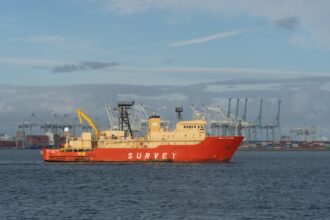
The depths of the Cold War were a shadowy arena of technological one-upmanship, and nowhere was this more keenly felt than in the silent, unseen world beneath the waves. The Soviet Union, acutely aware of its strategic vulnerabilities, poured vast resources into developing a robust and sophisticated submarine tracking network. Uncovering this technology is not merely an academic exercise; it offers a crucial lens through which to understand the Cold War’s naval dynamics, the evolution of anti-submarine warfare (ASW), and the persistent cat-and-mouse game played out in the global oceans.
The advent of nuclear-powered submarines transformed naval warfare. These underwater leviathans, capable of remaining submerged for extended periods and launching devastating ballistic missiles, posed an existential threat to both the United States and the Soviet Union. For Moscow, operating with a geographically disadvantaged coastline and a powerful, albeit often technologically inferior, surface fleet, the submarine force became a cornerstone of its defense strategy. However, this very reliance on submarines also necessitated a formidable capability to detect and track enemy submarines, particularly those of the United States.
Origins of Soviet ASW Concerns
The Soviet Union’s initial ASW capabilities were largely reactive. Early diesel-electric submarines were relatively slow and required frequent surfacing. The development of NATO’s nuclear submarine fleet in the 1950s, however, presented a paradigm shift. The potential for a stealthy first strike, or the disruption of Soviet sea lines of communication, loomed large. This galvanized Soviet military planners to invest heavily in a comprehensive ASW doctrine and the technologies to support it. The ocean, a vast and complex environment, became the ultimate battlefield for this technological arms race.
The Strategic Imperative: Protecting the Motherland
For the Soviet Union, the primary drivers for developing advanced submarine tracking technology were multifaceted. Firstly, it was about the credible threat of nuclear deterrence. Soviet ballistic missile submarines, often referred to as “boomers,” were designed to patrol in protected waters, remaining unheard and unseen until ordered to launch their payloads. The Soviets needed to ensure their own submarines could operate with a degree of sanctuary, while simultaneously being able to locate and potentially neutralize enemy submarines that might threaten their own deterrent force or naval infrastructure. Secondly, controlling sea lanes was paramount. The Soviet Union relied on maritime trade and the ability to project power. Enemy submarines posed a significant threat to these operations.
Soviet submarine tracking technology has played a crucial role in naval warfare and intelligence gathering during the Cold War and beyond. For a deeper understanding of the advancements in this field, you can explore the article titled “The Evolution of Submarine Detection: From Sonar to Satellite” on In The War Room. This article delves into the various technologies developed to track submarines, including the innovative methods employed by the Soviet Union. To read more, visit In The War Room.
Hydroacoustics: The Ears of the Deep
The ocean is not a transparent medium. Sound travels effectively underwater, making hydroacoustics the cornerstone of submarine detection. The Soviets, like their Western counterparts, invested heavily in understanding and exploiting the acoustic properties of the marine environment. This pursuit of sonic superiority was a relentless endeavor, akin to perfecting a finely tuned instrument capable of discerning the faintest whisper in a roaring tempest.
Passive Sonar Systems: Listening to the Ocean’s Symphony
Passive sonar systems are designed to detect the sounds emitted by submarines themselves. These include the hum of machinery, the churn of propellers, and the cavitation generated by the hull moving through the water. The Soviets developed a wide array of passive sonar arrays, from hull-mounted systems to towed arrays and even large, fixed arrays deployed on the seabed.
Hull-Mounted Sonar Arrays
These are integrated directly into the submarine’s hull, providing a relatively immediate and compact detection capability. Soviet submarines, like those of other navies, were equipped with various configurations of hull sonar, optimized for different operational roles and frequencies. The development focused on increasing sensitivity and directional accuracy to pinpoint the source of detected sounds.
Towed Acoustic Arrays
These are long cables, often kilometers in length, that are towed behind a surfaced or submerged vessel. They are highly effective at detecting low-frequency sounds emitted by submarines at considerable distances. The Soviet Union developed sophisticated towed arrays, often employing multiple hydrophones to improve bearing accuracy and distinguish between different types of submarine noise. Think of a string of pearls, each pearl a sensitive listener, spread out across a vast expanse to catch every ripple.
Fixed Seabed Arrays
For crucial strategic areas, such as chokepoints or approaches to their submarine bases, the Soviets deployed large, fixed arrays of hydrophones on the ocean floor. These systems, often connected by underwater cables, provided a persistent surveillance capability, acting as sentinels guarding vital territories. The sheer scale and permanence of these installations underscored their strategic importance.
Active Sonar Systems: Pinging the Unknown
Active sonar systems work by emitting a sound pulse (a “ping”) and then listening for the echo that returns after bouncing off a target. This provides a direct indication of a target’s presence and range. While more revealing than passive sonar, active sonar also has the disadvantage of revealing the location of the emitting platform.
The Trade-off Between Detection and Secrecy
Soviet ASW planners grappled with the inherent compromise between effective detection via active sonar and the imperative of maintaining secrecy. The development of optimized ping frequencies and sophisticated signal processing techniques aimed to minimize the detectability of their own active sonar emissions while maximizing the chances of obtaining a useful echo. This was a constant balancing act, a tightrope walk between revealing their presence to find the enemy.
Target Classification and Identification
A significant challenge for any sonar system is distinguishing between a genuine submarine and other underwater objects, such as marine life, geological formations, or even other vessels. The Soviets invested heavily in developing algorithms and acoustic signatures databases to aid in the classification and identification of sonar contacts. This involved analyzing the characteristics of the echoes, including their Doppler shift, temporal patterns, and spectral content.
Beyond Sound: Diversifying the Detection Toolbox
While hydroacoustics was paramount, the Soviets understood that relying on a single sense was precarious. They developed and deployed a range of non-acoustic detection methods to create a layered and more resilient ASW network.
Magnetic Anomaly Detection (MAD)
Submarines, being large metallic objects, subtly distort the Earth’s magnetic field. Magnetic Anomaly Detectors (MAD) are highly sensitive instruments that can detect these localized variations. These were often deployed on aircraft and helicopters that would fly low over suspected submarine operating areas.
Aerial ASW Platforms
The Soviet Union operated a dedicated fleet of ASW aircraft, such as the Tu-142 “Bear-F,” equipped with sophisticated MAD systems, sonobuoys, and other sensors. These aircraft played a crucial role in sweeping vast areas of ocean and providing real-time intelligence to other ASW assets. The sight of these distinctive aircraft patrolling the skies was a constant reminder of the ongoing struggle for oceanic control.
Limitations of MAD
MAD systems are effective only at very close range and thus have a limited coverage area. They are also susceptible to interference from geological formations and other metallic objects on the seabed or in the water column. Despite these limitations, MAD remained a valuable tool in the ASW arsenal, particularly for confirming potential sonar contacts.
Radar and Electro-Magnetic Detection
While submarines operate submerged, they must still surface periodically to snorkel (draw in air for their diesel engines) or to recharge batteries. During these brief periods, they become vulnerable to detection by radar. The Soviets developed specialized radar systems to detect these fleeting appearances.
Over-the-Horizon Radar (OTHR)
These advanced radar systems are capable of detecting targets at ranges far beyond the visual horizon, leveraging atmospheric conditions to bounce radar signals off the ionosphere. The Soviets developed OTHR networks to monitor vast stretches of ocean for any surface activity, including the snorkel exhaust of submarines.
ESM (Electronic Support Measures)
Submarines also emit radio frequency signals, particularly when communicating or using certain navigation systems. Electronic Support Measures (ESM) systems are designed to detect, intercept, and analyze these signals. The Soviets employed ESM capabilities on both their surface vessels and their shore-based listening posts to gain intelligence on enemy submarine operations.
Visual and Infrared Detection
During surface operations or when using their periscopes to observe the surface, submarines can also be detected by visual and infrared sensors.
ASW Patrol Aircraft and Ships
Traditional methods of visual and infrared observation were employed by patrol aircraft and ships. This included the use of powerful binoculars, high-resolution cameras, and thermal imaging devices to spot periscopes, snorkel exhausts, or disturbed water trails.
The Importance of Reconnaissance
The success of these more overt detection methods often relied on intelligence gathered through other means, such as signals intelligence or reconnaissance. Understanding where enemy submarines were likely to be operating or which patrol routes they might be using was crucial for effective visual and infrared surveillance.
The Intelligence Network: Ears and Eyes Above and Below
The effectiveness of any detection technology is amplified by the intelligence network that supports it. The Soviet Union built a vast and intricate intelligence apparatus to collect, process, and disseminate information related to submarine activity. This was a complex web, woven from signals intelligence, human intelligence, and satellite reconnaissance.
Signals Intelligence (SIGINT): Listening to the Airwaves
SIGINT activities involved intercepting and analyzing electronic communications from submarines and their support networks. This provided invaluable insights into patrol routes, operational orders, and even the internal status of enemy submarines.
Naval Communication Interception
The Soviet Union invested heavily in establishing global SIGINT listening posts capable of intercepting a wide range of naval radio communications. These stations, both at sea and on land, were the electronic ears of the Soviet Union, constantly straining to overhear the conversations of their adversaries.
Cryptanalysis and Code-breaking
A critical component of SIGINT is the ability to decipher encrypted messages. The Soviets dedicated significant resources to cryptanalysis, aiming to break the codes used by Western navies for submarine communication. The success of these efforts could provide a decisive advantage, revealing enemy intentions before they were acted upon.
Human Intelligence (HUMINT): The Shadow Network
While less glamorous than electronic eavesdropping, human intelligence played an equally vital role. Agents embedded within foreign naval establishments or with access to sensitive information provided ground-level insights into submarine development, operational plans, and ASW tactics.
Sources and Methods
HUMINT sources within naval dockyards, command centers, or scientific research facilities could provide invaluable information that was difficult to obtain through other means. The risks associated with such operations were immense, but the potential rewards were equally significant.
Satellite Reconnaissance: The Eye in the Sky
The advent of satellite technology provided a new dimension to intelligence gathering. Satellites equipped with high-resolution cameras and other sensors could provide broad-area surveillance and monitor naval activities, including submarine deployments and exercises.
Photo-Reconnaissance Satellites
These satellites captured detailed imagery of shipyards, naval bases, and even the surface wakes of submarines. Analyzing this imagery could reveal patterns of activity, identify new submarine classes, and track the movement of naval assets.
Radar and Electronic Intelligence Satellites
Beyond optical imagery, satellites also carried radar and electronic intelligence payloads, allowing them to penetrate cloud cover and detect electronic emissions from naval platforms, including submarines.
Soviet submarine tracking technology has long been a subject of intrigue, particularly during the Cold War, as nations raced to develop advanced systems for monitoring underwater activities. For those interested in exploring this topic further, a related article provides an in-depth analysis of the evolution of these technologies and their impact on naval warfare. You can read more about it in this insightful piece on submarine strategies and innovations by visiting this link.
Submarine Tracking Doctrine and Operational Deployment
| Metric | Description | Value / Capability | Time Period |
|---|---|---|---|
| Detection Range | Maximum distance at which Soviet sonar systems could detect submarines | Up to 50 km (varied by system and environment) | 1960s-1980s |
| Sonar Types | Types of sonar technology used in tracking submarines | Passive and Active Sonar, Towed Array Sonar | 1960s-1990s |
| Satellite Tracking | Use of satellites for submarine detection and tracking | Early warning and tracking satellites launched in 1970s | 1970s-1980s |
| Hydrophone Networks | Underwater microphone arrays for acoustic detection | Extensive fixed hydrophone arrays in strategic locations | 1960s-1980s |
| Data Processing Speed | Speed of onboard computers analyzing sonar data | Measured in thousands of operations per second | 1970s-1980s |
| Tracking Accuracy | Precision in locating and following submarine targets | Within 100 meters under optimal conditions | 1980s |
The technology itself is only one part of the equation. The Soviet Union developed comprehensive doctrines and sophisticated operational procedures to leverage its tracking capabilities effectively. This involved coordinating various assets and intelligence streams to create a cohesive anti-submarine warfare effort.
ASW Patrol Zones and Interception Lines
Soviet naval planners designated specific ASW patrol zones and established interception lines along probable enemy submarine transit routes. This ensured that their ASW assets were positioned to maximize the chances of detecting and tracking intruding submarines.
The “Forward Edge of Battle Area” (FEBA)
This concept, familiar in land warfare, was adapted to the maritime domain. The Soviets aimed to establish a strong ASW presence in the waters closest to their own territory and strategic assets, creating a defensive screen.
Chokepoint Interdiction
Key maritime chokepoints, such as straits and narrow passages, were heavily monitored with fixed sonar arrays and regular ASW patrols, aiming to prevent enemy submarines from accessing or egressing critical areas.
The Role of ASW Task Forces
The Soviet Navy organized dedicated ASW task forces comprised of submarines, surface escorts, and integral air support. These task forces were designed to operate in a coordinated manner, combining the strengths of various platforms and sensors for maximum effectiveness.
Coordination and Command Structures
Effective coordination was crucial. The Soviets developed sophisticated command and control systems to link together their disparate ASW assets and intelligence sources, enabling real-time decision-making and response.
The Art of the “Kill Chain”
In ASW, as in other forms of warfare, the successful neutralization of a target depends on a continuous “kill chain.” This involves:
Search and Detection
The initial phase where ASW assets actively or passively search for potential submarine contacts.
Localization and Classification
Once a contact is made, efforts are intensified to determine its precise location and to classify it as a submarine.
Tracking and Engagement
Maintaining a continuous track of the submarine and, if necessary, launching weapons against it.
Post-Engagement Assessment
Confirming the destruction or neutralization of the target.
The Soviet Union poured immense effort into optimizing each link in this chain, recognizing that a weakness in any one could render the entire operation futile. The ongoing effort to uncover the specifics of their technological advancements in this domain offers a vital glimpse into the strategic calculations that underscored the Cold War. The ocean remains a place of mystery, and understanding the technologies developed to probe its depths offers insights not just into the past, but also into the enduring challenges of maritime security.
FAQs
What was the primary purpose of Soviet submarine tracking technology?
Soviet submarine tracking technology was developed to detect, monitor, and track the movement of enemy submarines, particularly those of NATO countries, to maintain strategic military advantage during the Cold War.
What types of technologies did the Soviet Union use for submarine tracking?
The Soviet Union employed a combination of sonar systems, underwater hydrophone arrays, magnetic anomaly detectors, and satellite reconnaissance to track submarines. They also used specialized surface ships and aircraft equipped with advanced sensors.
How did the Soviet Navy’s sonar systems work in tracking submarines?
Soviet sonar systems emitted sound waves underwater and detected echoes reflected from submarine hulls. Passive sonar arrays listened for noise generated by submarine engines and propellers, allowing the detection and localization of submarines without revealing the listener’s position.
What role did the Soviet “SOSUS” equivalent play in submarine tracking?
The Soviet Union developed its own network of underwater hydrophone arrays similar to the U.S. SOSUS (Sound Surveillance System). These arrays were deployed on the ocean floor to detect low-frequency sounds from submarines over long distances, enabling early warning and tracking.
Did Soviet submarine tracking technology influence modern naval surveillance?
Yes, many principles and technologies developed by the Soviet Union for submarine tracking have influenced modern naval surveillance systems. Advances in sonar, signal processing, and underwater sensor networks continue to be foundational in contemporary anti-submarine warfare.