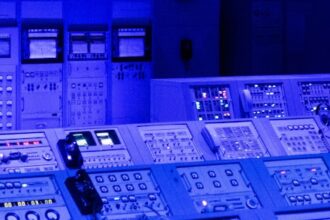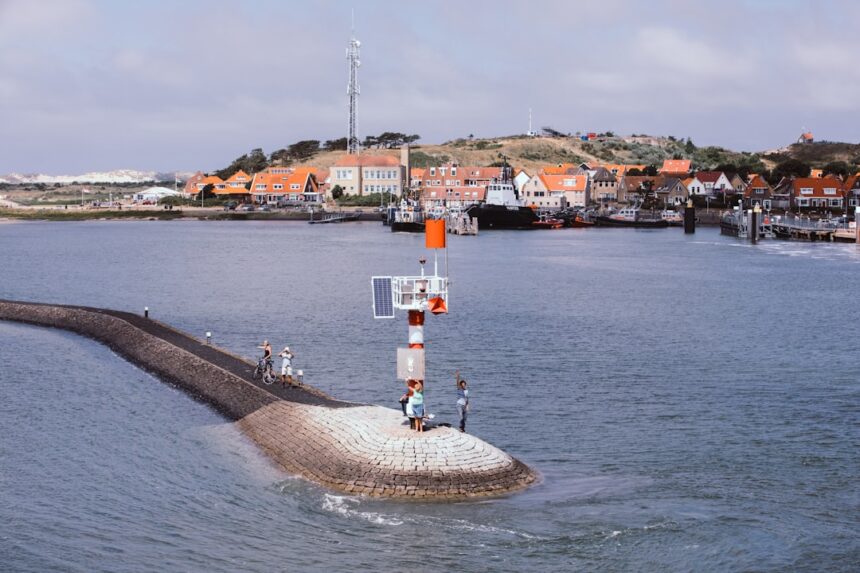
The silent hunter of the deep, the submarine, has long presented an existential challenge to naval powers, a phantasm lurking beneath the waves, capable of delivering devastating blows or slipping away unseen. The perennial struggle to pierce this underwater veil has been a driving force behind a relentless evolution of detection technologies. From the rudimentary to the highly sophisticated, these advancements represent a continuous arms race, a technological chess match played out in the silent, crushing depths of the ocean. Understanding this evolution offers a fascinating glimpse into the interplay of scientific innovation, strategic necessity, and the ever-present desire to maintain maritime security.
In the nascent days of submarine warfare, the methods for detecting these new submersible threats were as rudimentary as the submarines themselves. Imagine the early days of a forest fire, where the only alert might be a curl of smoke or a distant crackle. So too were the initial attempts to locate submerged vessels. These early techniques relied heavily on passive observation and sheer luck, with limited technological aid.
Visual and Auditory Observation
The most elementary form of detection was purely visual. Sailors scanning the horizon at the surface would look for any anomaly: a periscope breaking the water, a wake left by a surfacing submarine, or even the shadow of a submerged hull on a clear day. This was akin to a lookout on a ship in calm seas, hoping to spot a distant sail. The effectiveness of this method was, of course, highly dependent on sea state, weather conditions, and the attentiveness of the observer.
Auditory methods, while still basic, offered a slight improvement. As submarines began to operate with engines, noise became an inadvertent telltale. Listeners on surface vessels would be tasked with hearing the rumble of engines, the ping of machinery, or even the sounds of activity within the hull. This relied on the fact that water, while an excellent medium for sound transmission, also muffled and distorted it. The effectiveness was limited by ambient ocean noise, such as waves crashing, marine life, and the sounds of the detecting vessel itself.
Early Mines and Barrages
As the threat of submarines became more pronounced, particularly during World War I, more aggressive, albeit still primitive, countermeasures emerged. These were less about pinpointing a specific location and more about creating a zone of danger.
Acoustic Mines
The concept of acoustic mines was an early attempt to leverage sound for detection. These mines were designed to detonate when they detected a specific frequency or sound signature associated with a passing submarine. While not a direct detection and tracking system, their presence acted as a deterrent and a passive hazard, forcing submarines to operate with greater caution or risk detonating the mine.
Anti-Submarine Nets
The deployment of large anti-submarine nets, often equipped with explosive charges or mines, was another early strategy. These nets aimed to physically impede and potentially damage submarines attempting to pass through them. While not a detection method in the sense of locating a target, they required intelligence regarding potential submarine routes and were a crude form of area denial, forcing submariners into predictable channels.
The history of submarine detection technology is a fascinating journey that highlights the evolution of naval warfare and the continuous race between stealth and detection. For a deeper understanding of this topic, you can explore the article on submarine detection advancements and their impact on military strategy at In The War Room. This resource provides valuable insights into the technological innovations that have shaped underwater surveillance and the ongoing challenges faced by navies around the world.
The Rise of Active Sonar: Listening with Artificial Ears
The advent of active sonar marked a watershed moment in submarine detection. It transformed the passive act of listening into an active interrogation of the underwater environment. Instead of merely waiting to hear a sound, naval forces could now project sound and interpret the echoes that returned, effectively using the ocean itself as a canvas for sonic imaging. This was akin to shining a flashlight into a dark room; the returning light reveals what is hidden beyond the immediate visual contact.
The Principle of Echolocation
Active sonar operates on the principle of echolocation, a phenomenon observed in nature by creatures like bats and dolphins. A sonar transducer emits a pulse of sound energy, often in the form of a “ping.” This sound wave travels through the water until it encounters an object, such as a submarine. The sound then reflects off the object, returning to the sonar transducer as an echo. By measuring the time it takes for the echo to return and the direction from which it originates, the sonar operator can determine the range and bearing of the target.
Early Sonar Systems: From Simple Pings to Rudimentary Displays
The earliest active sonar systems, developed during the interwar period and seeing significant deployment in World War II, were relatively basic. They typically consisted of a directional projector and a receiver, often integrated into a single unit.
Projector and Receiver Units
These systems would emit a powerful sound pulse and then switch to a listening mode to capture the returning echoes. The sound emitted was often in the audible range, making early sonar operations audible to anyone with sensitive hearing, a distinct disadvantage. The processing of the returning echoes was rudimentary, sometimes displayed as a simple dial indicating range or a visual sweep on a cathode ray tube.
Interpreting the Echoes: The Art of the Sonarman
Interpreting sonar echoes was, and to some extent still is, an art form. Sonar operators had to distinguish between echoes from submarines, marine life, the seabed, or even schools of fish. The “ping” of a submarine had a characteristic sound signature, but subtle variations, interference from other vessels, or extreme depths could make identification challenging. This required extensive training and experience, making the sonarman a critical asset.
The Doppler Effect and Speed Determination
A crucial advance in active sonar was the incorporation of Doppler shift detection. The Doppler effect, familiar from the changing pitch of a siren as it approaches and recedes, applies to sound waves as well. If a target is moving towards the sonar source, the frequency of the returning echo will be higher. If it is moving away, the frequency will be lower. By analyzing this frequency shift, sonar operators could determine the target’s relative speed, a vital piece of information for targeting and evasion. This added a crucial dimension to the static “where is it?” question, allowing for the addition of “how fast is it moving?”
The Evolution of Passive Sonar: The Whisper of the Deep
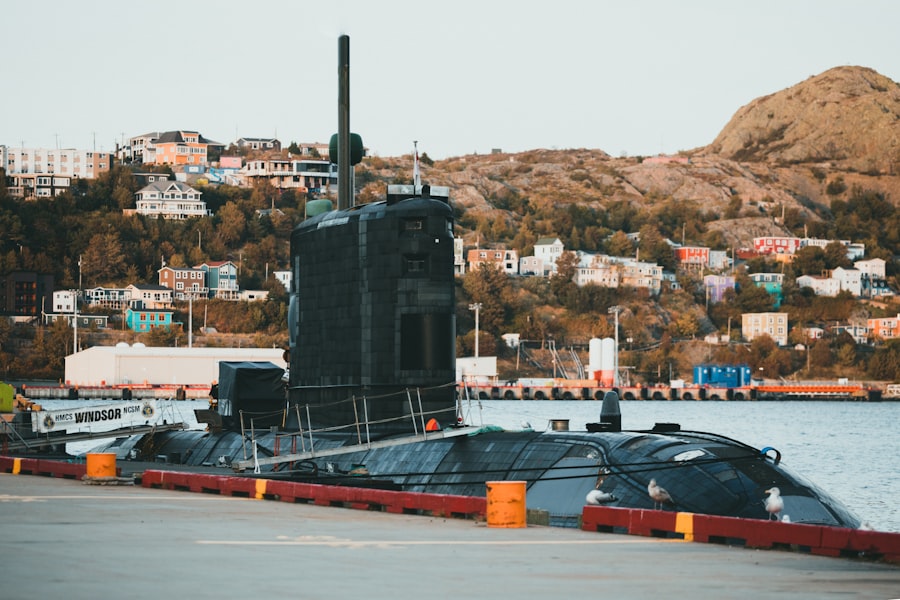
While active sonar offers a powerful means of detection, its very nature provides a sonic footprint that can be detected by the target. This led to the parallel and equally vital development of passive sonar, which listens for the sounds emitted by the submarine itself. This is akin to a hunter lying in wait, listening for the rustle of leaves or the snap of a twig that betrays the presence of prey.
The Silent Symphony of the Ocean
Submarines, even the most stealthy, are not truly silent. Machinery, water flow over the hull, propeller cavitation, and internal activities all generate acoustic signatures. Passive sonar systems are designed to detect, classify, and track these sounds. The challenge lies in separating the faint whispers of a distant submarine from the cacophony of the ocean.
Hydrophones and Arrays
The core of passive sonar technology lies in hydrophones, underwater microphones. These are often deployed in arrays, groups of hydrophones strategically placed to triangulate the source of a sound. By comparing the time and intensity of a sound arriving at different hydrophones, the system can pinpoint the direction and, with further analysis, the location of the sound source.
Bearing, Range, and Classification
Passive sonar primarily provides bearing information – the direction of the sound. Determining range is more complex and often relies on analyzing the strength of the signal, comparing it to known sound propagation models, and sometimes using triangulation with multiple passive listening posts or a combination of passive and active sonar. Classification is the critical process of identifying the type of vessel emitting the sound based on its unique acoustic signature. Different classes of submarines, with their specific engine types, hull designs, and operational profiles, produce distinct acoustic “fingerprints.”
The Acoustic Signature: A Submarine’s Identity Card
Every submarine, like a musical instrument, has a unique sound profile. This “acoustic signature” is a complex combination of frequencies, amplitudes, and temporal patterns produced by its machinery, hull, and propulsion system. Deciphering these signatures is a cornerstone of passive sonar operation.
Machinery Noise
The hum of engines, the whine of pumps, and the clatter of auxiliary machinery are all sources of acoustic emissions. Sophisticated passive sonar systems can analyze these noises to identify the type of power plant (e.g., diesel-electric, nuclear) and even the specific class of submarine.
Propeller Cavitation
As a propeller rotates, low-pressure areas can form around the blades, leading to the formation of tiny vapor bubbles. When these bubbles collapse, they create a characteristic popping or sputtering sound known as cavitation. The nature and intensity of propeller cavitation can reveal information about the propeller’s design, speed, and condition, offering valuable clues about the submarine.
Flow Noise
The movement of water over the submarine’s hull creates friction and turbulence, generating flow noise. This noise is influenced by the submarine’s speed, hull shape, and the sea state. Passive sonar operators learn to distinguish between different types of flow noise to gain further insights into the target’s behavior.
The Challenge of Ambient Noise
The ocean is a noisy place. Whales and dolphins communicate, ships create their own noise, and geological activity can generate sounds. A significant challenge for passive sonar is filtering out this ambient noise to isolate the faint pings of a distant enemy submarine. Advanced signal processing techniques are employed to enhance the signal-to-noise ratio, making it possible to detect targets that would otherwise be lost in the background.
Beyond Sound: Expanding the Sensory Net
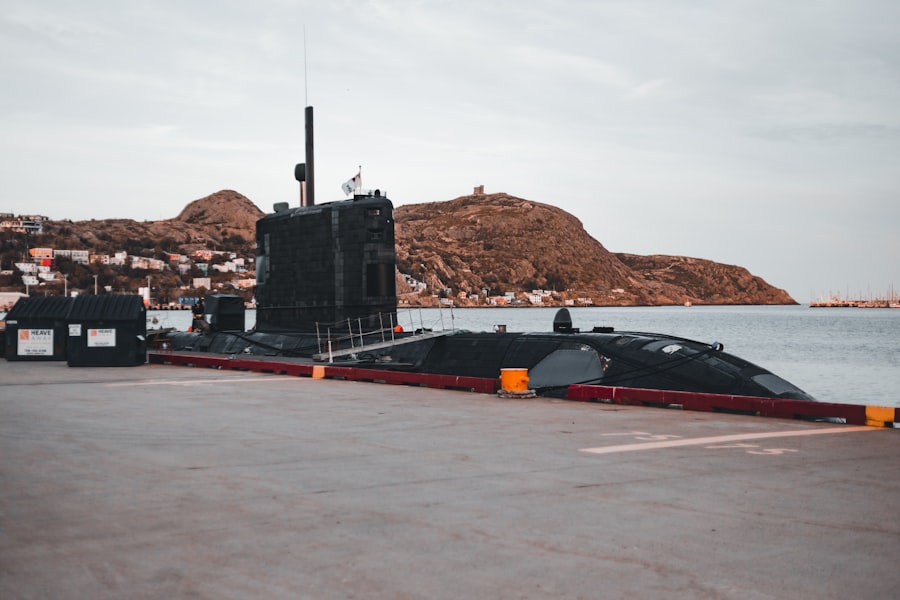
While sonar has been the workhorse of submarine detection for decades, the pursuit of stealthy submarines has driven the development of technologies that exploit other physical phenomena. The ocean is not just a medium for sound; it is also subject to electromagnetic fields, thermal variations, and even subtle changes in water density.
Magnetic Anomaly Detection (MAD)
Submarines, being large masses of metal, perturb the Earth’s magnetic field. Magnetic Anomaly Detection (MAD) systems are designed to detect these subtle local variations. Aircraft equipped with MAD detectors, often trailing a “bird” or “ometer” on a cable, can sweep areas of the ocean, looking for the telltale magnetic signature of a submerged submarine. This is like looking for a large iron object buried in the sand; its presence will warp the surrounding magnetic field.
The Principle of Magnetic Perturbation
The Earth’s magnetic field is relatively uniform in most areas. However, the presence of a ferrous object like a submarine creates a localized distortion. MAD systems are highly sensitive magnetometers that can measure these anomalies. The strength and shape of the anomaly can provide clues to the size and depth of the object.
Limitations and Operational Niches
MAD is primarily an airborne detection method, most effective for submarines operating relatively close to the surface. Its range is limited, and it requires the detecting platform to fly relatively low. However, it remains a valuable tool for confirming suspected submarine locations or for rapid area searches. It is particularly effective in shallow waters where submarines might operate closer to the surface.
Infrared Detection: Sensing the Thermal Wake
While submarines are designed to be cold, the operation of their machinery generates heat. This heat can, under certain conditions, be detectable by infrared (IR) sensors, particularly when the submarine is operating near the surface or has recently surfaced. Infrared cameras are sensitive to thermal radiation emitted by objects.
Thermal Signatures and Detection
A submarine’s internal machinery, exhaust vents (if applicable), and even the disturbed water around its hull can exhibit a slightly higher temperature than the surrounding ocean. IR sensors, often mounted on aircraft or ships, can detect these minute temperature differences, providing a visual signature that can be analyzed for the presence of a submarine. This is akin to spotting a heat leak in a building on a cold day; the warmth emanating from the building is visible.
Environmental Factors and Limitations
The effectiveness of IR detection is heavily influenced by environmental factors. Sea surface temperature, air temperature, cloud cover, and the presence of algae or other surface phenomena can all mask or mimic a submarine’s thermal signature. Furthermore, the depth at which a submarine operates significantly impacts its thermal detectability.
Wake Detection and Optical Sensors
The passage of a submarine through the water creates disturbances that can be observed using various optical sensors. These disturbances can include surface wakes, foam trails, or even subtle changes in the water’s reflectivity.
Surface Wakes and Disturbances
Even a submerged submarine can leave a faint trail of disturbed water, especially when operating at speed or near the surface. This can manifest as a subtle change in wave patterns or a slight disturbance on the water’s surface. Advanced optical sensors, including high-resolution cameras and lidar systems, can detect these subtle cues.
Submarine Periscopes and Snorkels
The most obvious optical signature is the periscope or snorkel breaking the surface. However, modern submarines are designed to minimize this, often using retractable periscopes or operating at depths that make visual detection impossible. Nonetheless, vigilance and the use of optical sensors remain relevant.
The evolution of submarine detection technology has been a fascinating journey, marked by significant advancements in both military and civilian applications. One particularly insightful article that delves into this history can be found at this link, where it explores the various methods developed over the decades, from early sonar systems to modern acoustic sensors. As nations continue to enhance their underwater surveillance capabilities, understanding the past becomes crucial for appreciating the complexities of contemporary submarine detection.
The Digital Revolution: Data Fusion and Artificial Intelligence
| Year | Technology | Description | Significance |
|---|---|---|---|
| 1914 | Hydrophones | Early underwater listening devices used to detect submarines by sound. | First passive sonar technology used in WWI for submarine detection. |
| 1918 | ASDIC (Active Sonar) | Active sonar system emitting sound pulses and detecting echoes from submarines. | Revolutionized submarine detection in WWII, improving anti-submarine warfare. |
| 1940s | Magnetic Anomaly Detectors (MAD) | Devices detecting disturbances in Earth’s magnetic field caused by submarines. | Enhanced detection capabilities from aircraft against submerged submarines. |
| 1950s | Sonobuoys | Deployable sonar devices dropped from aircraft to detect submarines underwater. | Allowed wide-area submarine detection and tracking from the air. |
| 1960s | Passive Sonar Arrays | Networks of hydrophones used to listen for submarine noises over large areas. | Improved long-range detection and tracking of quiet submarines. |
| 1970s | Low Frequency Active Sonar (LFAS) | Sonar using low frequency sound waves to detect submarines at greater distances. | Extended detection range and improved detection in deep ocean environments. |
| 1990s | Satellite Ocean Surveillance | Use of satellites to detect submarine wakes and disturbances on the ocean surface. | Added a new dimension to submarine detection beyond acoustic methods. |
| 2000s | Unmanned Underwater Vehicles (UUVs) | Autonomous underwater drones equipped with sonar for submarine detection. | Enhanced covert and persistent submarine monitoring capabilities. |
| 2010s | Advanced Signal Processing & AI | Use of machine learning to analyze sonar data and improve detection accuracy. | Reduced false alarms and improved identification of submarine signatures. |
The proliferation of diverse detection methods has created a deluge of data. The true power of modern submarine detection lies not just in collecting this information but in integrating and interpreting it. This is where the digital revolution, powered by advanced computing and artificial intelligence, has transformed the landscape.
Data Fusion: Weaving the Threads of Information
Data fusion is the process of combining data from multiple sources to create a more comprehensive and accurate picture of the operational environment. In submarine detection, this means integrating data from active sonar, passive sonar, MAD, IR sensors, and other intelligence sources. Instead of seeing fragments of information, naval forces can now paint a holistic view of the underwater battlespace.
Creating a Common Operating Picture
By fusing data, operators can build a “common operating picture” (COP), a unified representation of where submarines are believed to be, their likely courses, and their capabilities. This COP is dynamic, constantly updated as new information becomes available, allowing for more informed decision-making.
Enhancing Detection Probabilities
When multiple sensors provide corroborating evidence, the probability of detecting and correctly identifying a submarine increases significantly. For instance, a faint passive sonar contact might be elevated in confidence if a passing aircraft also registers a magnetic anomaly or a fleeting thermal signature. This synergy is a powerful force multiplier.
Artificial Intelligence and Machine Learning: The Intelligent Ear
Artificial intelligence (AI) and machine learning (ML) are revolutionizing the analysis of complex sensor data. These technologies can be trained to recognize subtle patterns that human operators might miss, process vast amounts of data far faster than humans can, and adapt to new and evolving threats. Imagine an AI as a hyper-vigilant, tireless watchman with an encyclopedic knowledge of all possible enemy sounds.
Automated Target Recognition (ATR)
ATR algorithms can analyze sonar data, identifying specific acoustic signatures and classifying them with a high degree of accuracy. ML models can be trained on massive datasets of submarine sounds, allowing them to distinguish between different classes of submarines, their operational modes, and even their individual characteristics.
Predictive Analysis and Threat Assessment
AI can go beyond simple detection and classification. By analyzing the patterns of detected contacts, their movements, and historical data, AI can predict a submarine’s likely future actions and potential threat vectors. This allows for proactive rather than reactive responses.
The Future of Sonar Interpretation
The role of the human sonar operator is evolving. While their experience and intuition remain invaluable, AI is increasingly taking over repetitive and data-intensive tasks, freeing up human analysts to focus on higher-level interpretation, strategy, and dealing with unusual or ambiguous situations. AI acts as a powerful assistant, amplifying human capabilities.
Stealth Beyond Sonar: Counter-Detection and Future Horizons
The evolution of submarine detection is inextricably linked to the evolution of submarine stealth. As detection technologies become more advanced, submarine designers work to counter them, creating a continuous cycle of innovation. This leads to an ongoing exploration of new detection methods and advanced stealth technologies.
Submarine Stealth Technologies
Modern submarines are designed with stealth in mind from their inception. This involves a multi-faceted approach to reducing their detectability across the entire spectrum of sensing technologies.
Anechoic Coatings
These are specialized materials applied to the hull of submarines that absorb sonar energy, reducing the amount of sound that is reflected back to active sonar systems. They act like a cloak of invisibility to sonar.
Hull Shape Optimization
The shape of a submarine’s hull is carefully designed to minimize hydrodynamic noise and sonar reflections. Smooth, flowing lines and the absence of sharp angles can significantly reduce a submarine’s acoustic and radar signatures.
Noise Reduction Systems
Advanced quieting technologies are employed to reduce machinery noise, propeller cavitation, and other internal sounds. This includes advanced engine mounts, quieting insulation, and the use of water-jet propulsion systems in some cases.
Emerging Detection Technologies and Concepts
The quest for the ultimate anti-submarine weapon continues, driving research into novel detection methods.
Quantum Technologies
Emerging quantum technologies, such as quantum magnetometers and quantum sonar, hold the promise of vastly improved sensitivity and capabilities. Quantum sensors could potentially detect submarines at much greater ranges and with greater precision than current technologies.
Bio-Acoustic Sensing
Research is ongoing into ways to leverage the natural acoustic environment and the behavior of marine life for detection purposes. This could involve deploying networks of sensors that listen for changes in marine mammal communications or other bio-acoustic indicators that might signal the presence of a submarine.
Advanced Underwater Communications
The development of new methods for underwater communication, beyond traditional acoustic means, could also have implications for detection. For instance, the use of optical or extremely low-frequency (ELF) radio waves might offer new avenues for locating submerged assets, while also presenting their own unique detection challenges.
In conclusion, the evolution of submarine detection technology is a testament to human ingenuity and the persistent drive to overcome formidable challenges. From the simple visual scan of the ocean’s surface to the sophisticated fusion of data from a myriad of sensors, the journey has been one of continuous adaptation and innovation. As submarines become more advanced in their stealth capabilities, naval powers will undoubtedly continue to push the boundaries of science and engineering, ensuring that the silent hunter of the deep, while ever more elusive, will never become truly invisible. The ocean’s depths remain a frontier, and the battle for awareness within them is far from over.
FAQs
What is submarine detection technology?
Submarine detection technology refers to the methods and tools used to locate and track submarines underwater. This includes sonar systems, magnetic anomaly detectors, radar, and other acoustic and non-acoustic sensors.
When did submarine detection technology first develop?
Submarine detection technology began developing during World War I, as navies sought ways to detect and counter the threat posed by enemy submarines. Early methods included hydrophones and passive listening devices.
How has submarine detection technology evolved over time?
Submarine detection technology has evolved from simple passive listening devices to advanced active sonar systems, magnetic anomaly detectors, and satellite-based surveillance. Improvements in signal processing and underwater acoustics have significantly enhanced detection capabilities.
What role did World War II play in advancing submarine detection technology?
World War II was a critical period for submarine detection technology, with significant advancements in sonar (ASDIC), radar, and depth charge tactics. The war accelerated research and development to counter the increased threat of submarines.
What are some modern submarine detection technologies used today?
Modern submarine detection technologies include advanced active and passive sonar arrays, towed array sonar systems, underwater drones, magnetic anomaly detectors, and satellite surveillance. These technologies are integrated to provide comprehensive underwater situational awareness.