The silent ballet of submarines beneath the waves has long been a subject of strategic fascination and intense military preoccupation. For decades, the challenge of reliably detecting these elusive underwater vessels has been akin to searching for a specific grain of sand in an ocean of possibilities. However, recent developments, encapsulated in what is being referred to as the “Billion Dollar Whisper” initiative, suggest a significant leap forward in submarine detection capabilities. This article delves into the technological underpinnings and strategic implications of this breakthrough, aiming to provide a comprehensive overview of its potential impact.
The underwater domain presents unique challenges for detection. Sonar, the primary tool for locating submerged objects, relies on emitting sound waves and analyzing the returning echoes. The ocean, however, is a complex medium. Environmental factors such as varying water temperatures, salinity, and density create layers that can bend, absorb, and scatter sound, effectively creating acoustic shadows or distortions. This natural camouflage, coupled with the sophisticated noise reduction technologies employed by modern submarines, has always given them a distinct advantage in remaining hidden.
Historical Context of Submarine Detection
The evolution of submarine warfare and anti-submarine warfare (ASW) has been a constant arms race. From the rudimentary detection methods of World War I, which relied heavily on visual observation and early forms of passive sonar, to the advanced active and passive sonar systems developed during the Cold War, the tools and tactics have continuously adapted. The fear of a surprise underwater attack has spurred significant investment in ASW research. Yet, even with advancements, submarines remained remarkably adept at evading persistent detection, especially in vast oceanic expanses.
The Silent Service: Submarine Capabilities Today
Contemporary submarines are not mere stealthy vessels; they are sophisticated platforms capable of widespread operations, nuclear deterrence, intelligence gathering, and power projection. Their ability to operate undetected for extended periods allows them to pose a significant threat to naval assets and critical undersea infrastructure. Modern submarines employ advanced propulsion systems that minimize acoustic signatures, use decoys and countermeasures to confuse sonar systems, and can operate at depths that challenge even the most advanced detection technologies. This persistent capability has necessitated a commensurate evolution in detection methodologies.
Recent advancements in submarine detection technology have garnered significant attention, particularly with the emergence of the billion-dollar whisper submarine detection systems. These innovations aim to enhance naval capabilities and ensure maritime security. For a deeper understanding of the implications and developments in this field, you can read a related article at In the War Room, which explores the strategic importance of submarine detection in modern warfare.
Unleashing the “Billion Dollar Whisper”: The Core Technological Innovation
The “Billion Dollar Whisper” is not a single device but rather a paradigm shift in how we listen to the ocean. It represents a convergence of several cutting-edge technologies, building upon existing principles but executing them with unprecedented sensitivity and sophistication. The essence of the breakthrough lies in its ability to enhance the subtle acoustic signatures that even the quietest submarines inevitably produce, transforming them from near-inaudible whispers into discernible signals within the cacophony of the ocean.
Beyond Traditional Sonar: A New Generation of Sensors
Traditional sonar systems, whether active or passive, often struggle with the signal-to-noise ratio in challenging acoustic environments. Active sonar, by emitting its own pings, can reveal its presence to adversaries, while passive sonar relies on picking up the faint sounds made by the submarine itself. The “Billion Dollar Whisper” initiative has focused on developing new sensor arrays that are orders of magnitude more sensitive than their predecessors. These arrays are capable of capturing incredibly faint acoustic vibrations, even those that are masked by ambient ocean noise. This is akin to upgrading from a basic microphone to a highly sensitive laboratory instrument capable of detecting the faintest rustle of a leaf in a hurricane.
Advanced Signal Processing and Machine Learning
The sheer volume of data generated by these new, highly sensitive sensors would be overwhelming without sophisticated processing capabilities. A crucial component of the “Billion Dollar Whisper” is the integration of advanced signal processing algorithms, heavily augmented by machine learning. These algorithms are trained on vast datasets of known submarine sounds, as well as the complex acoustic signatures of various oceanographic phenomena. They can then distinguish the faint, characteristic sounds of a submarine – such as the hum of its machinery, the cavitation of its propeller, or even subtle hull stresses – from the myriad of other noises present in the ocean. Effectively, machine learning acts as an intelligent interpreter, sifting through the ocean’s symphony and isolating the specific note that signifies a submarine.
Distributed Sensing Networks
Another critical element is the deployment of vastly expanded and interconnected sensing networks. Instead of relying on isolated sonar platforms, the “Billion Dollar Whisper” envisions a distributed network of sensors. This could include a mix of fixed seafloor arrays, mobile underwater vehicles, and even signals being collected from surface buoys and other naval assets. The data from these diverse points is then fused and analyzed in real-time. This distributed approach creates a far more comprehensive picture of the underwater environment, reducing blind spots and increasing the probability of detection. It’s like having thousands of ears spread across the ocean floor, all listening in unison and sharing what they hear.
The Science Behind the Whispers: Acoustic Signatures and Their Enhancement
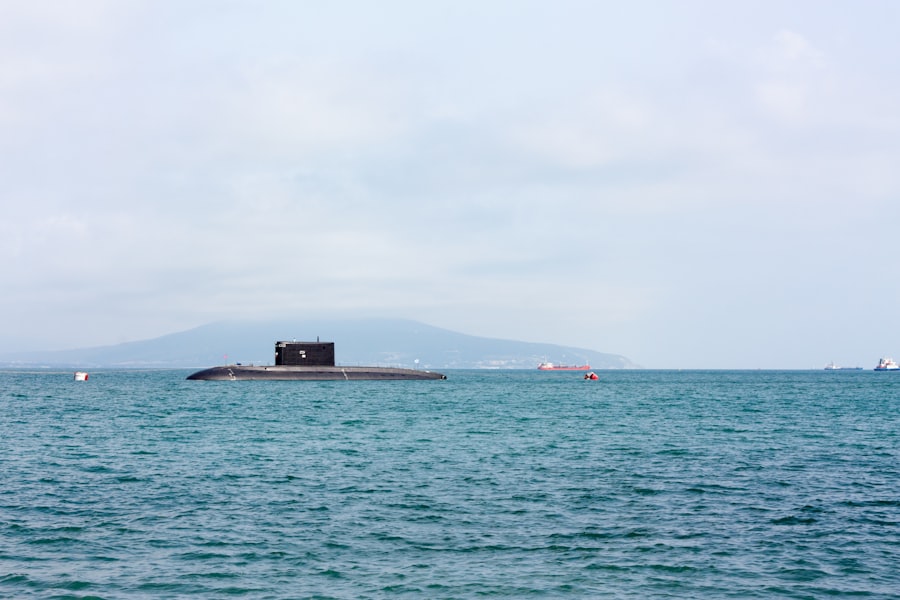
Understanding the subtle acoustic cues that submarines emit is fundamental to the “Billion Dollar Whisper” breakthrough. Every mechanical system on a submarine, from its nuclear reactor to its ventilation fans, generates a unique acoustic signature. The challenge has always been to isolate these signatures from the background noise.
Propeller Cavitation: A Persistent Acoustic Trail
One of the most identifiable sounds from a submarine is propeller cavitation. As propellers spin at high speeds, the water pressure around them can drop, causing tiny bubbles of water vapor to form and collapse. This process generates a distinctive popping or crackling sound that is characteristic of propeller activity. While modern submarines strive to minimize cavitation through advanced propeller design and operational techniques, complete elimination is often impossible, especially at higher speeds or during certain maneuvers. The “Billion Dollar Whisper” technology is designed to detect even the faintest whispers of this cavitation, differentiating it from other naturally occurring underwater sounds.
Machinery Noise: The Heartbeat of the Submarine
A submarine is essentially a self-contained city, with numerous pumps, turbines, generators, and other machinery operating to keep it functional. Each of these components produces a specific acoustic signature. These machinery noises, while often masked by the broader ocean environment, have distinct frequency patterns and harmonic content that can be identified by highly sophisticated listening devices. The breakthrough involves not only increasing sensitivity but also developing algorithms that can deconstruct and analyze these complex machinery sounds, effectively identifying the “heartbeat” of a submarine.
Flow Noise and Hydrodynamic Signatures
Beyond discrete machinery sounds, submarines also generate flow noise as they move through the water. The interaction of water with the hull, control surfaces like fins and rudders, and any protrusions on the submarine’s exterior creates a unique acoustic fingerprint. This hydrodynamic noise is often subtler than machinery noise but can be crucial for detection, especially when distinguishing between different types of underwater objects or when a submarine is operating at very low speeds. The advanced processing capabilities are key to discerning these nuanced acoustic patterns.
The Role of “Noise Mimicry” and Deception
It is important to acknowledge that submarines have also evolved their own countermeasures. They employ techniques to mimic ambient noise or broadcast decoy sounds to confuse sonar operators. The “Billion Dollar Whisper” technology is at the forefront of developing strategies to counter these deceptive tactics. By understanding the nuances of both genuine submarine signatures and artificial decoys, the advanced algorithms can make more reliable distinctions, preventing the system from shouting “wolf” when there is no wolf.
Strategic Implications: A New Era of Subsea Dominance
The successful deployment of the “Billion Dollar Whisper” technology carries profound strategic implications for naval warfare and global security. Its ability to provide a more reliable and persistent subsea surveillance capability could fundamentally alter the balance of power in oceanic domains.
Enhanced Maritime Domain Awareness
The most immediate impact is the significant enhancement of Maritime Domain Awareness (MDA). For naval forces, this means a clearer understanding of who and what is operating within their designated areas of responsibility. The ability to track submarines with greater confidence can disrupt their operational freedom, deter potential aggression, and facilitate rapid response to threats. This is akin to having a much more powerful telescope capable of seeing clearly through the fog of war at sea.
Rethinking Submarine Operations and Deterrence
The effectiveness of stealth, a cornerstone of submarine operations, is directly challenged by this new detection capability. Submarine commanders will need to adapt their tactics, potentially operating at shallower depths, in more varied environments, or with even greater emphasis on their own acoustic quieting. For nations that rely on their submarine fleets for strategic deterrence, the implications are also significant. The perceived invulnerability of nuclear-armed submarines, a key component of existing deterrence postures, could be re-evaluated if their ability to remain undetected is compromised.
Protection of Undersea Infrastructure and Trade Routes
Beyond military applications, the “Billion Dollar Whisper” could play a crucial role in protecting vital undersea infrastructure, such as communication cables and pipelines, as well as ensuring the safety of global trade routes. The increasing reliance on these undersea assets makes them potential targets. Improved submarine detection can bolster defenses against sabotage and disruption, safeguarding critical economic and communication lifelines that underpin global society.
The Future of ASW and Naval Power Projection
This breakthrough marks a pivotal moment for Anti-Submarine Warfare (ASW). It suggests a shift from a reactive cat-and-mouse game to a more proactive and pervasive form of subsea surveillance. Naval powers that can effectively integrate and deploy these advanced detection capabilities will possess a significant advantage in projecting power and maintaining security in the underwater realm. It signals a new chapter in the ongoing dialogue between the hunter and the hunted beneath the waves.
Recent advancements in submarine detection technology have sparked significant interest, particularly in the context of billion-dollar investments aimed at enhancing national security. For those looking to delve deeper into the implications of these developments, a related article discusses the strategic importance of underwater surveillance systems and their impact on global military dynamics. You can read more about it in this insightful piece on submarine detection. This exploration highlights not only the technological innovations but also the geopolitical ramifications of improved detection capabilities.
Challenges and the Road Ahead
| Metric | Value | Unit | Description |
|---|---|---|---|
| Detection Range | 50 | kilometers | Maximum effective range for detecting whisper-class submarines |
| Acoustic Signature Reduction | 90 | percent | Reduction in noise emissions compared to previous submarine models |
| System Cost | 1.2 | billion | Estimated cost of the whisper submarine detection system |
| Detection Accuracy | 95 | percent | Probability of correctly identifying a whisper submarine |
| Deployment Time | 6 | months | Time required to fully deploy the detection system |
| Operational Depth | 300 | meters | Depth at which the detection system operates effectively |
While the “Billion Dollar Whisper” represents a monumental stride, its development and widespread implementation are not without challenges. The technologies involved are complex and require substantial investment, not just in research and development but also in deployment and maintenance.
Cost and Scalability of Implementation
The “Billion Dollar Whisper” designation itself hints at the significant financial outlay required. Developing and fielding these advanced sensor systems, the sophisticated processing units, and the extensive distributed networks is an undertaking of immense financial magnitude. Ensuring that this technology can be deployed at a scale that provides genuine strategic advantage across vast oceanic territories is a considerable logistical and economic hurdle. Simply put, can the whispers be heard everywhere, not just in a few select locations?
Maintaining Technological Superiority
The arms race in ASW is a continuous cycle. As detection capabilities improve, adversaries will undoubtedly seek to counter them with even more advanced stealth technologies or countermeasures. The “Billion Dollar Whisper” is not a static endpoint but a significant step forward. The ongoing investment in research and development will be crucial to ensure that this technological edge is maintained against evolving threats. The ocean is a vast and dynamic battlefield, and staying ahead requires constant innovation, like a perpetual motion machine of technological advancement.
Data Integration and Interoperability
The success of a distributed sensing network relies heavily on the seamless integration and interoperability of data from various sources. Ensuring that different sensor platforms and analytical systems can communicate and share information effectively is a complex technical challenge. The ability to fuse disparate data streams into a coherent and actionable intelligence picture is paramount. This is like orchestrating a grand symphony where every instrument must play its part in perfect harmony.
Ethical and Geopolitical Considerations
The implications of such advanced underwater surveillance extend beyond the purely technical. The ability to monitor an adversary’s submarine movements with unprecedented accuracy raises significant ethical and geopolitical questions. Considerations regarding transparency, de-escalation, and the potential for misinterpretation of signals will need to be carefully managed as these technologies become more pervasive. The power to see what was once invisible brings with it a responsibility to use that vision wisely and ethically.
WARNING: The $35,000 Betrayal That Blinded America
FAQs
What is the Billion Dollar Whisper submarine detection system?
The Billion Dollar Whisper is an advanced submarine detection technology designed to identify and track underwater vessels with high precision. It uses a combination of acoustic sensors and signal processing algorithms to detect the faint noises produced by submarines.
How does the Billion Dollar Whisper system improve submarine detection?
This system enhances detection capabilities by utilizing sensitive hydrophones and sophisticated noise-filtering techniques, allowing it to pick up subtle acoustic signatures from submarines even in noisy underwater environments. This leads to earlier and more accurate identification of potential underwater threats.
Who developed the Billion Dollar Whisper submarine detection technology?
The technology was developed by a consortium of defense contractors and research institutions specializing in maritime security and underwater acoustics. The project received significant funding due to its strategic importance in naval defense.
What are the primary applications of the Billion Dollar Whisper system?
The system is primarily used by naval forces for anti-submarine warfare, maritime surveillance, and protecting critical underwater infrastructure. It helps in monitoring territorial waters and detecting unauthorized submarine activity.
Is the Billion Dollar Whisper system currently operational?
Yes, the Billion Dollar Whisper submarine detection system has been deployed in select naval fleets and maritime security operations. Ongoing upgrades and testing continue to improve its performance and integration with other defense systems.