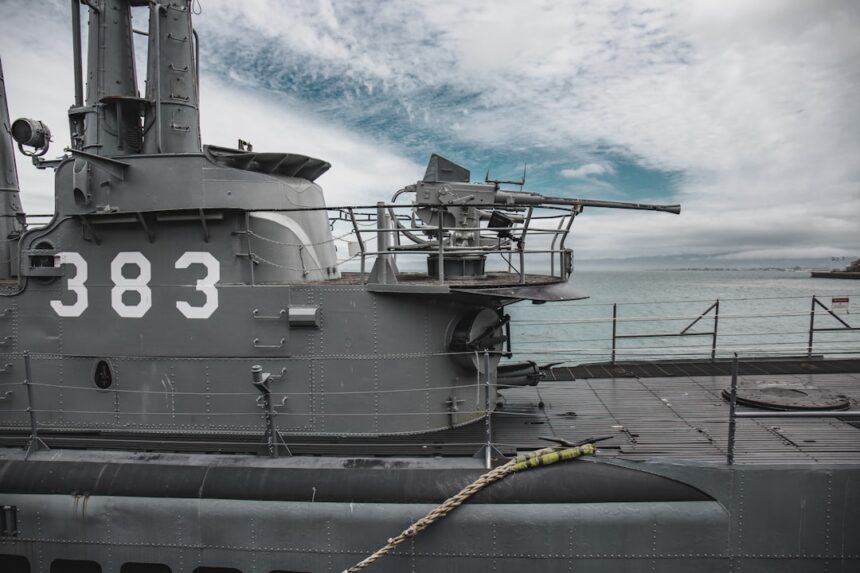
The Cold War provided a fertile ground for espionage narratives, with the submarine, a silent predator of the deep, becoming a crucial theater for intelligence gathering. Among the myriad tales of clandestine operations and technological prowess, Blind Man’s Bluff: The Untold Story of American Submarine Espionage stands as a seminal work. This book, authored by Sherry Sontag and Christopher Drew with Annette Lawrence Drew, delves into the secretive world of U.S. Navy submarine intelligence, revealing a history previously hidden beneath layers of classification. It presents a captivating account of the cat-and-mouse games played between American and Soviet submarines, detailing daring missions that pushed the boundaries of technology, human endurance, and international law.
The roots of submarine espionage can be traced to the post-World War II era, as the ideological chasm between the United States and the Soviet Union widened. Both superpowers recognized the profound strategic advantage afforded by undersea warfare and the critical need to understand their adversary’s capabilities.
Early Cold War Imperatives
Following the war, the Soviet Union rapidly developed its conventional submarine fleet and, crucially, began investing heavily in nuclear-powered submarines. This development sparked considerable alarm in Washington D.C., as the prospect of undetected Soviet submarines armed with nuclear weapons posed an existential threat. The United States, therefore, initiated programs to monitor Soviet naval activities, with submarines emerging as the ideal platforms for such clandestine operations due to their stealth and endurance.
Technological Leaps and Bounds
The early years saw relatively rudimentary espionage methods. Submarines would track surface vessels, conduct periscope observations, and attempt to collect acoustic signatures. However, as technology advanced, so did the sophistication of these missions. The development of advanced sonar systems, integrated electronics, and specialized data recorders transformed submarines into highly capable intelligence-gathering assets. These technological leaps were not merely incremental improvements; they represented fundamental shifts in how undersea espionage was conducted.
For those interested in the gripping tales of submarine warfare and the intricacies of naval strategy, the article “The Silent Service: Submarine Warfare in the Modern Era” on In The War Room provides an in-depth analysis that complements the stories found in “Blind Man’s Bluff.” This article explores the evolution of submarine tactics and the psychological aspects of underwater combat, shedding light on the often-overlooked experiences of submariners. To read more, visit In The War Room.
The Art of the Silent Hunt
Blind Man’s Bluff meticulously details numerous missions, each a testament to the ingenuity and bravery of the submariners involved. These operations were often undertaken with immense risk, balancing the imperative to gather intelligence against the constant threat of detection and confrontation.
Operation Holy Stone
One of the most widely known operations, though still shrouded in secrecy, was Operation Holy Stone. This series of missions involved U.S. submarines deliberately entering Soviet territorial waters, often within a few miles of their naval bases, to perform highly sensitive intelligence collection. The primary objective was to tap into underwater communication cables, a daring feat requiring precision navigation and specialized equipment. The book recounts how U.S. subs, such as the USS Halibut and later the USS Parche, were modified with dedicated “pods” and equipment to locate, tap, and record communications passing through these vital undersea arteries. This was akin to a cat burglar, not just breaking into a vault, but meticulously installing a hidden microphone without triggering any alarms.
Acoustic Intelligence Gathering
Beyond cable tapping, a constant and critical aspect of submarine espionage was the collection of acoustic intelligence, or “ACINT.” This involved recording the unique sound signatures of Soviet submarines and surface vessels. Every ship emits a distinct acoustic fingerprint, from its propulsion system to its auxiliary machinery. By analyzing these sounds, U.S. analysts could identify specific Soviet units, understand their operational characteristics, and even pinpoint potential weaknesses. This was a painstaking process, often requiring long periods of silent trailing, where a U.S. submarine would shadow a Soviet vessel for days, sometimes weeks, acting as a tireless phantom.
Perilous Close Encounters
The inherent risks of operating in such proximity to a hostile superpower’s assets led to numerous close calls and even collisions. Blind Man’s Bluff describes heart-stopping moments where U.S. submarines narrowly avoided detection, or, in some instances, made physical contact with Soviet vessels. These encounters, often in the murky depths, were terrifying glimpses into the potential for unintended escalation. The book vividly portrays the psychological toll on the crews, who operated under immense pressure, knowing that a single mistake could trigger an international incident or, worse, cost them their lives.
The Human Element: Above and Below the Waves

While technology played a pivotal role, the success of these missions ultimately rested on the shoulders of the men who volunteered for such perilous duty. Their training, discipline, and unwavering dedication were paramount.
The Submariner’s Creed
Submariners are a breed apart. Their training is rigorous, instilling a deep understanding of their vessel and an ironclad sense of teamwork. In the confined and unforgiving environment of a submarine, every crew member’s performance is critical to the survival of the entire complement. Blind Man’s Bluff highlights the unique camaraderie and stoicism of these individuals, who faced not only the dangers of the deep but also the psychological strains of prolonged isolation and the constant threat of confrontation. They were the anonymous warriors of the Cold War, operating in a silent world where failure was not an option.
The Commanders’ Burden
The commanders of these intelligence-gathering submarines bore an especially heavy burden. They were responsible for the lives of their crew, the multi-million dollar asset under their command, and the success of missions that held immense strategic importance. Their decisions, often made under extreme pressure and with limited information, could have far-reaching consequences. The book offers insights into the intricate decision-making processes, the ethical dilemmas, and the sheer mental fortitude required to lead such missions.
The Intelligence Analysts’ Resolve
Back on land, a dedicated corps of intelligence analysts worked tirelessly to decipher the secrets collected by the submarines. These individuals, often unsung heroes, played a crucial role in transforming raw data into actionable intelligence. Their meticulous work provided the strategic insights that guided policymakers and military planners. The book implicitly acknowledges that the entire enterprise was a symbiotic relationship between those who risked their lives to gather information and those who meticulously pieced together the puzzle.
Propaganda and Deception
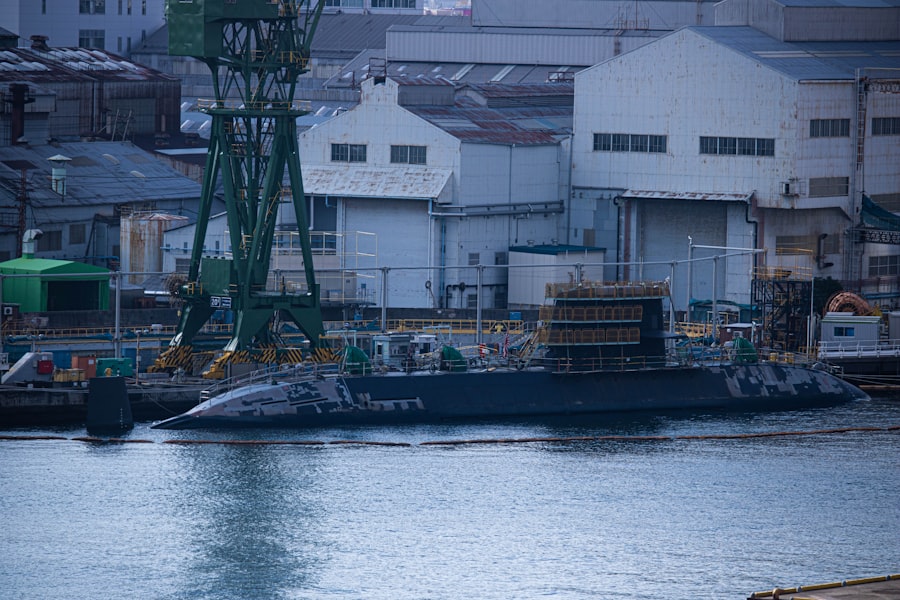
The narratives presented in Blind Man’s Bluff also touch upon the broader Cold War landscape of propaganda and deception, where both sides meticulously managed information to gain an advantage.
The “Whiskey on the Rocks” Incident
One compelling example is the “Whiskey on the Rocks” incident, where a Soviet Whiskey-class submarine ran aground off the coast of Sweden. While initially appearing to be a navigational error, the book delves into the possibility of a deeper, more complex story, hinting at potential intelligence operations or even deliberate provocations. These instances highlight the murky waters of Cold War espionage, where appearances were often deceiving, and official narratives frequently masked deeper truths.
The K-129 Salvage Attempt
The audacious attempt to salvage the sunken Soviet submarine K-129 by the CIA, codenamed Operation Azorian, is another testament to the lengths to which both sides would go to gain an advantage. Although Blind Man’s Bluff focuses primarily on U.S. Navy submarine operations, the broader context of Azorian, as a massive intelligence undertaking, underscores the desperation and determination to acquire an adversary’s secrets. The book, in its broader scope, often alludes to these other significant intelligence efforts, demonstrating the widespread and multi-faceted nature of the Cold War espionage game.
In exploring the gripping tales of submarine warfare, the book “Blind Man’s Bluff” offers a fascinating glimpse into the covert operations of the Cold War era. For those interested in delving deeper into the intricacies of naval espionage, a related article provides additional insights and context that enhance the understanding of these underwater missions. You can read more about these thrilling stories and their historical significance in the article found here.
Ethical and Legal Ambiguities
| Story Title | Author | Publication Year | Key Event | Submarine Involved | Location | Outcome |
|---|---|---|---|---|---|---|
| Blind Man’s Bluff: The Untold Story of American Submarine Espionage | Sherry Sontag & Christopher Drew | 1998 | Cold War submarine espionage missions | USS Halibut (SSGN-587) | Arctic Ocean | Successful intelligence gathering |
| Operation Ivy Bells | Sherry Sontag & Christopher Drew | 1998 | Undersea wiretapping mission | USS Parche (SSN-683) | Sea of Okhotsk | Compromised by Soviet espionage |
| Collision with Soviet Submarine K-219 | Sherry Sontag & Christopher Drew | 1998 | Submarine collision incident | USS Augusta (SSN-710) | Atlantic Ocean | Damage to both submarines, no casualties |
| USS Scorpion Loss | Sherry Sontag & Christopher Drew | 1998 | Mysterious sinking of USS Scorpion | USS Scorpion (SSN-589) | Atlantic Ocean | Submarine lost with all hands |
| Seizure of Soviet Submarine K-129 | Sherry Sontag & Christopher Drew | 1998 | Project Azorian recovery operation | Glomar Explorer | Pacific Ocean | Partial recovery of submarine |
Operating in international waters, and often deliberately entering territorial waters, raised significant ethical and legal questions. The missions detailed in Blind Man’s Bluff often operated in a gray area of international law, pushing the boundaries of what was considered acceptable.
Sovereign Rights and International Law
The concept of sovereign rights in international waters is complex and often contested. While the law of the sea generally allows for freedom of navigation in international waters, the deliberate intrusion into a nation’s territorial seas or the tapping of its communication cables undoubtedly constitutes a violation of sovereignty. The book implicitly grapples with these ethical ambiguities, presenting the missions as pragmatic necessities in a world teetering on the brink of nuclear war, where national security interests often superseded international norms. This was not a realm of black and white, but a continuous spectrum of shades of gray, where the ends often justified the means in the minds of those in power.
The Doctrine of “Plausible Deniability”
A recurring theme in clandestine operations, particularly during the Cold War, was the doctrine of “plausible deniability.” This meant structuring operations in such a way that if discovered, the sponsoring nation could credibly deny involvement. This was crucial for avoiding direct military confrontation and potential nuclear escalation. The very nature of submarine espionage, operating in stealth and secrecy, lent itself perfectly to this doctrine. The silence of the depths offered not just cover for operations, but also a convenient veil for official repudiations if operations ever went awry.
The Enduring Legacy of Submarine Espionage
Even after the official end of the Cold War, the lessons learned and the capabilities developed in submarine espionage continue to influence modern intelligence operations.
Continued Relevance in a New Era
While the primary adversary has shifted, the fundamental principles of understanding an adversary’s capabilities through covert means remain crucially important. Submarines continue to play a vital role in intelligence gathering, albeit against a more diverse set of threats, including terrorism, proliferation of weapons of mass destruction, and the rise of new naval powers. The “silent service” remains an indispensable tool in the national security arsenal, demonstrating the enduring utility of the lessons learned during the intense Cold War.
The Unseen Sacrifice
Blind Man’s Bluff serves as a powerful reminder of the sacrifices made by countless individuals who operated in the shadows. Their missions, unheralded and largely unknown to the public, played a vital role in maintaining a precarious balance of power and preventing a direct military conflict between the superpowers. The book not only chronicles daring feats but also implicitly honors the courage and dedication of these submariners, whose stories were, for decades, confined to the innermost circles of classified intelligence. Their legacy is not just one of technological achievement, but of profound human endeavor under extraordinary circumstances.
A Window into a Hidden World
Ultimately, Blind Man’s Bluff offers readers a rare and invaluable window into a hidden world, a world where silence was both a weapon and a shield. It is a meticulously researched and compellingly written narrative that transcends mere historical recounting, providing a profound understanding of the complex and often dangerous game of undersea espionage. For those interested in the Cold War, naval history, or the intricate mechanics of intelligence, the book serves as an essential read, revealing the hidden depths of a conflict that shaped the modern world.
WARNING: The $35,000 Betrayal That Blinded America
FAQs
What is the book “Blind Man’s Bluff” about?
“Blind Man’s Bluff” is a non-fiction book that explores the secretive world of submarine espionage during the Cold War. It details the covert operations, technological advancements, and intelligence battles between the United States and the Soviet Union beneath the ocean’s surface.
Who are the authors of “Blind Man’s Bluff”?
The book was written by Sherry Sontag, Christopher Drew, and Annette Lawrence Drew. They conducted extensive research and interviews to provide an in-depth look at submarine espionage.
What kind of stories are featured in “Blind Man’s Bluff”?
The book includes true stories of submarine missions, close encounters, and intelligence-gathering operations. It reveals the dangers faced by submariners and the high-stakes nature of underwater spying during the Cold War.
When was “Blind Man’s Bluff” published?
“Blind Man’s Bluff” was first published in 1998. Since then, it has been recognized as a significant work on naval history and Cold War espionage.
Why is “Blind Man’s Bluff” considered important?
The book is important because it uncovers previously classified information about submarine operations and provides insight into the secretive aspects of Cold War intelligence. It sheds light on the technological and human elements involved in underwater espionage.