The silent depths of the ocean have long held a mystique, and within them, submarines navigate a world where conventional communication methods are rendered impotent. Establishing reliable contact with these submerged vessels presents a formidable technical challenge, demanding specialized systems and intricate understanding of electromagnetic wave propagation in a conductive medium. Unlocking the secrets of submarine communication systems involves delving into the physics of wave behavior, the ingenious engineering solutions devised to overcome these limitations, and the evolving landscape of this critical technology.
The ocean, unlike the boundless expanse of air, is a dense and conductive medium. This physical reality forms the bedrock of the challenges faced by communicators aiming to reach submerged platforms. Understanding these fundamental impediments is the first step in appreciating the sophistication of the systems designed to overcome them.
Electromagnetic Wave Attenuation
Electromagnetic waves, the backbone of radio communication, behave dramatically differently when they encounter saltwater. Saltwater’s conductivity, though not as high as that of a metal, is sufficient to interact strongly with the oscillating electric and magnetic fields of radio waves.
The Skin Effect
One of the primary mechanisms at play is the skin effect. This phenomenon dictates that alternating currents tend to flow near the surface of a conductor. In the context of electromagnetic waves, this means that as the wave penetrates saltwater, its energy is rapidly absorbed and dissipated. The higher the frequency of the wave, the more pronounced this effect becomes, leading to a rapid decay in signal strength with increasing depth. Think of it like trying to push a fine-grained sand through a sieve; the smaller the holes, the less material gets through. Similarly, the higher the frequency, the smaller the “holes” in the water’s conductivity for the signal to pass through.
Absorption and Scattering
Beyond the primary skin effect, water molecules themselves can absorb electromagnetic energy, particularly at certain frequencies. Furthermore, the presence of dissolved salts and impurities can contribute to scattering, redirecting the wave’s energy in unpredictable directions, further degrading the signal. This is akin to a light beam passing through a hazy atmosphere; some light is absorbed, and some is scattered away from its original path.
The Limited Spectrum for Submarine Communication
The very properties that make water a barrier to communication also limit the usable frequency spectrum for transmitting signals. While very low frequencies (VLF) and extremely low frequencies (ELF) exhibit better penetration, they come with their own set of challenges, primarily related to antenna size and bandwidth.
VLF and ELF: The Penetrating Powers
Very low frequencies (3-30 kHz) and extremely low frequencies (3-30 Hz) are the workhorses for communicating with submarines. At these wavelengths, the ocean’s attenuating effect is minimized, allowing signals to penetrate to significant depths. The longer the wavelength, the less it is “hindered” by the conductive medium. Imagine a large, slow-moving wave versus a rapid, choppy one. The large wave can more easily overcome minor obstacles.
The Bandwidth Conundrum
However, the advantage of VLF and ELF in penetration comes at the cost of bandwidth. Transmitting data at these frequencies is akin to trying to send a high-definition movie over a dial-up modem. The maximum data rates achievable are extremely low, often measured in bits per second rather than the megabits or gigabits per second common in terrestrial communication. This severely restricts the type of information that can be reliably transmitted.
Submarine communication systems have long been shrouded in secrecy due to their critical role in national security and military operations. An insightful article that delves into the intricacies and advancements of these systems can be found at this link. It explores the challenges faced in underwater communication, the technologies employed to overcome these obstacles, and the implications for modern naval warfare.
Engineered Solutions for Submerine Communication
To bridge the communication gap between the surface and the silent world of submarines, a variety of ingenious engineering solutions have been developed. These systems are a testament to human ingenuity in overcoming seemingly insurmountable physical barriers.
Very Low Frequency (VLF) Communication Systems
VLF communication stands as a cornerstone in modern submarine communications. These systems are designed to broadcast signals from shore-based stations to submarines operating at considerable depths.
Giant Antennas: The Backbone of VLF
The defining characteristic of VLF transmission is the sheer scale of the antennas required. To generate the long wavelengths of VLF, massive broadcasting antennas are necessary, often stretching for miles across land. These antennas, sometimes configured as mast-like structures or extensive arrays of wires, are essential for efficiently radiating VLF energy into the atmosphere and, consequently, into the ocean. The size is directly proportional to the wavelength being transmitted; it’s like needing a bigger musical instrument to produce lower notes.
Shore-Based Transmitters and Infrastructure
The operation of VLF communication requires substantial infrastructure. Powerful transmitters, sophisticated tuning electronics, and extensive land parcels for antenna deployment are all critical components. These shore-based facilities are vital for ensuring the reliability and reach of the VLF signal.
Submarine Antenna Deployment
Submarines themselves are equipped with specialized antennas that can be deployed to receive VLF signals. These antennas are often towed behind the submarine or deployed on a mast that can be raised to a shallower depth. The ability to position the receiving antenna closer to the surface, while still maintaining stealth, is crucial for signal acquisition.
Extremely Low Frequency (ELF) Communication Systems
While VLF offers a balance between penetration and data rate, ELF takes penetration to an extreme, albeit with further limitations on bandwidth. ELF communication is reserved for the most critical, low-bandwidth alerts and commands.
The Need for Deep Penetration
ELF frequencies, with their incredibly long wavelengths, can penetrate to even greater depths than VLF, making them the ultimate solution for communicating with submarines at their deepest operational levels. This capability is paramount for certain strategic communication needs.
The Gigantic Scale of ELF Antennas
The antennas required for ELF transmission are on an even more colossal scale than those for VLF. They can span hundreds or even thousands of square miles, often utilizing the Earth itself as part of the antenna system (e.g., through extensive ground networks). These are not your typical radio towers; they are monumental earth structures.
Data Rate Limitations and Their Implications
The trade-off for ELF’s deep penetration is an extraordinarily low data rate. Information is transmitted in a highly compressed, coded form, often conveying simple messages like “execute mission” or “report status.” The bandwidth is so narrow that it resembles shouting a single word at someone in a hurricane, hoping they catch it.
Acoustic Communication Systems: The Sound of the Depths
When electromagnetic signals prove insufficient, or when higher data rates are required at depth, acoustic communication systems come to the fore. These systems harness the properties of sound waves in water, which travel far more effectively than radio waves.
Sonar Principles in Communication
Essentially, acoustic communication systems repurpose sonar technology for two-way communication. They employ transducers to convert electrical signals into acoustic pulses and vice-versa. These pulses are then transmitted through the water column.
Advantages of Acoustic Communication
Acoustic communication offers several advantages, including the potential for higher data rates than VLF/ELF and true two-way communication. This allows for more interactive exchanges and the transmission of more complex data.
Challenges of Acoustic Communication
However, acoustic communication also faces significant challenges. The range of acoustic signals is limited by factors such as water temperature, salinity gradients, and ambient noise. Interference from other sound sources, both natural and man-made, can degrade signal quality. Furthermore, acoustic transmissions can be detected, compromising the stealth of the submarine. It’s like trying to have a conversation in a crowded marketplace; your voice can carry, but it’s easily drowned out or overheard.
Satellite Communication Systems: Reaching the Surface
While submarines operate beneath the waves, their communication strategy often involves reaching the surface to utilize satellite technology. This requires a clever interplay between submerged operations and brief excursions to communicate.
Buoy-Assisted Communication
One method involves deploying communication buoys from the submarine. These buoys can ascend to the surface and establish a satellite link, relaying messages to and from the submerged vessel. This offers a higher bandwidth and more flexibility for data transfer.
Mast-Mounted Antennas
Alternatively, submarines can raise a mast with an antenna to a shallow depth, enabling direct satellite communication. This is a more direct approach but requires proximity to the surface and carries the risk of detection. The short window of opportunity for these communications necessitates efficient data transfer protocols.
The Evolution and Future of Submarine Communication
The landscape of submarine communication is not static. Continuous research and development are driven by the ever-evolving military and commercial needs for secure, reliable, and high-bandwidth communication with submerged platforms.
Advancements in VLF/ELF Technology
Efforts are ongoing to improve the efficiency and capabilities of VLF and ELF systems. This includes research into more advanced antenna designs and signal processing techniques to eke out higher data rates from these inherently bandwidth-limited systems.
Quantum Communication and its Potential
While still in its nascent stages, quantum communication holds intriguing possibilities for the future. Quantum entanglement, for instance, could theoretically enable instantaneous communication. However, the practical challenges of maintaining quantum states in a watery environment are immense.
Innovations in Acoustic Communication
The field of underwater acoustics is also seeing rapid advancements. Improved signal processing algorithms, novel transducer technologies, and better understanding of underwater acoustic environments are contributing to more robust and higher-bandwidth acoustic communication systems.
Development of Underwater Networks
The concept of underwater sensor networks and communication infrastructure is also gaining traction. These networks could enable seamless communication between multiple submerged platforms, akin to terrestrial wireless networks.
The Role of Artificial Intelligence and Machine Learning
Artificial intelligence (AI) and machine learning (ML) are poised to play an increasingly important role in optimizing submarine communication. AI can be used to analyze complex underwater acoustic environments, predict signal propagation paths, and adapt communication strategies in real-time.
Adaptive Signal Processing
ML algorithms can learn from vast amounts of data to improve signal detection and extraction in noisy environments, effectively “cleaning up” communications that would otherwise be unintelligible.
Network Management and Optimization
In future underwater networks, AI could manage and optimize communication flows, ensuring that data is routed efficiently and reliably between submerged assets.
Tactical and Strategic Implications
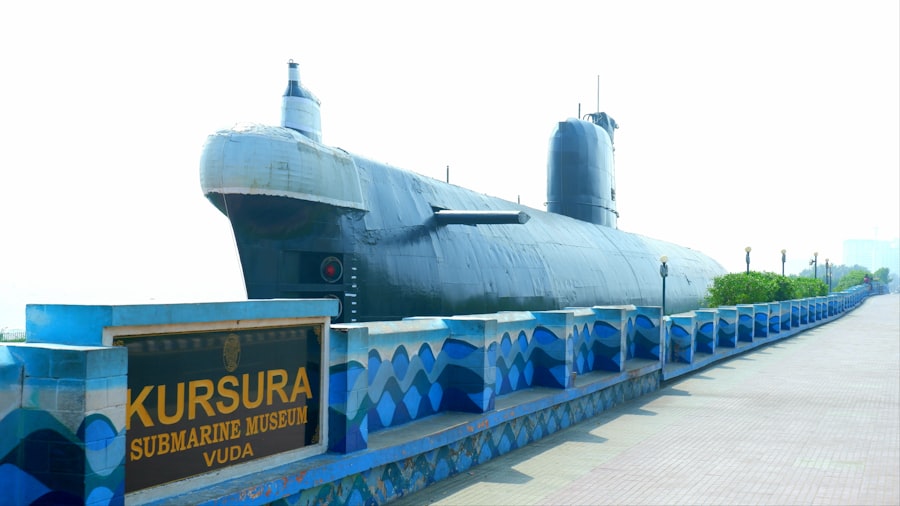
The ability to communicate effectively with submarines is not merely a technical feat; it carries profound tactical and strategic implications for naval operations and global security.
Command and Control
Reliable communication is paramount for effective command and control of submarine forces. It enables the transmission of operational orders, mission updates, and crucial intelligence gathered by submerged assets. The ability to command a submarine precisely, even in the deepest trenches, is like a conductor leading an orchestra in a soundproof hall; every nuance of the instruction matters.
Maintaining Situational Awareness
Effective communication allows for the timely reporting of a submarine’s status, position, and any encountered threats, contributing to overall tactical situational awareness for the fleet.
Mission Execution and Adaptation
Submarines are often employed for intelligence gathering, reconnaissance, and strike missions. Communication systems are vital for ensuring these missions are executed as planned and for allowing operators to adapt to changing circumstances.
Intelligence, Surveillance, and Reconnaissance (ISR)
Submarines, by their very nature, are ideal platforms for covert ISR operations. Their ability to communicate results and receive new taskings directly impacts their effectiveness in gathering vital intelligence.
Secure Data Exfiltration
The data collected by a submarine can be highly sensitive. Secure and reliable communication channels are essential for exfiltrating this data without compromising the mission or the platform.
Real-Time Threat Assessment
In certain scenarios, real-time updates from a submarine’s sensors can provide invaluable intelligence for threat assessment and decision-making above and below the waves.
Deterrence and Power Projection
A nation’s ability to effectively communicate with and control its submarine forces is a significant factor in its overall deterrence posture and capacity for power projection.
Global Reach and Responsiveness
Submarines offer a unique global reach. Effective communication ensures that these assets can be deployed and tasked strategically, projecting power and influence across vast oceanic distances.
Maintaining Strategic Balance
The ability to maintain covert communications with strategic nuclear submarines plays a critical role in maintaining the global strategic balance.
Submarine communication systems have long been shrouded in secrecy due to their critical role in national security and military operations. For those interested in exploring this topic further, a fascinating article can be found that delves into the intricacies of these systems and their evolution over time. You can read more about it in this insightful piece on submarine communication technologies, which highlights the challenges and innovations that have shaped underwater communication strategies.
Conclusion: The Unending Quest for the Silent Symphony
| Aspect | Details | Notes |
|---|---|---|
| Communication Medium | Very Low Frequency (VLF) and Extremely Low Frequency (ELF) radio waves | Allows communication through seawater to submerged submarines |
| Frequency Range | 3 kHz to 30 kHz (VLF), 3 Hz to 30 Hz (ELF) | Lower frequencies penetrate deeper but have lower data rates |
| Data Transmission Rate | Typically less than 300 bits per second | Limited bandwidth due to low frequencies |
| Encryption | Advanced military-grade encryption algorithms | Ensures secure and secret communication |
| Transmission Range | Up to several thousand kilometers | Depends on frequency and transmitter power |
| Transmitter Power | Up to several megawatts | High power needed for ELF/VLF transmission |
| Receiver Equipment | Specialized VLF/ELF receivers with large antennas | Installed on submarines for signal reception |
| Communication Limitations | One-way communication mostly; submarines respond when surfaced | Due to low data rates and signal attenuation |
| Stealth Considerations | Minimized transmission time to avoid detection | Submarines maintain stealth by limiting communication |
Unlocking the secrets of submarine communication systems reveals a fascinating interplay of physics, engineering, and strategic necessity. The ocean’s embrace, while beautiful and mysterious, presents a formidable barrier to conventional communication. Yet, through ingenuity and persistent innovation, humanity has developed a diverse array of systems, from mind-bogglingly large VLF antennas to subtle acoustic pulses and the strategic deployment of buoys.
The evolution of these systems is a continuous journey, driven by the inexorable demand for ever-increasing bandwidth, enhanced security, and greater operational flexibility. As technology advances, from the subtle whispers of quantum mechanics to the robust algorithms of artificial intelligence, the silent symphony of communication beneath the waves will undoubtedly continue to evolve, ensuring that even in the deepest, darkest reaches, the vital dialogue between surface and submerged realms can prevail. The quest for seamless, secure, and versatile submarine communication remains an active and critical frontier in the ongoing exploration of our planet’s final, silent expanse.
FAQs
What are submarine communication systems?
Submarine communication systems are networks of underwater cables and technologies used to transmit data, voice, and internet signals across oceans and seas. These systems enable global telecommunications by connecting continents and countries through fiber-optic cables laid on the seabed.
How do submarine communication cables work?
Submarine communication cables use fiber-optic technology to transmit data as pulses of light. These cables are composed of multiple layers of protective materials to withstand harsh underwater conditions. Signals are amplified at intervals by repeaters to maintain data integrity over long distances.
What are the main challenges in maintaining submarine communication systems?
Maintaining submarine communication systems involves challenges such as physical damage from fishing activities, ship anchors, natural disasters like earthquakes, and marine life. Additionally, repairing cables requires specialized ships and equipment, making maintenance complex and costly.
Are submarine communication systems secure from interception?
While submarine cables are generally secure due to their physical protection and encryption technologies, they can be vulnerable to interception or tapping by sophisticated entities. Security measures include monitoring, encryption, and international cooperation to protect data integrity and privacy.
Why are submarine communication systems important for global connectivity?
Submarine communication systems carry over 95% of international data traffic, making them critical for global internet, telephone, and data services. They support international business, finance, communication, and access to information, underpinning the modern digital economy and global connectivity.