The Soviet Navy, a behemoth forged in the crucible of ideology and ambition, played a multifaceted and often understated role in the grand geopolitical chess match known as the Cold War. Far from being merely a defensive force, it evolved into a potent instrument of Soviet foreign policy, projecting power, deterring aggression, and shaping the strategic landscape for over four decades. Its story is one of relentless industrial might, ingenious adaptation, and a constant, often desperate, race against its Western adversaries.
The foundation of the Soviet Navy’s Cold War significance lay in its dramatic post-World War II transformation. While the Imperial Russian Navy had been a significant force, and the Soviet Navy had played a crucial role in the Great Patriotic War, its capabilities were largely confined to the Baltic, Black, and far eastern seas. The advent of nuclear weapons and the emergence of the United States as a global superpower, with its own formidable naval presence, necessitated a radical rethinking of Soviet naval strategy. The specter of carrier-based air power and the perceived vulnerability of the Soviet homeland to seaborne invasion were powerful motivators for change.
Post-War Rebuilding and Ideological Imperatives
Following the devastation of World War II, the Soviet Union faced the monumental task of rebuilding its shattered infrastructure. However, naval development was not relegated to a secondary concern. Driven by both defensive requirements and the ideological imperative to challenge American global hegemony, Soviet naval thinking began to shift. The notion of the “rolling battle” – the idea of engaging the enemy at a distance from Soviet shores – gained traction. This required a navy capable of operating far from friendly ports, necessitating significant advancements in shipbuilding, logistics, and operational doctrine. The Soviet leadership, particularly at the highest echelons of the Communist Party, recognized that a credible blue water navy was essential for global influence and for safeguarding the vast coastline and maritime interests of the USSR.
The Shadow of the Atom: Nuclear Submarines and Ballistic Missiles
Perhaps the most profound and impactful development in the Soviet Navy’s Cold War arsenal was its embrace of nuclear technology. The ballistic missile submarine (SSBN) emerged as the ultimate deterrent and the vanguard of Soviet naval power projection. The objective was clear: to possess a survivable, second-strike nuclear capability that could withstand a first strike from the United States and retaliate with devastating force. This not only served as a deterrent against direct Soviet invasion but also acted as a counterweight to America’s own strategic bomber and intercontinental ballistic missile (ICBM) forces.
The development of SSBNs was a colossal undertaking, pushing the boundaries of Soviet engineering and industrial capacity. The Delta and Typhoon classes, in particular, became iconic symbols of Soviet naval power, bristling with ballistic missiles capable of reaching targets across the North American continent. These silent hunters, patrolling the icy depths of the Arctic and the vast expanses of the Atlantic and Pacific, were the ultimate embodiment of the nuclear standoff, a constant, chilling reminder of the mutually assured destruction that loomed over the world.
Khrushchev’s Ambitions and Gorshkov’s Vision
Nikita Khrushchev, with his characteristic bombast and ambitious vision, played a pivotal role in setting the Soviet Navy on its ambitious trajectory. While initially skeptical of large surface fleets, he eventually embraced the strategic value of naval power, particularly in the context of nuclear deterrence and the projection of Soviet influence in newly decolonized nations. However, it was Admiral of the Fleet of the Soviet Union Sergei Gorshkov who truly transformed the Soviet Navy into a global force. Gorshkov, a masterful strategist and a shrewd politician, understood that a navy’s effectiveness was not solely measured by its missile armament, but also by its ability to operate across the spectrum of naval warfare.
Gorshkov’s Doctrine: Offensive Capabilities and Global Reach
Gorshkov, who commanded the Soviet Navy for nearly three decades, articulated a doctrine that fundamentally shifted Soviet naval strategy from a primarily defensive posture to one of offensive engagement and global power projection. He famously declared, “When the Navy’s power is directed against the enemy’s territory, its role becomes offensive.” This shift was reflected in the massive shipbuilding programs initiated under his leadership, which aimed to create a navy that could challenge American naval supremacy on the world’s oceans. His vision extended beyond mere deterrence; he sought to establish a Soviet naval presence in every corner of the globe, a visible manifestation of Soviet strength and a tool for influencing geopolitical events.
The Soviet Navy played a crucial role during the Cold War, as it was instrumental in projecting power and influence across the globe. For a deeper understanding of the strategies and developments of the Soviet naval forces during this tense period, you can explore the article titled “The Evolution of the Soviet Navy: Strategies and Operations” available at In The War Room. This article provides valuable insights into the naval tactics employed by the Soviet Union and their impact on global maritime dynamics during the Cold War era.
Projection of Power and Global Presence
The Soviet Navy’s transformation into a blue water force enabled it to project Soviet power far beyond its territorial waters. This projection was not always a direct military threat, but often a form of diplomatic and ideological leverage, demonstrating the USSR’s willingness and capability to act on the world stage.
The “Show the Flag” Operations
A key aspect of the Soviet Navy’s role was its “show the flag” operations. These naval deployments to distant seas and ports were designed to demonstrate Soviet military prowess and political commitment to allies and potential adversaries alike. Fleets would routinely patrol the Mediterranean, the Indian Ocean, and the Atlantic, often shadowing NATO naval exercises and offering visible support to Soviet-aligned nations. For countries newly independent and seeking to diversify their international relationships, the sight of Soviet warships was a powerful symbol of support and an alternative to Western influence. This presence served as a constant reminder that the world was no longer a solely American-dominated chessboard.
The Mediterranean as a Crucial Chessboard
The Mediterranean Sea, a vital artery of global trade and a strategic chokepoint, became a particularly important area of operation for the Soviet Navy. The 5th Mediterranean Eskadra, established in 1967, was a permanent naval presence intended to counter American naval dominance in the region and to project Soviet influence in the volatile Middle East. This fleet engaged in frequent “freedom of navigation” operations, challenged NATO naval exercises, and provided a significant deterrent against any outward expansion of NATO’s influence in North Africa and the Middle East. The presence of Soviet destroyers and submarines in proximity to American carrier battle groups created a constant, simmering tension, a silent dance of power in the azure waters.
Supporting Soviet-Aligned Regimes and Intervening in Crises
The Soviet Navy was also a vital tool for supporting Soviet-aligned regimes and intervening in regional crises in ways that aligned with Soviet foreign policy objectives. While direct military interventions were rare, naval presence could significantly bolster the confidence of friendly governments facing internal or external threats. Furthermore, the logistical capabilities of the Soviet Navy allowed for the rapid deployment of military hardware and personnel to support allies, often under the guise of military exercises or aid shipments.
The Indian Ocean: A Strategic Backyard
The Indian Ocean, with its vital sea lanes and its proximity to the Middle East’s oil reserves, became another area of significant Soviet naval activity. The Soviet Union sought to establish a powerful presence in this region, challenging Western influence and forging closer ties with countries like India, which became a significant customer for Soviet military hardware and a strategic partner. Naval deployments to the Indian Ocean served multiple purposes: protecting Soviet commercial shipping, providing naval infrastructure support to allies, and demonstrating a willingness to defend Soviet interests in a strategically critical part of the world.
Blockade and Interdiction Capabilities
While not frequently employed in large-scale, overt blockades, the Soviet Navy possessed the capability to interdict maritime traffic. In times of heightened tension or conflict, Soviet submarines and surface ships could have posed a significant threat to Western shipping lanes, particularly in the North Atlantic and the Arctic. The potential for such actions served as a strategic deterrent, forcing Western navies to dedicate considerable resources to anti-submarine warfare (ASW) and convoy protection. The silent threat of a lurking Soviet submarine could cast a long shadow over the vital arteries of global trade.
The Shadow of the Submarine: A Perpetual Threat
The Soviet submarine force was arguably the most feared and strategically significant component of the Soviet Navy during the Cold War. Its sheer numbers, technological advancements, and relentless patrols cast a long shadow over the Western world, driving the continuous development of anti-submarine warfare capabilities.
The Red Tide of Submarines: Numbers and Quality
At its peak, the Soviet Union possessed the largest submarine fleet in the world, outnumbering the United States by a significant margin. This numerical superiority was coupled with a rapid pace of technological innovation. While early Soviet submarines were often noisy and less sophisticated than their Western counterparts, they rapidly evolved. The introduction of nuclear-powered submarines (SSNs and SSBNs) and the development of quieter, more advanced diesel-electric designs closed the technological gap considerably. The sheer volume of submarines, coupled with their increasing capability, presented NATO navies with a daunting challenge.
The U-Boat Legacy and the New Era of Silent Hunters
The specter of German U-boats in World War II deeply ingrained a fear of submarine warfare in naval planners. The Soviet Union, inheriting this legacy and driven by its own strategic imperatives, relentlessly pursued submarine development. The evolution from relatively primitive designs to increasingly sophisticated and stealthy platforms meant that the threat was not static but constantly adapting. The constant dance between developing quieter submarines and more effective detection methods became a defining characteristic of the Cold War naval arms race.
The Silent Service: Nuclear Attack Submarines (SSNs)
Beyond the nuclear missile platforms, the Soviet Union operated a large and capable fleet of nuclear-powered attack submarines (SSNs). These submarines were designed to hunt and destroy enemy submarines and surface ships. Their high underwater speed, extended endurance, and potent weapon systems made them a formidable threat to NATO carrier battle groups and merchant convoys. The ability of these SSNs to operate independently, far from friendly bases, and to remain submerged for extended periods made them elusive and dangerous adversaries.
The Hunt for the Hunter: Anti-Submarine Warfare (ASW)
The overwhelming Soviet submarine threat spurred a massive and continuous effort in Anti-Submarine Warfare (ASW) by NATO navies. This involved a sophisticated array of technologies and tactics, including advanced sonar systems (both passive and active), maritime patrol aircraft equipped with sonobuoys and magnetic anomaly detectors, and specialized ASW warships armed with torpedoes and depth charges. The perpetual “cat and mouse” game between Soviet submarines and NATO ASW forces defined a significant portion of naval strategy and technological development during the Cold War.
Ballistic Missile Submarines (SSBNs): The Ultimate Deterrent
As mentioned previously, the Soviet SSBN force represented the pinnacle of their submarine technology and the cornerstone of their nuclear deterrent. These submerged fortresses, armed with intercontinental ballistic missiles, were designed to survive a nuclear first strike and deliver a retaliatory blow. Their strategic importance was immense, providing the Soviet Union with a credible second-strike capability that was increasingly difficult for the United States to neutralize.
The Strategic Nuclear Triad and the Submarine’s Role
The Soviet Union, like the United States, developed a strategic nuclear triad: ICBMs, bombers, and submarines. The SSBN component of this triad was particularly vital because of its survivability. Unlike land-based ICBMs, which were vulnerable to pre-emptive strikes, or bombers, which could be intercepted, submarines operating in the vast oceans were incredibly difficult to locate and destroy. This inherent survivability made the SSBN force the most reliable guarantor of nuclear retaliation and thus a critical element of Soviet strategic doctrine.
The Surface Fleet: A Counterbalance to American Might
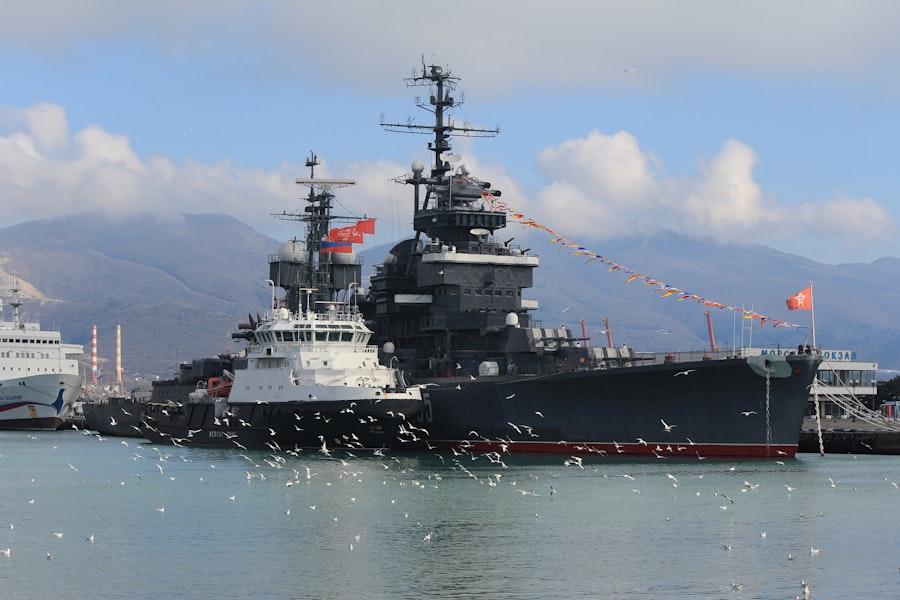
While the submarines often garnered the most attention, the Soviet surface fleet was a crucial component of its naval power. It developed significantly throughout the Cold War, aiming to provide a credible counterweight to the formidable American carrier battle groups and to project Soviet influence in a variety of operational environments.
Aircraft Carriers: A Late and Limited Entry
The development of aircraft carriers by the Soviet Union was a relatively late and ultimately limited endeavor compared to the United States. The Soviet Union’s experience with carrier aviation was primarily focused on light carriers and “heavy aircraft-carrying cruisers” (TAVKR) designed to operate vertical/short takeoff and landing (V/STOL) aircraft and helicopters. These vessels were not intended to project the same scale of air power as American supercarriers, but rather to provide air defense for surface fleets and limited strike capabilities.
From “Kuznetsov” to Limited Scope
The most significant Soviet aircraft carrier, the Admiral Kuznetsov, was commissioned in the twilight years of the Soviet Union. Its design reflected a compromise between traditional carrier concepts and Soviet naval doctrine, emphasizing its role as a “heavy aircraft-carrying cruiser.” While it demonstrated a significant step in Soviet carrier aviation, its operational capacity and impact were curtailed by the collapse of the Soviet Union and subsequent economic hardships.
Cruisers and Destroyers: Diplomatic Presence and Tactical Prowess
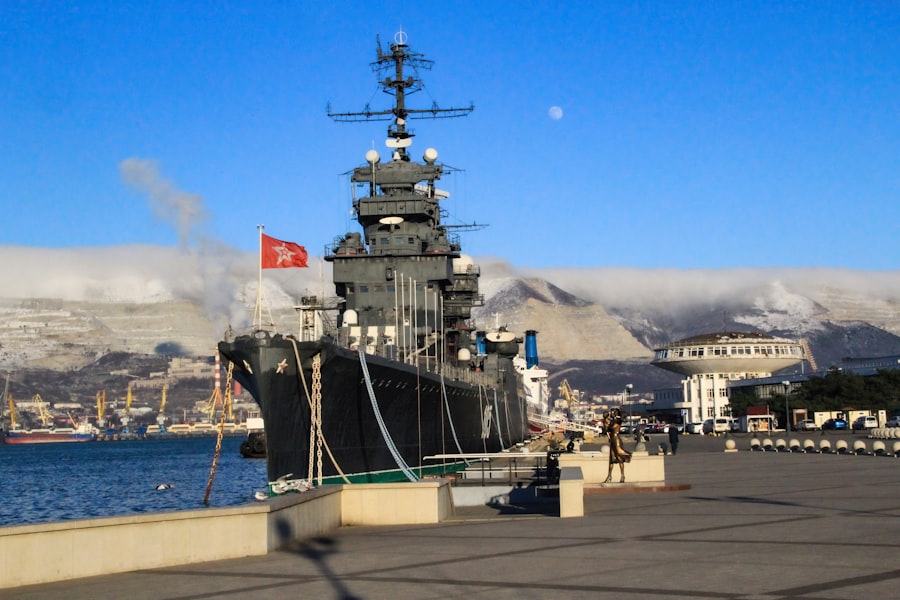
The Soviet Union also built a substantial fleet of cruisers and destroyers. These vessels were designed for a variety of roles, including anti-submarine warfare, anti-surface warfare, air defense, and naval diplomacy. Many of these ships, such as the Kirov-class battlecruisers and the Sovremenny-class destroyers, were formidable in their capabilities and represented a significant naval investment. Their presence in global waters served to project Soviet power, provide escort for other naval units, and engage in “show the flag” missions.
The Kirov Class: Nuclear-Powered Giants
The Kirov-class battlecruisers were a unique and imposing class of nuclear-powered surface combatants. These massive vessels were heavily armed with a wide array of offensive and defensive weapons, including anti-ship missiles, surface-to-air missiles, and anti-submarine armament. Their sheer size and firepower were intended to challenge American carrier battle groups and to provide a powerful platform for projecting Soviet naval strength. Their nuclear propulsion allowed for extended range and high speeds, making them valuable assets for long-range deployments and power projection.
Amphibious Warfare Capabilities: The Unsung Heroes
While less glamorous than the strategic submarines or the powerful surface combatants, the Soviet Union also developed significant amphibious warfare capabilities. These forces were designed to land troops and equipment on enemy shores, a capability that was vital for projecting power and supporting land operations. The development of large landing ships, troop transports, and specialized amphibious assault vehicles allowed the Soviet Union to conduct amphibious operations, though they were rarely tested in large-scale combat during the Cold War.
The Soviet Navy played a crucial role during the Cold War, as it sought to expand its influence and counter the naval capabilities of the United States and its allies. This period was marked by significant developments in naval technology and strategy, which are explored in detail in a related article that provides insights into the maritime confrontations of the era. For those interested in learning more about this fascinating topic, you can read the article here. The dynamics of naval power during this time not only shaped military strategies but also had lasting implications for international relations.
The Arms Race and Technological Competition
| Metric | Value | Notes |
|---|---|---|
| Peak Number of Ships | 400+ | Including submarines, surface combatants, and auxiliaries |
| Submarine Fleet Size | 200+ | One of the largest submarine fleets globally |
| Ballistic Missile Submarines (SSBNs) | 40+ | Key component of nuclear deterrence strategy |
| Attack Submarines (SSNs and SSKs) | 150+ | Included nuclear and diesel-electric powered vessels |
| Aircraft Carriers | 1 (Kiev-class) | Limited carrier capability compared to US Navy |
| Surface Combatants | 100+ | Destroyers, cruisers, frigates, and corvettes |
| Naval Aviation | ~200 aircraft | Included maritime patrol, anti-submarine, and strike aircraft |
| Personnel | ~400,000 | At peak strength during the Cold War |
| Primary Strategic Role | Nuclear deterrence and sea denial | Focus on protecting Soviet interests and countering NATO navies |
The Soviet Navy’s development was inextricably linked to the broader Cold War arms race. Every advancement by the Soviet Union spurred a response from NATO, leading to a relentless cycle of innovation and competition in naval technology.
The Constant Cat and Mouse Game
The dynamic between the Soviet Navy and NATO was akin to a perpetual “cat and mouse” game. As the Soviets developed quieter submarines, NATO poured resources into developing more sophisticated sonar and detection systems. When the Soviets deployed powerful new missile systems, NATO responded with improved countermeasures and defensive weaponry. This technological one-upmanship drove significant advancements in naval science and engineering on both sides.
Sonar, Stealth, and Countermeasures
The development of advanced sonar technology was central to the ASW effort. NATO poured billions into developing passive and active sonar systems capable of detecting submerged submarines, while the Soviets worked to minimize their acoustic signatures. Similarly, the development of stealth technologies in aircraft and ships, while more nascent in the Soviet Union, was a constant consideration. The interplay of offensive and defensive technologies shaped the nature of naval warfare throughout the Cold War.
The Role of Intelligence and Espionage
Intelligence gathering played a critical role in this technological competition. Espionage, electronic surveillance, and reconnaissance aircraft provided invaluable insights into Soviet naval capabilities and intentions, allowing NATO to tailor its response. Conversely, the Soviet Union was also keen to understand Western naval developments, leading to a constant flow of information, often acquired through clandestine means. This shadow war of information was as vital as any open naval confrontation.
The Cost of Competition: Economic Strain
The intense naval arms race placed a significant economic burden on both superpowers, and arguably more so on the Soviet Union. The sheer cost of building and maintaining such a vast and technologically advanced navy, particularly the nuclear-powered vessels, was immense. This constant drain on resources likely contributed to the economic strains that ultimately played a role in the Soviet Union’s eventual collapse. The navy was a powerful symbol of Soviet strength, but its upkeep was a heavy anchor on its economy.
The Legacy and Enduring Impact
The Cold War concluded with the dissolution of the Soviet Union, and the once mighty Soviet Navy was fractured and diminished. However, its impact on naval strategy, technology, and geopolitical dynamics during the conflict was profound and undeniable.
A Force to Be Reckoned With
Throughout the Cold War, the Soviet Navy evolved from a regional force into a global power, a formidable adversary that continuously challenged American naval dominance. Its submarines patrolled the world’s oceans, its surface ships projected power, and its very existence shaped the strategic calculations of its adversaries. It was a testament to Soviet industrial might and strategic ingenuity, and its presence was a constant factor in the global balance of power.
The Enduring Influence on Modern Naval Thought
Many of the technological advancements and strategic concepts pioneered by the Soviet Navy during the Cold War continue to influence modern naval thinking. The emphasis on submarine warfare, the development of advanced missile systems, and the concept of distributed, networked naval operations all have roots in Soviet naval doctrine. The legacy of its arms race with the West has left an indelible mark on the way navies are designed, trained, and operated today. Even in its diminished state, the memory of the Soviet Navy’s potent presence serves as a reminder of a bygone era of intense geopolitical rivalry and the critical role of naval power in shaping world events. The icy waters where its submarines once prowled, and the strategic calculations it forced upon its adversaries, continue to echo in the strategic discourse of the 21st century.
FAQs
What was the primary role of the Soviet Navy during the Cold War?
The primary role of the Soviet Navy during the Cold War was to challenge NATO naval forces, protect Soviet maritime interests, secure sea lines of communication, and provide strategic deterrence through its submarine fleet, particularly with nuclear-armed ballistic missile submarines.
How did the Soviet Navy’s submarine fleet contribute to its Cold War strategy?
The Soviet Navy’s submarine fleet was central to its Cold War strategy, especially its ballistic missile submarines (SSBNs), which served as a key component of the Soviet nuclear triad, providing a second-strike capability. Attack submarines (SSNs and SSKs) were used to counter NATO naval forces and protect Soviet SSBNs.
What types of surface ships were prominent in the Soviet Navy during the Cold War?
The Soviet Navy operated a variety of surface ships during the Cold War, including cruisers, destroyers, frigates, and missile boats. Notably, they developed large missile cruisers and guided missile destroyers equipped with anti-ship and anti-aircraft missiles to counter Western naval forces.
How did the Soviet Navy’s strategy differ from that of the United States Navy during the Cold War?
The Soviet Navy focused more on coastal defense, submarine warfare, and denying NATO access to key maritime areas, while the U.S. Navy emphasized power projection, carrier strike groups, and maintaining control of the open seas. The Soviet Navy prioritized submarines and missile technology over large aircraft carrier fleets.
What technological advancements did the Soviet Navy achieve during the Cold War?
During the Cold War, the Soviet Navy made significant technological advancements, including the development of nuclear-powered submarines, advanced missile systems such as the P-700 Granit anti-ship missile, and sophisticated sonar and electronic warfare capabilities. They also introduced new classes of submarines and surface combatants to enhance their naval power.