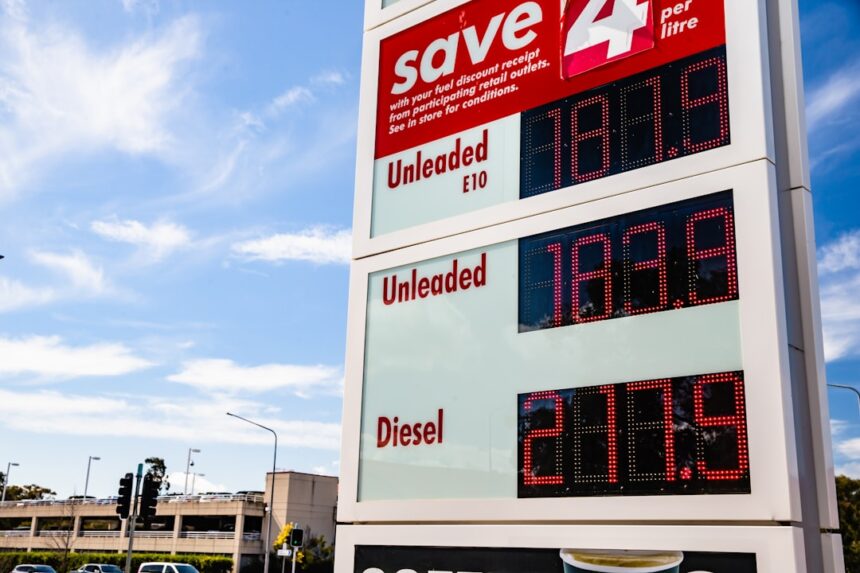
The global energy market has witnessed significant volatility in recent years, with oil prices reaching levels not seen in over a decade. The benchmark Brent crude oil price has consistently hovered around and, at times, surpassed the $120 per barrel mark. This price surge, driven by a complex interplay of geopolitical events, supply constraints, and post-pandemic demand recovery, has had a profound impact on the fiscal health of major oil-exporting nations. For Russia, an economy heavily reliant on hydrocarbon revenues, the sustained high price of oil presents a double-edged sword, offering substantial budgetary boosts while also exposing underlying vulnerabilities and potentially exacerbating existing challenges.
The Mechanics of Oil Revenue and the Russian Federation’s Budget
The Russian Federation’s federal budget relies heavily on revenue generated from the extraction and export of oil and natural gas. This dependence is structural, ingrained in the nation’s economic development over several decades. The price of oil directly influences the profitability of Russian energy companies and, consequently, the tax revenues collected by the state. When oil prices are low, the government faces significant fiscal pressure, often leading to austerity measures. Conversely, elevated oil prices act as a powerful stimulus, injecting substantial funds into state coffers and providing greater flexibility in public spending and economic management.
Understanding Oil and Gas as a Fiscal Pillar
The Russian government has historically leveraged its vast oil and gas reserves to fund its operations, invest in public services, and pursue strategic economic and political objectives. The annual budget process is intrinsically linked to projections of global energy prices, with the Ministry of Finance developing revenue forecasts based on anticipated crude oil prices. This reliance creates a direct correlation between the international energy market and the financial stability of the Russian state.
Tax and Duty Structures on Hydrocarbon Exports
The Russian system of taxation and duties on oil and gas exports is designed to capture a significant portion of the revenue generated by these commodities. This includes export duties, mineral extraction taxes (MET), and profits taxes levied on the production and sale of hydrocarbons. When oil prices rise, the value of these taxes and duties increases proportionally, directly translating into higher government revenue.
Sovereign Wealth Funds and Fiscal Buffers
Russia maintains sovereign wealth funds, such as the National Wealth Fund (NWF), which are designed to accumulate oil and gas revenues during periods of price booms. These funds serve as fiscal buffers, intended to be drawn upon during periods of economic downturn or to finance strategic long-term projects. A sustained period of $120 oil would significantly bolster the reserves within these funds, providing a substantial financial cushion.
The recent surge in oil prices, reaching around $120 per barrel, has significantly bolstered Vladimir Putin’s budget, allowing the Russian government to maintain its financial stability despite international sanctions. This development is explored in detail in the article titled “How $120 Oil Saved Putin’s Budget,” which delves into the implications of high oil prices on Russia’s economy and its geopolitical strategies. For more insights, you can read the full article here: How $120 Oil Saved Putin’s Budget.
Geopolitical Influences on $120 Oil and Russian Revenue Streams
The ascent of oil prices to $120 per barrel is not a purely market-driven phenomenon. Geopolitical tensions and conflicts have played a pivotal role in shaping the supply dynamics of the global energy market. Russia’s position as a major energy supplier means that international events directly impact its revenue streams, creating a complex and often unpredictable feedback loop.
The Impact of Sanctions and Supply Disruptions
The imposition of international sanctions on Russia following its invasion of Ukraine has created a complex web of consequences for its energy exports. While some markets have sought to reduce their reliance on Russian oil, others have continued to purchase it, albeit often at discounted prices. However, the overall global supply tightening, exacerbated by disruptions in other oil-producing regions, has contributed to higher benchmark prices. This creates a scenario where Russia may be selling its oil at a higher global price, even if specific contractual arrangements or market dynamics lead to some discounts.
Global Demand Dynamics and Economic Recovery
The post-pandemic global economic recovery has been characterized by a surge in demand for energy. As economies reopened and industrial activity ramped up, the global appetite for oil increased significantly. This heightened demand, coupled with the supply constraints, has been a primary driver of the elevated oil prices. For Russia, this robust demand signifies a consistent market for its primary export commodity, even amidst geopolitical challenges.
Diversification Challenges and the Oil Price Conundrum
While $120 oil provides a substantial financial windfall, it also poses a challenge to Russia’s long-term economic diversification efforts. The reliance on high commodity prices can disincentivize investments in other sectors, creating a “resource curse” dynamic where the booming energy sector overshadows the development of other industries.
The Role of Oil Revenue in State-Controlled Enterprises
A significant portion of Russia’s state-controlled enterprises operate within the energy sector. The substantial profits generated by these companies during periods of high oil prices are channeled back into the state budget through various mechanisms. This further entrenches the dominance of the energy sector in the Russian economy.
External Debt Servicing and Import Costs
Elevated oil revenues can significantly improve Russia’s ability to service its external debt. The influx of foreign currency from oil exports provides the necessary resources to meet international financial obligations. Moreover, higher commodity prices translate into higher import costs for Russia, but the increased export earnings can, at least partially, offset this impact.
Currency Fluctuations and the Ruble’s Resilience
The price of oil has a direct impact on the value of the Russian Ruble. Strong oil revenues tend to strengthen the Ruble, making imports cheaper and increasing the purchasing power of consumers and businesses. However, a country’s currency value is influenced by a multitude of factors, and while oil prices are a significant contributor, they are not the sole determinant.
Budgetary Allocations and Spending Priorities under $120 Oil
The substantial increase in oil revenues under a $120 per barrel scenario provides the Russian government with significantly enhanced budgetary flexibility. This allows for greater expenditure across various sectors, potentially impacting social programs, infrastructure development, defense spending, and other strategic initiatives. However, the allocation of these funds is subject to the government’s overarching policy objectives and priorities.
Increased Fiscal Space for Social Spending and Welfare Programs
Higher oil revenues can translate into increased funding for social programs, pensions, and welfare initiatives. This can help to alleviate poverty, improve living standards, and bolster public support. The government might be able to increase the generosity of existing programs or introduce new ones to address societal needs.
Investment in Public Infrastructure and Development Projects
With a boosted budget, the government can allocate more resources to infrastructure projects, such as roads, bridges, energy grids, and transportation networks. These investments are crucial for long-term economic growth and can also create employment opportunities.
Enhanced Defense Spending and Geopolitical Maneuvering
A robust oil revenue stream can also enable increased spending on defense and security. This can support modernization of the armed forces, research and development in military technologies, and the projection of geopolitical influence. The availability of substantial financial resources can provide greater latitude for pursuing foreign policy objectives.
Subsidies and Support for Domestic Industries
The government might also choose to use oil revenues to subsidize key domestic industries, support smaller businesses, or promote technological innovation. These measures are often aimed at strengthening the national economy and reducing reliance on imports in critical sectors.
Potential Risks and Long-Term Implications of Sustained High Oil Prices
Despite the immediate fiscal benefits, sustained high oil prices can also present significant long-term risks for the Russian economy. These risks are often linked to the potential for economic distortion, increased vulnerability to future price volatility, and the perpetuation of structural economic weaknesses.
The “Dutch Disease” Phenomenon and Economic Imbalances
The “Dutch disease” is an economic phenomenon where a boom in a natural resource sector leads to a decline in other sectors of the economy. In Russia’s case, sustained high oil prices could further entrench the dominance of the energy sector, making it more difficult for manufacturing, agriculture, and technology sectors to compete. This can lead to a loss of competitiveness in non-resource sectors and increased reliance on imports.
Reduced Incentive for Innovation and Economic Diversification
When resource revenues are abundant, there can be a reduced incentive for innovation and diversification. The ease of generating revenue from oil can mask deeper structural issues and discourage the development of new economic drivers. This can leave the economy vulnerable when commodity prices eventually decline.
Over-reliance on Commodity Cycles and External Shocks
A budget heavily dependent on fluctuating commodity prices is inherently vulnerable to external shocks. A sharp decline in oil prices, for whatever reason, can lead to severe fiscal strain, requiring painful austerity measures and potentially economic contraction. The experience of Russia in recent decades has demonstrated this cyclical vulnerability.
The Impact of Global Energy Transition on Future Demand
The global shift towards renewable energy sources poses a long-term challenge to economies heavily reliant on fossil fuels. While $120 oil signifies robust current demand, the accelerating pace of the energy transition could lead to a gradual or even rapid decline in the demand for oil in the coming decades, necessitating a fundamental restructuring of economies like Russia’s.
The recent surge in oil prices, particularly reaching around 120 dollars per barrel, has significantly bolstered Vladimir Putin’s budget, allowing him to navigate economic challenges more effectively. This development highlights the intricate relationship between global oil markets and national economies, as countries like Russia benefit from high energy prices. For a deeper understanding of the implications of these economic shifts, you can explore a related article that discusses the broader impacts of oil prices on geopolitical stability and national budgets. Check it out here.
Navigating the Future: Strategic Considerations for Russia
The prospect of $120 oil has significant implications for Russia’s economic and fiscal future. While the short-term benefits are undeniable, it is crucial for policymakers to consider the long-term implications and to implement strategies that mitigate risks and promote sustainable economic development.
Prudent Fiscal Management and Investment in Diversification
The most prudent approach to managing high oil revenues involves a combination of fiscal discipline and strategic investment in economic diversification. Building up sovereign wealth funds during boom periods is essential, but equally important is the targeted investment in sectors that can drive future growth and reduce the economy’s reliance on hydrocarbons.
Investing in Human Capital and Technological Advancement
Investing in education, skills development, and technological research and development is crucial for creating a diversified and resilient economy. This can foster innovation, create new industries, and improve the competitiveness of non-resource sectors.
Strategic Use of Sovereign Wealth Funds
The significant inflows into the National Wealth Fund under a $120 oil scenario present an opportunity for strategic long-term investments. These could include infrastructure development, support for innovative industries, or investments in sectors that are less susceptible to commodity price volatility. The careful and transparent management of these funds is paramount.
Planning for the Energy Transition
Acknowledging and actively planning for the global energy transition is a critical long-term imperative. This involves developing strategies to gradually reduce reliance on oil and gas, invest in renewable energy technologies, and foster industries that will be in demand in a decarbonized global economy.
The Nuance of “Boosting” Putin’s Budget
The phrase “$120 Dollar Oil Boosts Putin’s Budget”, while accurate in its superficial observation of increased revenue, requires a nuanced understanding. The term “boosts” speaks to the augmentation of funds available to the state. However, how these funds are managed, allocated, and invested, as well as the underlying vulnerabilities they might mask, are critical considerations. It is not merely an automatic positive outcome but rather a complex fiscal phenomenon with far-reaching implications for the Russian Federation’s economic trajectory and its position on the global stage. The sustained high prices, while currently beneficial to the treasury, necessitate a careful and strategic approach to ensure long-term economic stability and resilience.
FAQs
1. What impact did the rise in oil prices have on Putin’s budget?
The rise in oil prices to $120 per barrel significantly boosted Russia’s budget revenues, as oil and gas exports are a major source of income for the country. This increase in revenue helped Putin’s government to stabilize the budget and reduce the budget deficit.
2. How did the increase in oil prices affect Russia’s economy?
The increase in oil prices provided a much-needed boost to Russia’s economy, as the country heavily relies on oil and gas exports. The higher oil prices helped to strengthen the Russian ruble and improve the country’s overall economic outlook.
3. What were the implications of the rise in oil prices for Putin’s government?
The rise in oil prices alleviated some of the financial pressure on Putin’s government, allowing for increased spending on social programs and infrastructure projects. It also helped to maintain political stability and support Putin’s popularity among the Russian population.
4. How did the increase in oil prices impact Russia’s fiscal policy?
The increase in oil prices allowed Russia to pursue a more expansionary fiscal policy, as the higher revenues from oil exports provided the government with more resources to invest in various sectors of the economy and support economic growth.
5. What are the potential risks associated with Russia’s reliance on oil revenues?
Russia’s heavy reliance on oil revenues makes the country vulnerable to fluctuations in global oil prices. A sudden drop in oil prices could negatively impact the country’s budget, economy, and political stability. This dependence on oil also hinders diversification efforts and makes the economy less resilient to external shocks.